Cost of living in Spain:
what it really costs
No glossy marketing — real numbers from everyday life on the Costa Blanca. What do housing, food, a car and leisure cost, and how does that compare with northern Europe?
–20–30%
Cheaper than Germany
€10–14
Menú del día
€1.20
Coffee
€500+
Apartment rent
Updated 20 November 2026 · About the author →
Cost comparison: Germany vs. Costa Blanca
Average values for 2026 — individual experience varies
Our benchmark figures are German averages, because that is where the author comes from. Whether you're moving from the UK, Ireland, the Netherlands, Scandinavia, Poland or the US, compare the Spanish column with what you pay at home today.
🏠 Housing (rent per month)
| Property | Germany (avg.) | Spain |
|---|---|---|
| Studio / 1-room flat | €900–1,400 | €450–700 |
| 1-bedroom flat (2 rooms) | €1,200–2,000 | €700–1,100 |
| House / villa | €2,000–4,000 | €1,200–2,500 |
| Utilities & running costs | €200–350 | €80–150 |
🍽️ Food & drink
| Item | Germany | Spain |
|---|---|---|
| Coffee in a café | €2.50–3.50 | €1.20–1.80 |
| Menú del día (3 courses + drink) | – | €10–14 |
| Beer (0.5 l) | €3.50–5.00 | €1.50–2.50 |
| Bread (500 g) | €2.50–4.00 | €1.00–1.80 |
| Olive oil (1 l) | €7–12 | €4–8 |
| Tomatoes (1 kg) | €2.50–4.00 | €0.80–1.50 |
Cortado: €1.30
in any bar, every day
Breakfast for two
under €10 by the sea
Parking at shopping centres
always free
Chicken breast at the supermarket
half the German price
All the other costs
🚗Car & transport
💡Energy & phone
🎭Leisure & health
€9.65 in Berlin. From €3 in Spain. The same breakfast.
Café con leche, toast with tomato, freshly squeezed orange juice — here that isn't a luxury. It's everyday life. And it costs a fraction of what you pay in a northern European city.

🇩🇪 Berlin · April 2026
€9.65
Small breakfast · coffee + half a roll with salmon
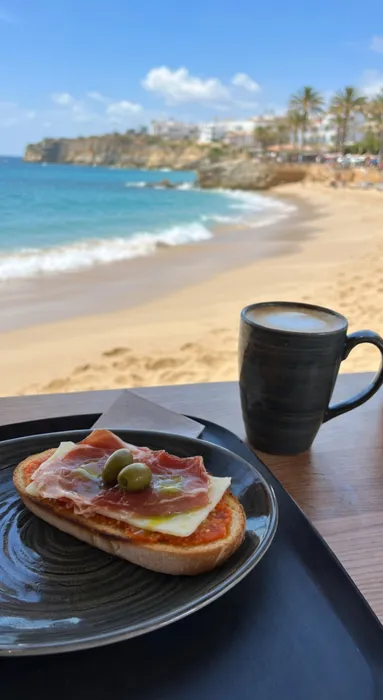
🇪🇸 Costa Blanca · 2026
€3.00 – 4.50
Café con leche + tostada with cheese / ham · up to €4.50 at the harbour
In April 2026 I was in Berlin. A small breakfast in a nice café — €9.65. Not a luxury venue, not a tourist price. A normal city breakfast on a normal street. You just pay it, because you have no choice.
On the Costa Blanca the same thing — café con leche, tostada with cheese or ham — costs from €3. Right on the seafront or in the old harbour sometimes €4.50. With a view of the water.
€9.65
Berlin, April 2026
€3.00
Everyday Costa Blanca
up to €4.50
Right at the harbour
From personal experience
Skoda Octavia 2.0 diesel — what the same car costs in Germany and in Spain
Insurance, road tax, roadworthiness test — with a car you notice the difference quickly. Same car, a fraction of the cost.

🇩🇪 Germany
Road tax
~€200/year
Insurance
~€900/year (third party, fire & theft)
Total per year
~€1,100/year
🇪🇸 Spain
Road tax
< €100/year
Insurance
~€370/year (incl. legal protection for traffic matters + breakdown cover)
Total per year
~€470/year
💰 Saving
Road tax
~€100/year
Insurance
~€530/year
Total per year
~€630/year
In Spain the same partial-cover policy — including legal protection for traffic matters and breakdown cover — costs less than the bare insurance in Germany. Add a road tax you barely notice. Together that's over €630 a year saved, without giving up anything.
Sample monthly budget: couple in a rented flat
A guide figure for a solid, comfortable life for two without major restrictions. No mortgage, no property ownership. Individual costs vary with lifestyle and area.
Rising rents in tourist areas
Especially on the northern Costa Blanca (Dénia, Jávea, Altea), long-term rents are rising because of pressure from the holiday-let market. If you want to live affordably for the long term, start looking early or consider buying.
What the numbers don't show — real life on the Costa Blanca
The first time you have breakfast on the Costa Blanca, you look at the bill twice. A café con leche, freshly squeezed orange juice, toast with olive oil and tomato — two people, a table with a sea view, under €10. That's not a special offer, that's Monday morning in a normal bar. In Germany the same breakfast by the water would hardly be had for under €25.
A cortado — a small coffee with a dash of milk — costs on average €1.20 to €1.50 on the Costa Blanca. In Munich or Hamburg you pay two to three times as much. And this isn't a special price for tourists: it's the standard price in the village bar, the beach bar and the shopping centre alike.
Speaking of shopping centres: if you drive to a mall on the Costa Blanca — whether in Torrevieja, Alicante, Elche or Benidorm — parking is free. No parking tickets, no barriers with a €3 minimum, no hidden fees. The toilets in the shopping centre are free and clean too. It sounds like a small thing, but you notice the difference every day.
At the supermarket you'll notice that fresh produce is much cheaper than in Germany. A chicken breast costs about half of what Lidl or Rewe charge there. Locally grown fruit and vegetables — tomatoes, peppers, courgettes, oranges — are fresher, tastier and cheaper. Shop regularly at the weekly market and you save even more.
Leisure costs less on the Costa Blanca too. A cinema ticket for €7–8, a gym from €25 a month, a football night in the bar with a €2 beer — it all adds up. But the biggest difference is what's free: the weather, the sea, the countryside. Cycling, hiking, swimming from March to November — the kind of free time you'd travel or pay for back home is simply everyday life here.
That doesn't mean everything is cheap. Imported products, electronics and branded goods cost about the same as in Germany. And if you want to live in a sought-after coastal spot, you pay for it in rent. But plan sensibly and you'll soon see: you can live very well and very affordably on the Costa Blanca — if you live the local life instead of copying your old life on Spanish soil.
Is owning a car in Spain really cheaper?
Carlo:In Spain the same partial-cover insurance — including legal protection for traffic matters and breakdown cover — costs less than the bare insurance in Germany. Over €630 a year saved, without giving up anything.

Cost of living in Spain: frequently asked questions
Is Spain really cheaper than northern Europe?
Compared with Germany, yes — on average 20–30% cheaper, especially for eating out, fresh produce and energy. Electronics and imported goods cost about the same.
How much does health insurance cost?
If you are resident and working (employed or self-employed), you are covered by the public system (Seguridad Social). Pensioners who draw a state pension from another EU country usually stay covered through that country (form S1). Private top-up insurance: €50–150 a month. Details on our health insurance page.
Do I need a car?
In most coastal towns, yes — public transport outside the cities has gaps. In Alicante city or Benidorm you can manage well without a car.
How much can I save compared with an expensive city?
With the same lifestyle and renting rather than buying, you can save €800–1,500 a month compared with Munich — mainly thanks to lower rent and living costs.
The bigger picture
Low living costs + your own business = a strong combination
What lasts one month in Munich gives you three months of breathing space on the Costa Blanca. Many newcomers use exactly that as a springboard into self-employment. Our guide explains how.
Ready for your new life?
Planning your move or buying a property on the Costa Blanca? Start with our guides. New consultation enquiries are currently paused; the consultation page has the details.