
Region guide
Moving to Calpe
on the Costa Blanca
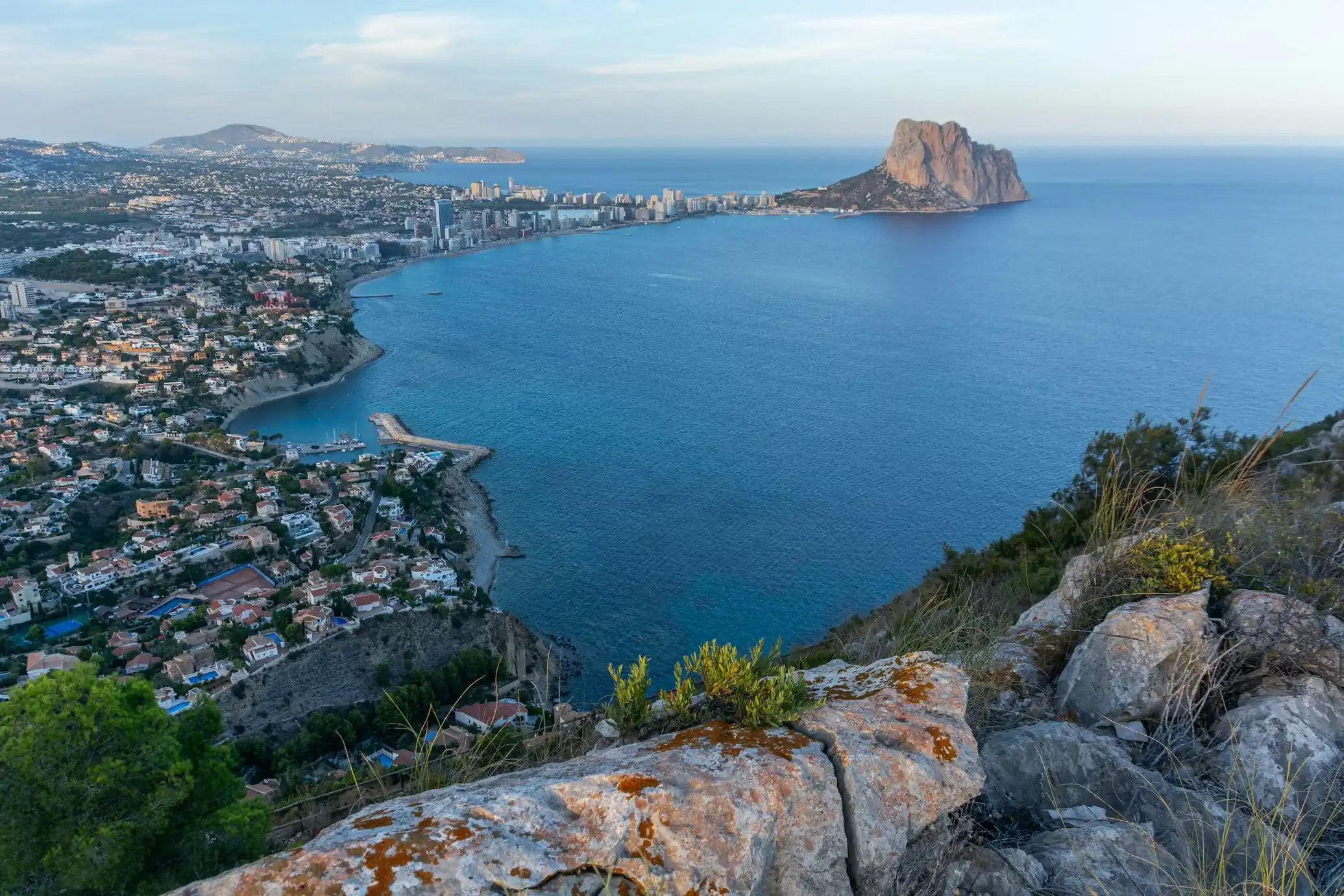
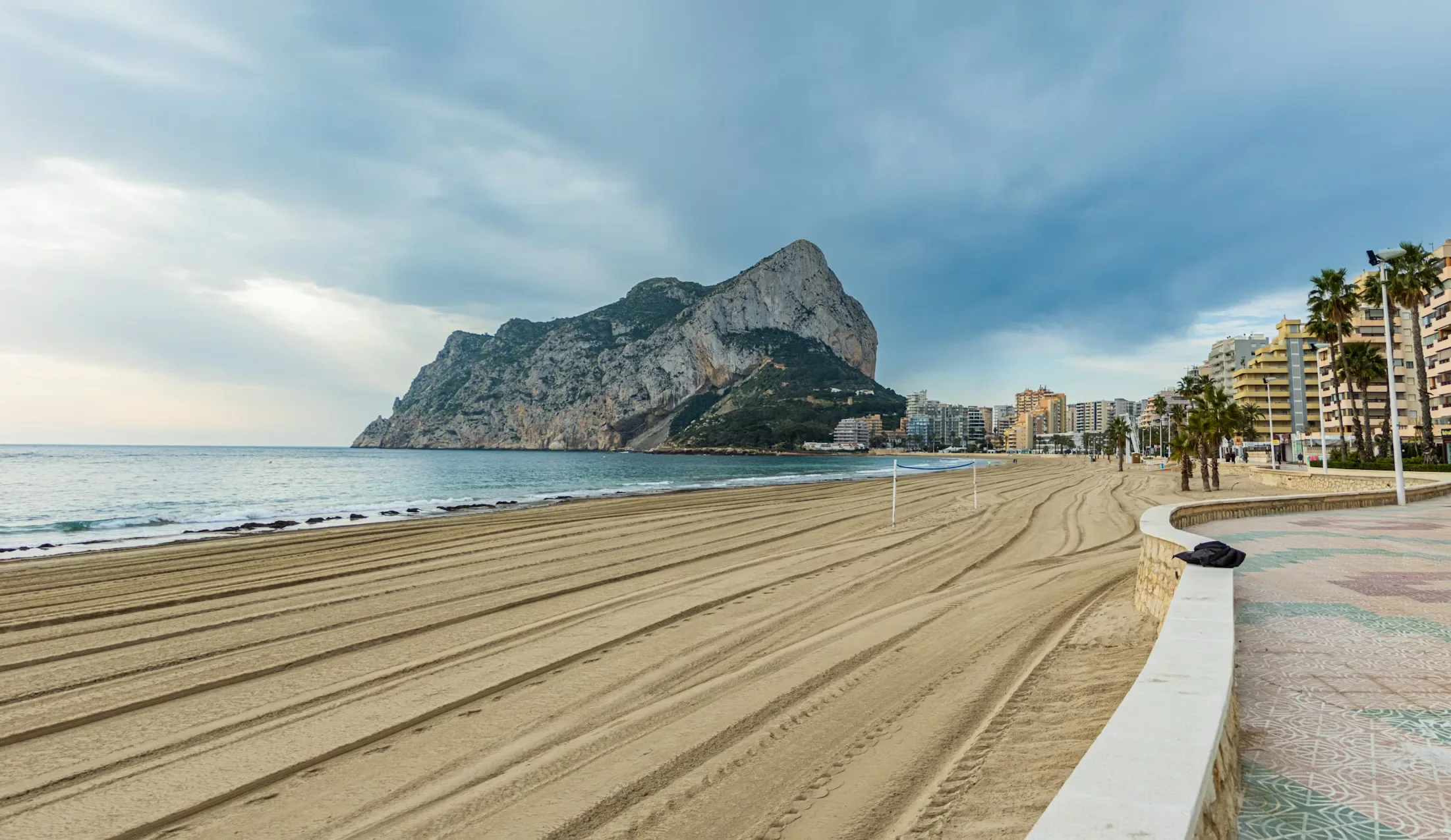
The Peñón de Ifach — an Instagram moment and Costa Blanca landmark in one town
Ask a questionPlease note: new requests via the consultation page are currently paused.
27,600
Residents
53%
Foreign residents
from €120k
Apartment prices
315
Sunny days a year
27,600
Residents
53%
Foreign residents
from €120k
Apartment prices
315
Sunny days a year
Updated 20 November 2026 · About the author →
Living in Calpe — what to really expect
Calpe has something no other town on the Costa Blanca has: the Peñón de Ifach — 332 metres of limestone rock rising sheer out of the sea. Below it, wide beaches, good restaurants, a small old town centre — and hillside neighbourhoods with views that are hard to beat.
This page takes you through everything that matters: from the first idea to your NIE number, from the housing market to residency. All based on real knowledge from 22 years living abroad, 10 of them in Spain.
The Peñón de Ifach — the Costa Blanca's Instagram picture
There's one picture everyone knows who has ever searched for 'Costa Blanca': a 332-metre limestone rock rising sheer out of the turquoise Mediterranean, a bright blue sky behind it, a small white town below. That's Calpe — and that's the Peñón de Ifach. Known far beyond the Costa Blanca, in every travel guide, in thousands of Instagram posts. When you see the rock live for the first time, you understand the hype immediately.
The Peñón has been a nature reserve since 1987, is home to more than 300 plant species, a breeding ground for cormorants and birds of prey — and you can climb it. The ascent leads through a rock tunnel from 1918, takes about an hour and a half and ends at the summit with a panoramic view that's hard to beat: the northern Costa Blanca, Dénia, Jávea, and on clear days even the Balearic Islands. Around 100,000 visitors a year come for exactly this moment — access is limited to 300 people at a time.
Beach, promenade and food in Calpe
Right at the foot of the Peñón lies one of the most beautiful beaches on the northern Costa Blanca: long, wide and well served by restaurants along the promenade. Calpe's beach promenade is a real plus — very popular with locals too, not just tourists. Fish restaurants, tapas bars, ice-cream parlours, a relaxed atmosphere. For a beach day, Calpe is close to ideal.
The food around the fishing port is remarkably good for a small town: fresh fish straight off the boat, arroz a banda, gambas a la plancha. If you want to eat well, the harbour area is the place. Further into town and in tourist zones the quality becomes more mixed — as everywhere on the Costa Blanca: follow the locals, not the big banners.
Living in Calpe — the hillsides, the view, the price
What really makes Calpe special for people moving here are the hillside neighbourhoods around the Peñón. In the urbanizaciones Buenavista, Oltamar, Maryvilla and other hillside areas there are residential complexes and detached villas with communal pools and views other places can't offer: the Peñón in the foreground, the sea behind, mountain ranges to the left and right. That pushes up prices — but it also explains why people buy exactly here and not elsewhere.
Apartments in Calpe start at around €120,000 for smaller units without a special view. With sea views, prices rise to €250,000 to €450,000. Villas with panoramic views and a pool cost between €400,000 and well over a million. The average price per square metre is between €2,800 and €4,500 — more expensive than Benidorm or Torrevieja, cheaper than Jávea or Moraira. The rental market is tight: holiday lets dominate the attractive locations, and long-term rentals are mainly found in the town centre.
“The Peñón de Ifach is the one picture everyone knows — and when you see it live for the first time, this rock that simply rises out of the water, you immediately understand why Calpe is on every list. The rest of the town is modest. But that one view makes up for a lot.”
Carlo Reuss — 22 years living abroad, 10 of them in Spain
Calpe's honest side — traffic, parking and winter
Calpe has a structural drawback that really hurts in summer: access. The town is hilly, the roads are narrow, and when the tourists arrive in July and August you can spend 20–30 minutes in traffic just to get down to the beach. Parking is similar: there are large car parks and some free spaces a bit further away, but spontaneous beach parking on a Saturday in August takes time. Everyday life in Calpe without a car is hard work. TRAM line 9 does connect Calpe with Benidorm and Dénia, but you can practically only reach the hillside areas and urbanizaciones by car.
In winter Calpe goes into hibernation mode. Not as extreme as Torrevieja, but noticeably: many of the holiday flats and houses stand empty, some restaurants close from October to March. If you're looking for an active city life all year round, you won't be happy in Calpe long term. If you value peace, nature and spectacular views and take life with a car for granted, you'll like Calpe in winter too.
Calpe's location, surroundings and what else there is
Geographically, Calpe is ideally placed: Benidorm is 30 minutes away (for nightlife, big shopping trips, clinics), Dénia also 30 minutes (for the ferry and connections to Valencia), Altea just 15 minutes (one of the prettiest white villages on the Costa Blanca), Jávea and Moraira 20 minutes (more exclusive, quieter, wonderful coves). Alicante airport is about 50–60 minutes away.
What many people don't know: Calpe has its own salt lagoon too — the Salines de Calp — with flamingos, herons and migratory birds, right on the edge of town. Smaller than the lakes in Torrevieja, but an unexpected nature highlight for anyone who likes a morning walk. Add festivals all year round: Moros y Cristianos in October, Fallas in March. Calpe is smaller than its neighbours — but far from uneventful.
NIE, residency and everyday life in Calpe
Calpe has no Policía Nacional station of its own. NIE and residency appointments (cita previa) are offered by the foreigners' offices at the police stations in Benidorm (20–25 minutes) or Dénia — the government booking system shows which one currently has slots. That's a little less convenient than in Alicante — but with an appointment it's easy to do. A gestoría in Calpe or Benidorm handles all the paperwork smoothly. Mercadona in the centre covers everyday shopping well; for bigger shopping trips (MediaMarkt, IKEA, shopping centres) you drive to Benidorm or Alicante.
Electricians, plumbers, painters and other tradespeople in Calpe: with a 53 percent share of foreign residents — Britons the largest group, followed by Germans — a solid network of service providers who speak English, German and other languages has grown up here. The large international communities in Jávea and Moraira widen the radius further.
If you're not an EU citizen (UK, US …)
- Visiting is not living: without a visa you can stay in the Schengen area for up to 90 days in any 180-day period. Time spent on a Spanish residence permit or long-stay visa doesn't count towards that limit.
- To live in Calpe you need a Spanish visa or residence permit before you move — for example the non-lucrative residence visa, the digital nomad (international teleworking) visa or a work visa. Once in Spain you get your foreigner identity card, the TIE, from the Policía Nacional.
- UK nationals resident in Spain before 2021 are covered by the Withdrawal Agreement. The UK and Spanish governments recommend swapping the old green residency certificate for a TIE, which border staff recognise as proof of residence.
- Buying property no longer gives you residence: Spain ended the "golden visa" for property investors on 3 April 2025.
More in our guides to residency in Spain and the NIE number.
Sources (checked November 2026): GOV.UK – Spain entry requirements · GOV.UK – Spain: register your residency · La Moncloa – end of the golden visa. Rules change — check the current requirements before you apply.
Questions about Calpe?
New requests via the consultation page are currently paused — the page has the details.
Consultation page🏡 Buying support
Buying property in Calpe? How personal support works, from the search to the keys.
Learn moreQuick links
Everything you need for Calpe
From planning to everyday life — all the key topics for your move
📋
🪪
🏡
🚗
🏥
💼
💶
🔌
⚖️
Get your NIE number
The first step — without an NIE nothing works in Spain.
Register as a resident
When you have to register and how it works — EU and non-EU.
Buying property
Buying property in Spain explained step by step.
Register your car
Re-registering a car in Spain — process, costs, deadlines.
Health insurance
Public or private — what really applies in Spain.
Self-employed in Spain
Autónomo or SL — explained step by step.
Taxes in Spain
What you pay tax on as a resident.
Electricity & gas
Setting up utility contracts quickly and without stress.
Lawyer & gestoría
When you need help and where to find it.
What's on
Events & weekly markets in Calpe
Markets, fiestas and events in your area
🛒
Fri 20 Nov
8 am – 2 pm
Alfàs del Pi Weekly Market
📍 Alfàs del Pi · Avenida de la Constitución
🛒
Sat 21 Nov
8 am – 2 pm
Calpe Weekly Market (Saturday)
📍 Calpe · Avenida de Rumanía
🛒
Sat 21 Nov
9 am – 2 pm
La Cala de Finestrat Weekly Market
📍 Finestrat · Carrer Tramuntana (La Cala)
🛒
Sun 22 Nov
8 am – 2 pm
El Albir Weekly Market
📍 El Albir · Carrer Isaac Albéniz (off...
🛒
Sun 22 Nov
8 am – 2 pm
Benidorm Weekly Market
📍 Benidorm · Explanada Rincón de Loix...
🏷️
Sun 22 Nov
8 am – 2 pm
La Nucía Rastro (Antiques & Flea Market)
📍 La Nucía · Polígono Industrial L'Alberca
🏷️
Sun 22 Nov
8 am – 2 pm
Polop Rastro (Flea Market)
📍 Polop · Polígono Industrial (Calle...
🛒
Tue 24 Nov
8 am – 2 pm
Altea Weekly Market
📍 Altea · Camí de l'Algar
🛒
Fri 20 Nov
8 am – 2 pm
Alfàs del Pi Weekly Market
📍 Alfàs del Pi · Avenida de la Constitución
🛒
Sat 21 Nov
8 am – 2 pm
Calpe Weekly Market (Saturday)
📍 Calpe · Avenida de Rumanía
🛒
Sat 21 Nov
9 am – 2 pm
La Cala de Finestrat Weekly Market
📍 Finestrat · Carrer Tramuntana (La Cala)
🛒
Sun 22 Nov
8 am – 2 pm
El Albir Weekly Market
📍 El Albir · Carrer Isaac Albéniz (off...
🛒
Sun 22 Nov
8 am – 2 pm
Benidorm Weekly Market
📍 Benidorm · Explanada Rincón de Loix...
🏷️
Sun 22 Nov
8 am – 2 pm
La Nucía Rastro (Antiques & Flea Market)
📍 La Nucía · Polígono Industrial L'Alberca
🏷️
Sun 22 Nov
8 am – 2 pm
Polop Rastro (Flea Market)
📍 Polop · Polígono Industrial (Calle...
🛒
Tue 24 Nov
8 am – 2 pm
Altea Weekly Market
📍 Altea · Camí de l'Algar
Calpe — an honest overview
Pros and cons from real life — not marketing
Advantages of Calpe
✓
Peñón de Ifach — a unique natural landmark, known worldwide
✓
Long, wide beach with good restaurants right by the water
✓
53% foreign residents — strong international community (Britons, Germans)
✓
Hillside areas with spectacular panoramic views
✓
Ideally placed: Benidorm 30 min, Dénia 30 min, airport 50 min
✓
Quieter than Benidorm — small-town feel with good infrastructure
✓
Its own salt lagoon with flamingos — less known than Torrevieja's, but there
Worth knowing
!
In summer: traffic jams, jams, jams — getting into Calpe in high season is a slog
!
Beach parking in summer: 20–40 minutes of searching is normal
!
Hard work without a car — TRAM to Benidorm and Dénia, but the hillside areas need a car
!
Town centre not particularly pretty — not postcard Spain like Altea
!
The town empties noticeably in winter — many holiday flats stand empty
!
Big shopping trips / MediaMarkt / official appointments always mean a drive
Housing market in Calpe
Current market prices for buying and long-term renting in Calpe and the surrounding area. All figures are guide values — location, condition and sea views have a big effect on the price.
Rent, 1-bed flat
€650–1,100/month
Rent, 2-bed flat
€900–1,600/month
Buy from
from €120,000
Buy, price per m²
€2,800–4,500/m²
Sea views and views of the Peñón push prices up considerably. Villas with panoramic views from €750k. Long-term rentals scarce — holiday lets dominate near the coast.
Buying property in Calpe
Buying property in Spain involves a few things to watch: the NIE number, a land registry extract, checking the property is free of debts and charges, the notary — and budgeting 10–13% for purchase costs on top of the price. Our buying guide explains each step.
Compare other areas
The Costa Blanca has many faces — discover more towns
Frequently asked questions about Calpe
From real life — the questions we hear most often
Can you really climb the Peñón de Ifach?
Yes — the climb is free, leads through a rock tunnel dating from 1918 and takes about 1–1.5 hours to the summit at 332 metres. The view over the northern Costa Blanca and, on clear days, as far as the Balearic Islands is spectacular. Important: the nature reserve is limited to 300 visitors at a time. In summer, start early or go on a weekday.
Is Calpe a good place to live in winter?
Yes — but quiet. Like all coastal towns between Benidorm and Dénia, Calpe has a marked winter lull: many holiday flats stand empty, the promenade is quieter, some restaurants close for the season. If you want an active life all year, Dénia or Alicante suit you better. If you like peace and nature, you'll find winter in Calpe pleasant.
What are traffic and parking like in Calpe?
Problematic in summer. Getting into Calpe — especially down towards the beach — means traffic jams in July and August. Beach parking costs money and fills up fast; realistically, allow 20–40 minutes to find a space. There are large car parks and free spaces a bit further away. Living in Calpe without a car is very hard work — the TRAM links the town to Benidorm and Dénia, but the hillside areas are practically car-only.
What does a villa with a view of the Peñón cost in Calpe?
Villas with panoramic views of the Peñón de Ifach and the sea start at around €750,000 and go far higher depending on location, size and features. In the hillside urbanizaciones (residential developments) — Buenavista, Maryvilla, Oltamar — detached houses with a pool and views cost between €400,000 and €2 million.
Does Calpe have an old town?
Yes, a small historic core — the Casco Antiguo, with a Gothic-Mudéjar church from the 15th century, an old cannon tower with a museum, and Roman baths. It makes for a pleasant 20–30 minute stroll. It's not a large old town like Alicante or Elche — but charming and worth seeing.
Are there tradespeople in Calpe who speak other languages?
Because of the high share of foreign residents (53%), Calpe and the surrounding area have electricians, plumbers, tradespeople and renovation firms who speak English, German and other languages. The large international communities in Jávea and Moraira (both 20 minutes away) widen the choice further. Ask for recommendations and always get a written quote.
Where can I find an electrician or plumber in Calpe?
Electricians, plumbers and other tradespeople in Calpe are best found through recommendations from the local international community or expat groups. Our directory and our guides to tradespeople and electricians are a good starting point. Always ask for a written quote (presupuesto).
What does it cost to move to Calpe?
A removal from central Europe (from Germany, for example) costs between €2,000 and €6,000, depending on the volume of your household. On top of that come registration costs (NIE, residency), a possible rental deposit and, if you buy, notary and purchase costs. Careful planning pays off.
Tradespeople & services in Calpe
Guides to finding local services on the Costa Blanca
🔌Electricians
🔧Plumbing & pools
🏗️Tradesmen
🚛Removals to Calpe
🏥Health insurance
⚖️Lawyer & gestoría
💼Taxes in Spain
🏡Estate agents
📒Local directory
Looking for an electrician, plumber or tradesman in Calpe?
Whether it's an electrician in Calpe, a plumber, a painter or help with your move — finding the right contacts is the hardest part. Recommendations from the local community are worth a lot; our directory and service guides are a good place to start. Always ask for a written quote (presupuesto) before work begins.
Browse the directory →Ready for your life in Calpe?
From the NIE number to moving in — our guides take you through every step, based on 22 years living abroad, 10 of them in Spain.
Personal questions: new requests via the consultation page are currently paused.