

Region guide
Moving to Torrevieja
on the Costa Blanca
Flamingos, salt lakes and 52% foreign residents — the most international town on the Costa Blanca
Ask a questionPlease note: new requests via the consultation page are currently paused.
110,500
Residents
52%
Foreign residents
from €60k
Apartment prices
325
Sunny days a year
110,500
Residents
52%
Foreign residents
from €60k
Apartment prices
325
Sunny days a year
Updated 20 November 2026 · About the author →
Living in Torrevieja — what to really expect
Torrevieja in the south of the Costa Blanca is one of a kind: more foreigners than Spaniards, pink salt lakes with thousands of flamingos, the lowest property prices in the region — and a ghost town in winter. An honest assessment of a place that thrills many and overwhelms some.
This page takes you through everything that matters: from the first idea to your NIE number, from the housing market to residency. All based on real knowledge from 22 years living abroad, 10 of them in Spain.
Torrevieja — from fishing village to the most international town on the Costa Blanca
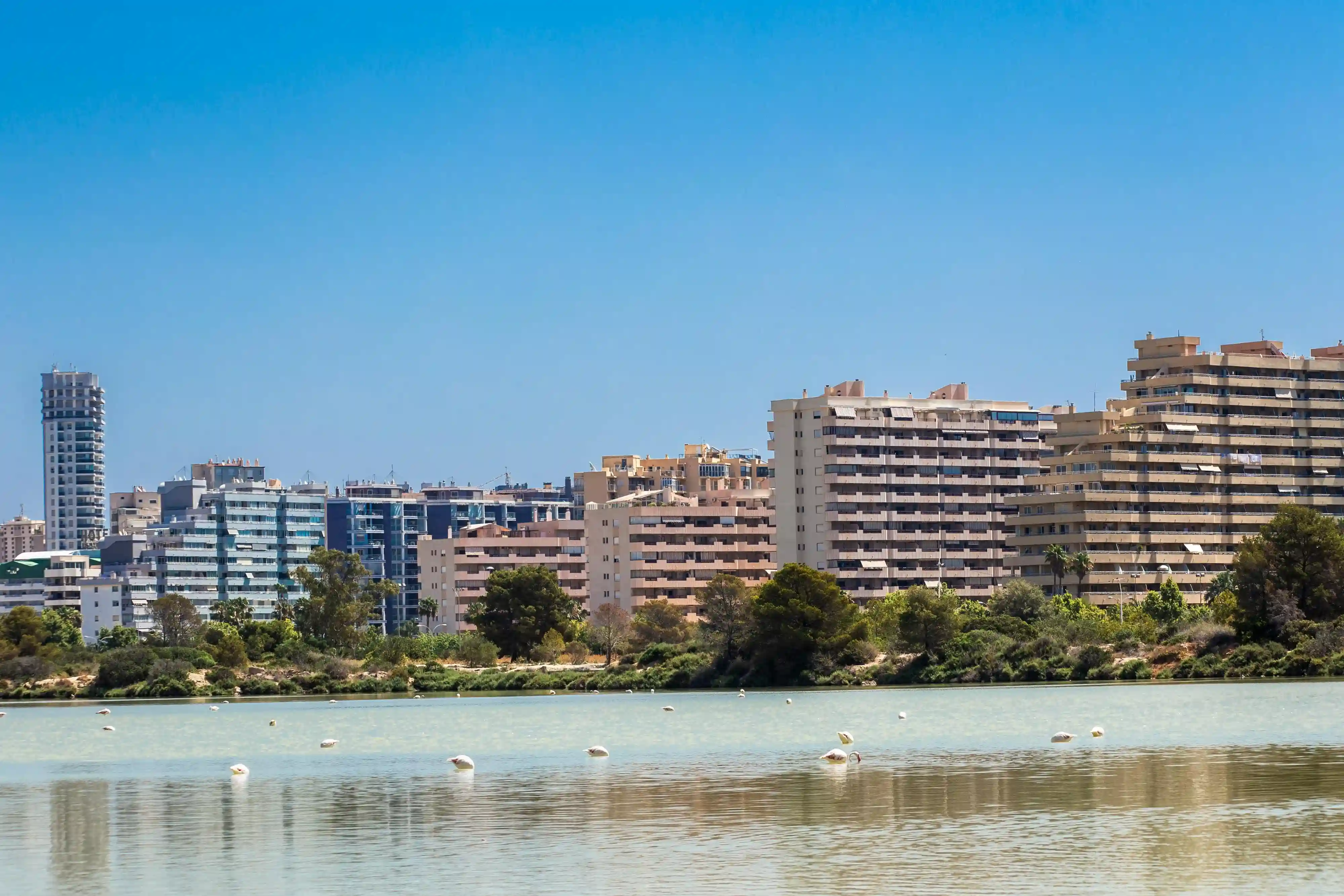
Fifty or sixty years ago, Torrevieja was a small fishing village in the south of the province of Alicante. Today it's a town of 110,500 residents — 52 percent of them foreigners. 123 nationalities. Ukrainians, Russians, Colombians, Britons, Germans, Poles. If you search for 'moving to Torrevieja', you won't find romantic stories about fishing-village charm — but a tough, international place that has sprung up over the past decades. High-rise blocks, beach developments, supermarkets, beach bars. It isn't postcard Spain. But it works.
What makes Torrevieja particularly attractive for newcomers: the infrastructure is entirely geared to expats. Doctors, lawyers, tax advisers and tradespeople who speak English, German and other languages — when you arrive, you hardly need any Spanish at first. That's an advantage for getting started. In the long run it's a question of your own ambitions: if you really want to integrate, you have to make an effort to get out of the bubble.
Flamingos, salt lakes & nature reserve — what truly sets it apart
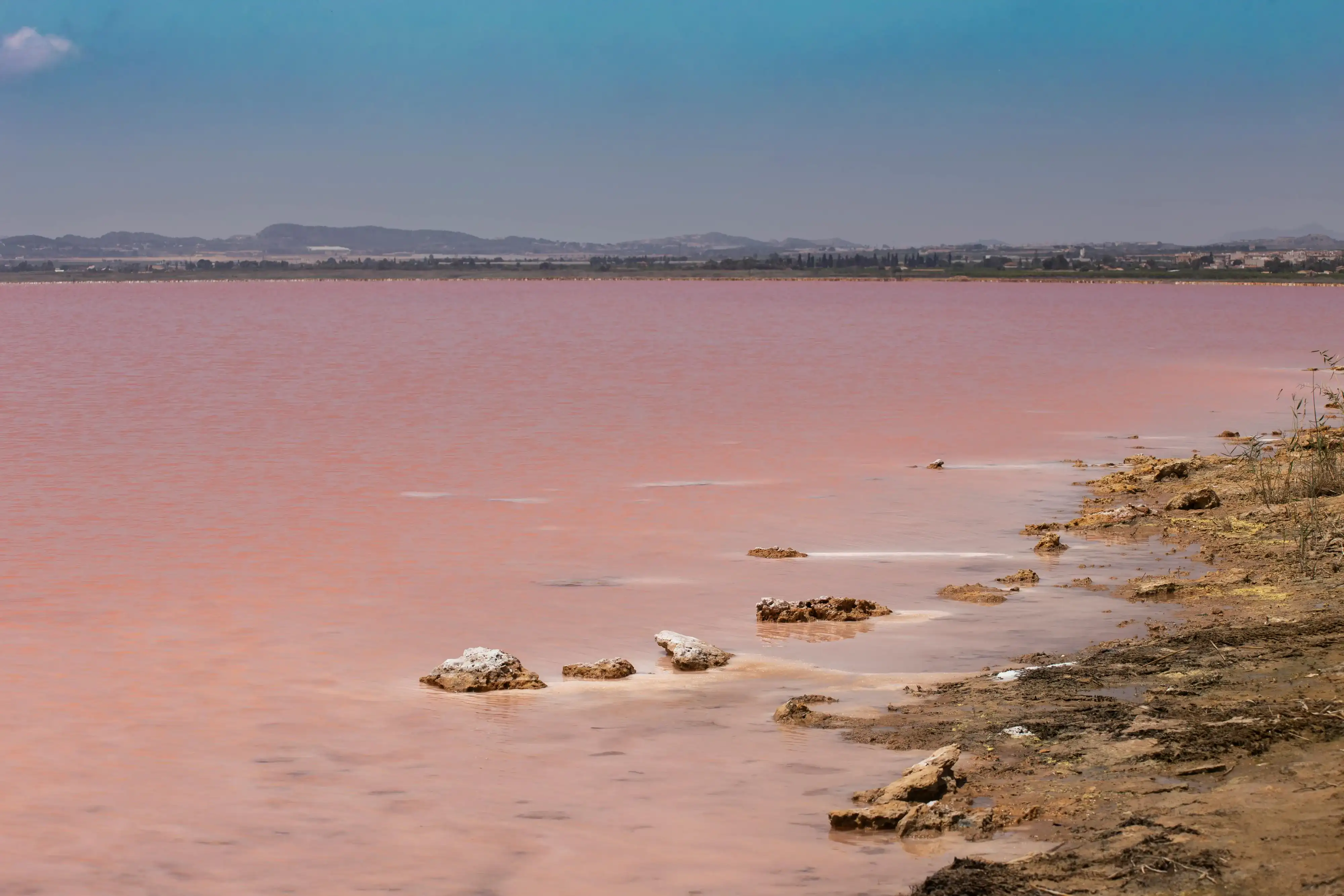
The natural spectacle around Torrevieja is unique on the entire Mediterranean coast. The Parque Natural de Las Lagunas de La Mata y Torrevieja covers 3,700 hectares — a lagoon that glows pink, its colour coming from salt-loving algae and bacteria, and a sanctuary for up to 8,000 flamingos per season. Post a photo and the likes keep coming. Go for a walk there and you understand why people move to Torrevieja.
Incidentally, the flamingos don't respect town boundaries. The neighbouring Parc Natural de les Salines de Santa Pola north of Torrevieja is another important flamingo hotspot, with 2,500 hectares of salt flats. If you want to see flamingos in southern Spain, this 30-kilometre strip between Santa Pola and Torrevieja is exactly the right place. Then there is the climate: the iodine-rich salty air is widely regarded as good for the respiratory tract — some people move here specifically because of asthma or bronchitis.
The honest truth about Torrevieja — ghost town, beaches and food
Here's the version without the sugar-coating: from November to April, Torrevieja's waterfront looks like a ghost town. The big apartment blocks — some with 80 to 100 apartments per building — are shuttered, not a soul, no lights. If you live only in the centre or on the beach promenade, you feel it. Residents of areas such as Los Balcones or Los Altos notice it less — everyday life goes on there all year. But the romantic idea of a lively seaside town in winter doesn't exist here.
Food in Torrevieja is a mixed bag. There are really good restaurants — fresh fish, local cooking, honest food. But there's also a lot that can only be described as tourist fare: reheated ready meals, greasy fried breakfasts, pizza for €4. If you want to eat well in Torrevieja, you need to know where to go or ask. The beaches are smaller than their reputation and extremely crowded in summer. A real old town like Alicante, Elche or Altea — it doesn't exist. The promenade by the harbour is nice, but that's it.
“Torrevieja isn't the prettiest place on the Costa Blanca — that would be a lie. No real old town, food ranging from world-class to tourist junk, almost deserted in winter. But: affordable, international, lively — and the salt lakes with the flamingos are a genuine natural wonder. Every place has its crowd. Torrevieja has its own.”
Carlo Reuss — 22 years living abroad, 10 of them in Spain
Nightlife, the new harbour and what Torrevieja does well
What Torrevieja does really well: nightlife. Together with Benidorm, Torrevieja is the strongest nightlife spot on the Costa Blanca. Beach bars stay open until the early hours, there are clubs that play all night, live music by the water, summer festivals. If you're 25 and see your move to Spain as a party adventure, you'll be very happy here. Smaller coastal towns simply don't offer this.
On top of that, a real plus is taking shape right now: Torrevieja harbour is being completely rebuilt. The leisure and dining centre 'Paseo del Mar' at the harbour opened in June 2026 — with around 27 venues and a cinema; further work around the harbour is still under way. Once the harbour is finished, Torrevieja's waterfront will look completely different. Buy now and you buy before the upgrade.
Living in Torrevieja — neighbourhoods, prices, property market
If you want to rent a flat in Torrevieja, you'll find the largest supply on the Costa Blanca — and the lowest prices. A two-bedroom flat on a long-term let costs between €600 and €1,100, towards the top in the centre and considerably less in Los Balcones or Los Altos. If you want to buy, prices start at around €60,000 to €80,000 for apartments from the 1980s and 1990s. New developments in better locations cost more, but even there Torrevieja is cheaper than Alicante, Dénia or Calpe.
The most popular areas with foreign residents: Los Balcones and Los Altos (quiet, slightly elevated, active all year), La Mata (a small beach village to the north with a relaxed atmosphere), and the town itself for anyone who wants to walk everywhere. If you're looking for an electrician, plumber, painter or other tradesman in Torrevieja, these are the areas where most providers used to working with foreign clients are based.
NIE, residency and everyday life in Torrevieja
Applying for your NIE in Torrevieja and registering as a resident is done through the Policía Nacional in Torrevieja. Because of the huge number of newcomers (52% foreign residents means a constant stream of NIE applications), book your appointment early. A gestoría in Torrevieja usually handles the process smoothly — there are several options locally that work in languages other than Spanish.
In everyday terms Torrevieja is well equipped: Mercadona, Lidl, Aldi, MediaMarkt within 20 minutes (Carrefour Torrevieja), the Hospital de Torrevieja, several private clinics and doctors who speak other languages. Alicante airport is 30 minutes away — ideal for anyone who flies home regularly. The Polish community in Torrevieja is growing fast, by the way — one of the fastest-growing expat communities on the entire Costa Blanca right now.
If you're not an EU citizen (UK, US …)
- Visiting is not living: without a visa you can stay in the Schengen area for up to 90 days in any 180-day period. Time spent on a Spanish residence permit or long-stay visa doesn't count towards that limit.
- To live in Torrevieja you need a Spanish visa or residence permit before you move — for example the non-lucrative residence visa, the digital nomad (international teleworking) visa or a work visa. Once in Spain you get your foreigner identity card, the TIE, from the Policía Nacional.
- UK nationals resident in Spain before 2021 are covered by the Withdrawal Agreement. The UK and Spanish governments recommend swapping the old green residency certificate for a TIE, which border staff recognise as proof of residence.
- Buying property no longer gives you residence: Spain ended the "golden visa" for property investors on 3 April 2025.
More in our guides to residency in Spain and the NIE number.
Sources (checked November 2026): GOV.UK – Spain entry requirements · GOV.UK – Spain: register your residency · La Moncloa – end of the golden visa. Rules change — check the current requirements before you apply.
Questions about Torrevieja?
New requests via the consultation page are currently paused — the page has the details.
Consultation page🏡 Buying support
Buying property in Torrevieja? How personal support works, from the search to the keys.
Learn moreQuick links
Everything you need for Torrevieja
From planning to everyday life — all the key topics for your move
📋
🪪
🏡
🚗
🏥
💼
💶
🔌
⚖️
Get your NIE number
The first step — without an NIE nothing works in Spain.
Register as a resident
When you have to register and how it works — EU and non-EU.
Buying property
Buying property in Spain explained step by step.
Register your car
Re-registering a car in Spain — process, costs, deadlines.
Health insurance
Public or private — what really applies in Spain.
Self-employed in Spain
Autónomo or SL — explained step by step.
Taxes in Spain
What you pay tax on as a resident.
Electricity & gas
Setting up utility contracts quickly and without stress.
Lawyer & gestoría
When you need help and where to find it.
What's on
Events & weekly markets in Torrevieja
Markets, fiestas and events in your area
🛒
Fri 20 Nov
8 am – 2 pm
Torrevieja Friday Market
📍 Torrevieja · Avenida Delfina Viudes /...
🛒
Fri 20 Nov
3 pm – 8 pm
Los Montesinos Afternoon Market
📍 Los Montesinos · Calle Santos Médicos
🛒
Fri 20 Nov
8 am – 2 pm
Pilar de la Horadada Market
📍 Pilar de la Horadada · Avenida Reina Sofía /...
🎨
Fri 20 Nov
10 am – 10 pm
Torrevieja Hippie Market
📍 Torrevieja · Avenida de la Estación 26...
🛒
Sat 21 Nov
8 am – 2 pm
Playa Flamenca Market (La Zenia / Orihuela Costa)
📍 Orihuela Costa · Calle Nicolás de Bussi (La...
🛒
Sat 21 Nov
8 am – 2 pm
San Fulgencio Saturday Market
📍 San Fulgencio · Calle Mar Jónico...
🎨
Sat 21 Nov
10 am – 10 pm
Torrevieja Hippie Market
📍 Torrevieja · Avenida de la Estación 26...
🎨
Sun 22 Nov
10 am – 10 pm
Torrevieja Hippie Market
📍 Torrevieja · Avenida de la Estación 26...
🛒
Fri 20 Nov
8 am – 2 pm
Torrevieja Friday Market
📍 Torrevieja · Avenida Delfina Viudes /...
🛒
Fri 20 Nov
3 pm – 8 pm
Los Montesinos Afternoon Market
📍 Los Montesinos · Calle Santos Médicos
🛒
Fri 20 Nov
8 am – 2 pm
Pilar de la Horadada Market
📍 Pilar de la Horadada · Avenida Reina Sofía /...
🎨
Fri 20 Nov
10 am – 10 pm
Torrevieja Hippie Market
📍 Torrevieja · Avenida de la Estación 26...
🛒
Sat 21 Nov
8 am – 2 pm
Playa Flamenca Market (La Zenia / Orihuela Costa)
📍 Orihuela Costa · Calle Nicolás de Bussi (La...
🛒
Sat 21 Nov
8 am – 2 pm
San Fulgencio Saturday Market
📍 San Fulgencio · Calle Mar Jónico...
🎨
Sat 21 Nov
10 am – 10 pm
Torrevieja Hippie Market
📍 Torrevieja · Avenida de la Estación 26...
🎨
Sun 22 Nov
10 am – 10 pm
Torrevieja Hippie Market
📍 Torrevieja · Avenida de la Estación 26...
Torrevieja — an honest overview
Pros and cons from real life — not marketing
Advantages of Torrevieja
✓
Lowest property prices on the entire Costa Blanca (from €60,000)
✓
Pink salt lakes with up to 8,000 flamingos — a unique natural spectacle
✓
52% foreign residents — instant community, instant network
✓
Salty sea air — widely regarded as good for the airways
✓
30 minutes to Alicante airport (ALC)
✓
Strong nightlife — beach bars until the early hours, clubs, live music
✓
Harbour being redeveloped — Paseo del Mar leisure centre open since June 2026
Worth knowing
!
No real old town — no promenade quarter like Alicante, Elche or Altea
!
November to April: ghost town — high-rise blocks shuttered, hardly any life
!
Very mixed food: alongside good places, a lot of pure tourist fare
!
Beaches rather small, scattered and extremely crowded in summer
!
The town itself isn't pretty — not postcard Spain
!
With so many foreign residents, little integration into real Spanish life
Housing market in Torrevieja
Current market prices for buying and long-term renting in Torrevieja and the surrounding area. All figures are guide values — location, condition and sea views have a big effect on the price.
Rent, 1-bed flat
€450–750/month
Rent, 2-bed flat
€600–1,100/month
Buy from
from €60,000
Buy, price per m²
€900–2,000/m²
Best buyer's market on the Costa Blanca — large supply, good negotiating position, many holiday homes on the market.
Buying property in Torrevieja
Buying property in Spain involves a few things to watch: the NIE number, a land registry extract, checking the property is free of debts and charges, the notary — and budgeting 10–13% for purchase costs on top of the price. Our buying guide explains each step.
Compare other areas
The Costa Blanca has many faces — discover more towns
Frequently asked questions about Torrevieja
From real life — the questions we hear most often
Is Torrevieja really a ghost town in winter?
Yes — and that's not a cliché. From November to April most of the big apartment blocks on the waterfront are closed. People who live here permanently know this and know how to deal with it. The centre and residential areas such as Los Balcones or Los Altos stay active — but the beach promenade sleeps.
Why are the salt lakes in Torrevieja pink?
The pink colour comes from a special alga (Dunaliella salina) and carotenoid-producing bacteria that thrive at high salt concentrations. The Parque Natural de Las Lagunas de La Mata y Torrevieja is one of the most important flamingo sites in southern Europe — up to 8,000 birds rest here. The flamingos don't respect town boundaries: the neighbouring Salinas de Santa Pola nature reserve is another hotspot.
How many foreigners live in Torrevieja?
As of January 2026, 110,500 people live in Torrevieja — 52% of them foreign nationals. That's one of the highest shares in Spain. The largest groups: Ukraine (10,074), Russia (5,926), Colombia (5,141), the United Kingdom (4,708). In total, 123 nationalities are represented.
When will the new harbour in Torrevieja be finished?
Torrevieja harbour is currently being completely rebuilt. The new leisure and dining centre Paseo del Mar has been open since June 2026; further work around the harbour is still under way. Once everything is finished, the harbour will be one of the most attractive on the whole Costa Blanca — comparable with Alicante or Valencia.
What's missing in Torrevieja?
A real old town to stroll around. A beautiful historic centre like Alicante, Elche or Altea — it doesn't exist. If you move to Torrevieja and want historic architecture, museums or a lively, high-quality restaurant quarter, you have to drive to Alicante (30 minutes).
Are there good tradespeople and service providers in Torrevieja?
Yes — because of the large foreign population, many tradespeople used to working with foreign clients have settled in the area. You'll find electricians, plumbers, painters and renovation firms in Torrevieja who speak English, German and other languages. Quality varies a lot — recommendations from the community are worth their weight in gold.
Where can I find an electrician or plumber in Torrevieja?
Electricians, plumbers and other tradespeople in Torrevieja are best found through recommendations from the local international community or expat groups. Our directory and our guides to tradespeople and electricians are a good starting point. Always ask for a written quote (presupuesto).
What does it cost to move to Torrevieja?
A removal from central Europe (from Germany, for example) costs between €2,000 and €6,000, depending on the volume of your household. On top of that come registration costs (NIE, residency), a possible rental deposit and, if you buy, notary and purchase costs. Careful planning pays off.
Tradespeople & services in Torrevieja
Guides to finding local services on the Costa Blanca
🔌Electricians
🔧Plumbing & pools
🏗️Tradesmen
🚛Removals to Torrevieja
🏥Health insurance
⚖️Lawyer & gestoría
💼Taxes in Spain
🏡Estate agents
📒Local directory
Looking for an electrician, plumber or tradesman in Torrevieja?
Whether it's an electrician in Torrevieja, a plumber, a painter or help with your move — finding the right contacts is the hardest part. Recommendations from the local community are worth a lot; our directory and service guides are a good place to start. Always ask for a written quote (presupuesto) before work begins.
Browse the directory →Ready for your life in Torrevieja?
From the NIE number to moving in — our guides take you through every step, based on 22 years living abroad, 10 of them in Spain.
Personal questions: new requests via the consultation page are currently paused.