
Region guide
Moving to Dénia
on the Costa Blanca
Green north, big heart — the most expensive and most beautiful corner of the Costa Blanca
Ask a questionPlease note: new requests via the consultation page are currently paused.
47,000
Residents
1 hr
to Valencia airport
from €160k
Apartment prices
300
Sunny days a year
47,000
Residents
1 hr
to Valencia airport
from €160k
Apartment prices
300
Sunny days a year
Updated 20 November 2026 · About the author →
Living in Dénia — what to really expect
Dénia lies at the very north of the Costa Blanca — practically the last town before the road heads towards Valencia. Beautifully set against the mountains, with ferries to Ibiza and Mallorca, excellent food and a well-established international community. But: it's the most expensive corner of the Costa Blanca, and the climate has a peculiarity you need to know about.
This page takes you through everything that matters: from the first idea to your NIE number, from the housing market to residency. All based on real knowledge from 22 years living abroad, 10 of them in Spain.
Dénia — the northernmost point of the Costa Blanca
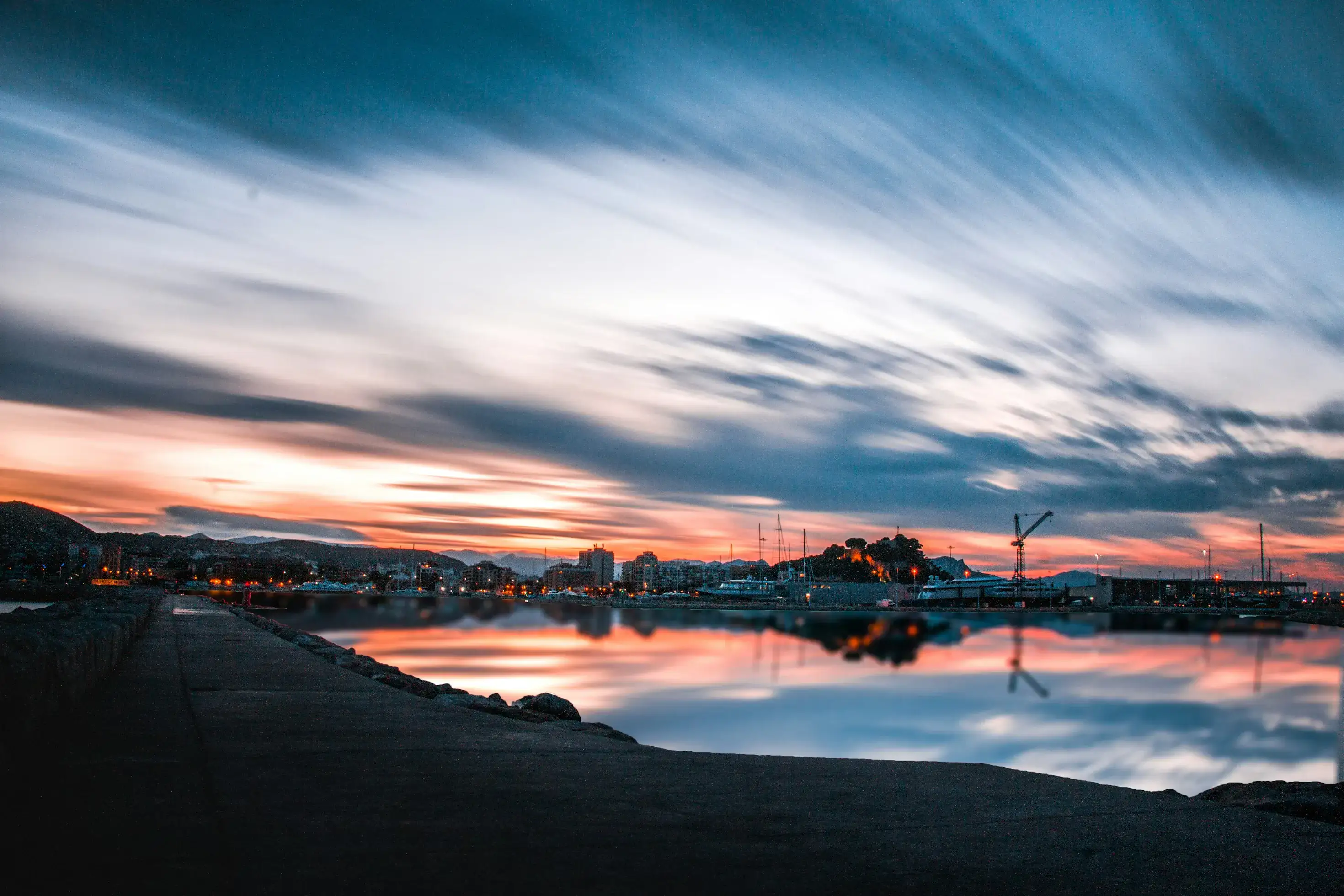
Drive up the Costa Blanca from south to north and at some point you notice: the air gets fresher, the mountains come closer, there's more green. Somewhere between Calpe and Jávea you reach the Marina Alta — and shortly afterwards Dénia. Practically the last town before the road heads towards Valencia. The town lies between the Montgó massif and the Mediterranean, has a harbour with ferry connections to the Balearic Islands and an old town that's simply easy to love.
The people who live here are mostly older — retirees from Germany, the UK, the Netherlands and elsewhere in northern Europe who have earned a peaceful, sunny retirement. And the infrastructure reflects that: relaxed restaurants, good medical care, clubs and societies, little nightlife. If that's what you're looking for, Dénia is perfect. If you want a big-city atmosphere — it isn't.
The climate in Dénia — green, beautiful and with one peculiarity
Dénia is noticeably greener than Alicante or Torrevieja. The mountains, the nature, the vegetation — that's no coincidence. The green comes from the rain. And the rain comes in the form of the DANA — the Depresión Aislada en Niveles Altos, also known as 'gota fría'. This weather phenomenon, an isolated upper-level low, hits the north of the Costa Blanca — Dénia, Calpe, Jávea — considerably more often and more intensely than the south. When it comes, it comes hard: floods, overflowing ramblas (dry riverbeds), flooded basements.
It sounds more dramatic than it is in everyday life — most years pass without problems. But if you buy in Dénia, check the flood map for the location and never buy a flat in a basement or a dip. 300 sunny days a year are still the rule — but you should know about this one exception.
Els Magazinos & Carrer de Loreto — Dénia dines differently
When it comes to food, Dénia is a world of its own. For years the town has been known as the gastronomic capital of the Costa Blanca — several Michelin stars in the area, fresh fish straight from the harbour and rice dishes like nowhere else. But the heart of it isn't the starred restaurant, it's Els Magazinos: a converted harbour warehouse of more than 3,000 square metres on the 'Calle de los Sabores', right by the water. Several floors, 20+ stalls and restaurants, fresh produce, local cooking — no plastic food-court feel, but real Spain.
If you prefer to sit outside, head to the Carrer de Loreto — the main pedestrian street that runs from the harbour to the foot of the castle. Restaurant after restaurant, terrace after terrace. Walk for five minutes and you've seen 30 or 40 places. In the evening the squares fill up, children play in the street and somewhere live music drifts through the lanes. This is the Dénia people mean when they say: this is where I want to grow old.
“Dénia is greener than the rest of the Costa Blanca — but the green doesn't come from nowhere. It comes from the rain. When a DANA arrives, it always heads straight here. That's the one thing you need to know before you move to Dénia.”
Carlo Reuss — 22 years living abroad, 10 of them in Spain
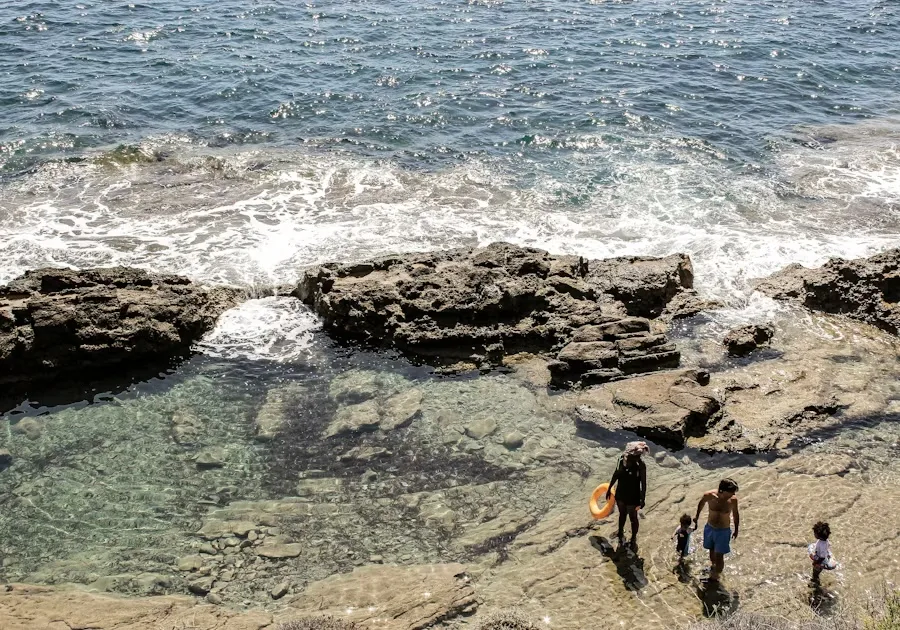
Living in Dénia — neighbourhoods, costs, rental market
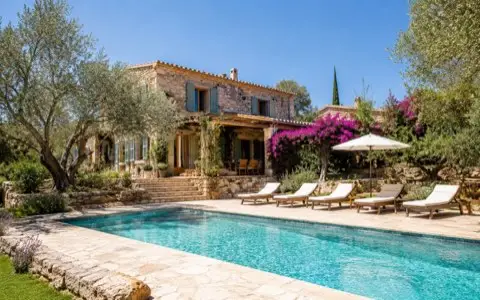
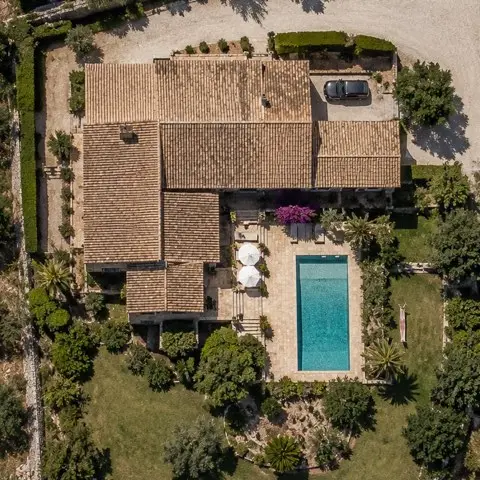
Dénia is expensive — that's the most honest thing you can say. The long-term rental market is tight because many owners prefer to let to tourists. A two-bedroom flat on a long-term let quickly costs €1,200–1,500, more in summer. If you want to buy, prices start at around €160,000 for smaller apartments — houses with a garden or sea views cost considerably more.
The most popular areas with foreign residents are Las Marinas (a quiet beach area to the north), Les Rotes (natural coastline to the south, rocky beaches) and the town itself for anyone who wants to walk everywhere. If you want more space for less money, go inland: Ondara, Pedreguer, El Verger — 10–15 minutes from Dénia — offer houses from €180,000 in surroundings that are still very Spanish.
Valencia airport, ferries and getting around
Dénia has no airport of its own — but two good options. Valencia airport (VLC) is about an hour away and has more connections to northern Europe: Scandinavia, the Netherlands, the UK. Depending on where you fly and the price, you choose between Valencia and Alicante (ALC, about 1.5 hours). In practice that works well — both airports are easy to reach by motorway.
What makes Dénia unique: the ferry. Ferries leave Dénia daily for Ibiza, Formentera and Mallorca — operated by the shipping company Baleària. If you want to holiday on the islands or visit friends, you simply drive to the port. Within the Costa Blanca, the TRAM line connects Dénia via Benidorm to Alicante — relaxed, cheap, with lovely views.
What Dénia isn't — and why that can be fine
Dénia is a small town. And the towns around it don't offer a big-city feel either. If you need a MediaMarkt, you drive to Valencia or Alicante. If you want to visit the oceanarium (the Oceanogràfic in Valencia is one of the largest in Europe), you go to Valencia. Concerts, festivals, a football stadium, IKEA, big shopping centres — all a longer drive. That's not a weakness if you know and accept it — it's a deal you enter into consciously.
People who move to Dénia have usually made a choice: nature, peace and good food rather than big-city amenities. Very few regret that decision. But it should be made consciously — not because Dénia isn't beautiful, but because wrong expectations are what cause most disappointments.
If you're not an EU citizen (UK, US …)
- Visiting is not living: without a visa you can stay in the Schengen area for up to 90 days in any 180-day period. Time spent on a Spanish residence permit or long-stay visa doesn't count towards that limit.
- To live in Dénia you need a Spanish visa or residence permit before you move — for example the non-lucrative residence visa, the digital nomad (international teleworking) visa or a work visa. Once in Spain you get your foreigner identity card, the TIE, from the Policía Nacional.
- UK nationals resident in Spain before 2021 are covered by the Withdrawal Agreement. The UK and Spanish governments recommend swapping the old green residency certificate for a TIE, which border staff recognise as proof of residence.
- Buying property no longer gives you residence: Spain ended the "golden visa" for property investors on 3 April 2025.
More in our guides to residency in Spain and the NIE number.
Sources (checked November 2026): GOV.UK – Spain entry requirements · GOV.UK – Spain: register your residency · La Moncloa – end of the golden visa. Rules change — check the current requirements before you apply.
Questions about Dénia?
New requests via the consultation page are currently paused — the page has the details.
Consultation page🏡 Buying support
Buying property in Dénia? How personal support works, from the search to the keys.
Learn moreQuick links
Everything you need for Dénia
From planning to everyday life — all the key topics for your move
📋
🪪
🏡
🚗
🏥
💼
💶
🔌
⚖️
Get your NIE number
The first step — without an NIE nothing works in Spain.
Register as a resident
When you have to register and how it works — EU and non-EU.
Buying property
Buying property in Spain explained step by step.
Register your car
Re-registering a car in Spain — process, costs, deadlines.
Health insurance
Public or private — what really applies in Spain.
Self-employed in Spain
Autónomo or SL — explained step by step.
Taxes in Spain
What you pay tax on as a resident.
Electricity & gas
Setting up utility contracts quickly and without stress.
Lawyer & gestoría
When you need help and where to find it.
What's on
Events & weekly markets in Dénia
Markets, fiestas and events in your area
🛒
Fri 20 Nov
8 am – 1 pm
Dénia Fresh Produce Market (Friday)
📍 Dénia · Calle La Vía
🛒
Fri 20 Nov
9 am – 2 pm
Gata de Gorgos Market
📍 Gata de Gorgos · Plaza Nueva
🛒
Fri 20 Nov
8 am – 2 pm
Moraira Market
📍 Moraira · Les Sorts market car park...
🏷️
Sat 21 Nov
9 am – 2 pm
Jalón Rastro – Antiques & Flea Market
📍 Jalón · Passeig de l'Alameda by...
🛒
Sat 21 Nov
8 am – 1:30 pm
Benissa Weekly Market
📍 Benissa · Glorieta Dolores Piera /...
🏷️
Sun 22 Nov
9 am – 2 pm
Dénia Rastro (Sunday Flea Market)
📍 Dénia · Mercat de l'Autocine
🏷️
Sun 22 Nov
9 am – 2 pm
Pedreguer Rastro (Sunday Flea Market)
📍 Pedreguer · Polígono Industrial Les Galgues
🛒
Mon 23 Nov
8 am – 1:30 pm
Dénia Weekly Market (Monday)
📍 Dénia · Explanada de Torrecremada
🛒
Fri 20 Nov
8 am – 1 pm
Dénia Fresh Produce Market (Friday)
📍 Dénia · Calle La Vía
🛒
Fri 20 Nov
9 am – 2 pm
Gata de Gorgos Market
📍 Gata de Gorgos · Plaza Nueva
🛒
Fri 20 Nov
8 am – 2 pm
Moraira Market
📍 Moraira · Les Sorts market car park...
🏷️
Sat 21 Nov
9 am – 2 pm
Jalón Rastro – Antiques & Flea Market
📍 Jalón · Passeig de l'Alameda by...
🛒
Sat 21 Nov
8 am – 1:30 pm
Benissa Weekly Market
📍 Benissa · Glorieta Dolores Piera /...
🏷️
Sun 22 Nov
9 am – 2 pm
Dénia Rastro (Sunday Flea Market)
📍 Dénia · Mercat de l'Autocine
🏷️
Sun 22 Nov
9 am – 2 pm
Pedreguer Rastro (Sunday Flea Market)
📍 Pedreguer · Polígono Industrial Les Galgues
🛒
Mon 23 Nov
8 am – 1:30 pm
Dénia Weekly Market (Monday)
📍 Dénia · Explanada de Torrecremada
Dénia — an honest overview
Pros and cons from real life — not marketing
Advantages of Dénia
✓
Greener, closer to nature — Montgó Natural Park on the doorstep
✓
Ferries to Ibiza, Mallorca and Formentera
✓
Valencia airport (1 hr) — more connections to northern Europe
✓
Pleasant to live in all year — no ghost town in winter
✓
Excellent food scene — Els Magazinos, Carrer de Loreto
✓
Well-established international community with its own networks
✓
Quiet and authentic — far less mass tourism than Benidorm
Worth knowing
!
Most expensive corner of the Costa Blanca — rents and prices noticeably higher
!
DANA torrential rain hits Dénia/Calpe more often than the south
!
Older residents dominate — little nightlife, little on offer for younger people
!
For anything bigger (MediaMarkt, aquarium, concerts) → Valencia or Alicante
!
Long-term rentals scarce — many owners prefer to let to tourists
Housing market in Dénia
Current market prices for buying and long-term renting in Dénia and the surrounding area. All figures are guide values — location, condition and sea views have a big effect on the price.
Rent, 1-bed flat
€750–1,200/month
Rent, 2-bed flat
€1,000–1,800/month
Buy from
from €160,000
Buy, price per m²
€2,000–4,500/m²
Limited supply of long-term rentals — holiday lets are squeezing the market. The inland towns (Ondara, Pedreguer) offer much more for your money.
Buying property in Dénia
Buying property in Spain involves a few things to watch: the NIE number, a land registry extract, checking the property is free of debts and charges, the notary — and budgeting 10–13% for purchase costs on top of the price. Our buying guide explains each step.
Compare other areas
The Costa Blanca has many faces — discover more towns
Frequently asked questions about Dénia
From real life — the questions we hear most often
Is Dénia really that expensive?
Yes — Dénia is the most expensive corner of the Costa Blanca. A two-bedroom flat on a long-term let easily costs €1,200–1,500. If you're flexible and look inland (Ondara, Pedreguer, El Verger), you'll find much cheaper houses with far more space.
What is a DANA and how dangerous is it for Dénia?
DANA stands for 'Depresión Aislada en Niveles Altos' — an isolated upper-level low that triggers extreme rainfall, also known as 'gota fría'. The downpours hit the north of the Costa Blanca — Dénia, Calpe, Jávea — considerably more often and harder than the south. Flooding in basements or underground car parks is possible. When buying property, always check the flood risk of the location.
Which airport is better — Valencia or Alicante?
Valencia (VLC, about 1 hour) is closer. Alicante (ALC, about 1.5 hours) is the bigger airport, with more routes to the UK, Germany and northern Europe, many of them low-cost. In practice, people in Dénia use both — depending on the destination and the price.
Is Dénia a good choice for younger people moving abroad?
Not as a first choice. The population is mostly older — retirees and expats looking for peace and quiet. Infrastructure, restaurants and clubs are geared to them. If you're under 45 and looking for city life, nightlife or young networking, Alicante is a better fit.
What's missing in Dénia?
If you ever need a MediaMarkt, a large aquarium, a shopping centre or a stadium-size concert, you drive to Valencia or Alicante. Dénia is a small town — and the towns around it don't offer a big-city feel either. That is both its charm and its limitation.
Is there an international community in Dénia?
Yes — one of the most established on the whole Costa Blanca, with large German-speaking, British and Dutch communities. Doctors, lawyers, gestorías and clubs used to foreign residents are all available. Newcomers quickly find their feet.
Where can I find an electrician or plumber in Dénia?
Electricians, plumbers and other tradespeople in Dénia are best found through recommendations from the local international community or expat groups. Our directory and our guides to tradespeople and electricians are a good starting point. Always ask for a written quote (presupuesto).
What does it cost to move to Dénia?
A removal from central Europe (from Germany, for example) costs between €2,000 and €6,000, depending on the volume of your household. On top of that come registration costs (NIE, residency), a possible rental deposit and, if you buy, notary and purchase costs. Careful planning pays off.
Tradespeople & services in Dénia
Guides to finding local services on the Costa Blanca
🔌Electricians
🔧Plumbing & pools
🏗️Tradesmen
🚛Removals to Dénia
🏥Health insurance
⚖️Lawyer & gestoría
💼Taxes in Spain
🏡Estate agents
📒Local directory
Looking for an electrician, plumber or tradesman in Dénia?
Whether it's an electrician in Dénia, a plumber, a painter or help with your move — finding the right contacts is the hardest part. Recommendations from the local community are worth a lot; our directory and service guides are a good place to start. Always ask for a written quote (presupuesto) before work begins.
Browse the directory →Ready for your life in Dénia?
From the NIE number to moving in — our guides take you through every step, based on 22 years living abroad, 10 of them in Spain.
Personal questions: new requests via the consultation page are currently paused.