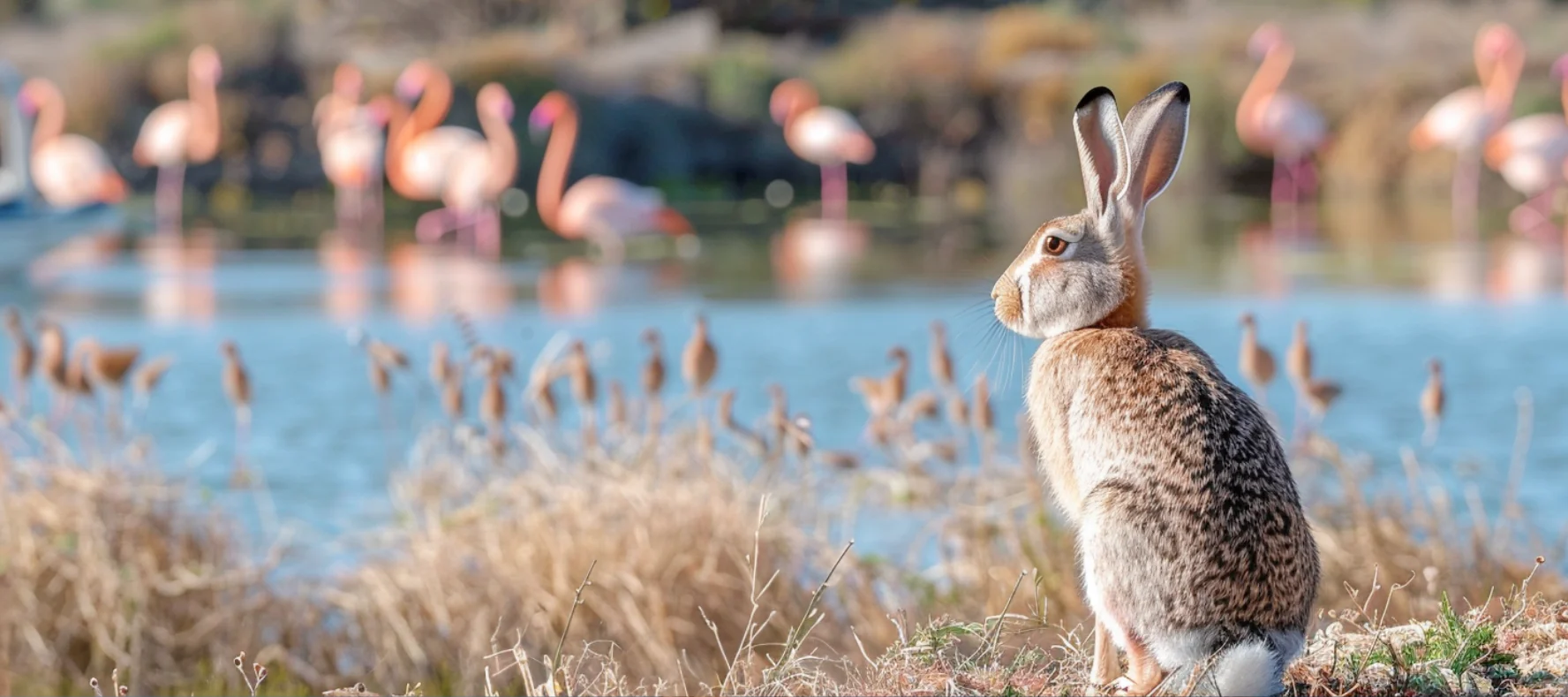
The Costa Blanca doesn't just offer dream beaches and a mild climate – it is also home to a surprisingly diverse wildlife. Whether in the mountains near Alcoy, the salt lagoons of Torrevieja, the orange groves near Crevillente or the hinterland of Murcia – if you go through the region with your eyes open, you'll discover animals you wouldn't expect here: tortoises in your own garden, free-flying parrots, flamingos in pink flocks, vultures in the sky and genets at night.
This article gives you a comprehensive overview of the most fascinating animal species on the Costa Blanca – arranged by animal group, with real sightings and special places to see them.
Reptiles – tortoises, geckos & co.
🐢 Spur-thighed tortoises (Testudo graeca) – wild in the garden
Especially in dry, stony areas around Crevillente, Aspe, Hondón de las Nieves or Albatera, a wild tortoise may suddenly turn up in your garden. They are usually shy, move slowly and like to hide under bushes or in cracks in walls.
These animals are strictly protected – never catch them or keep them as pets!
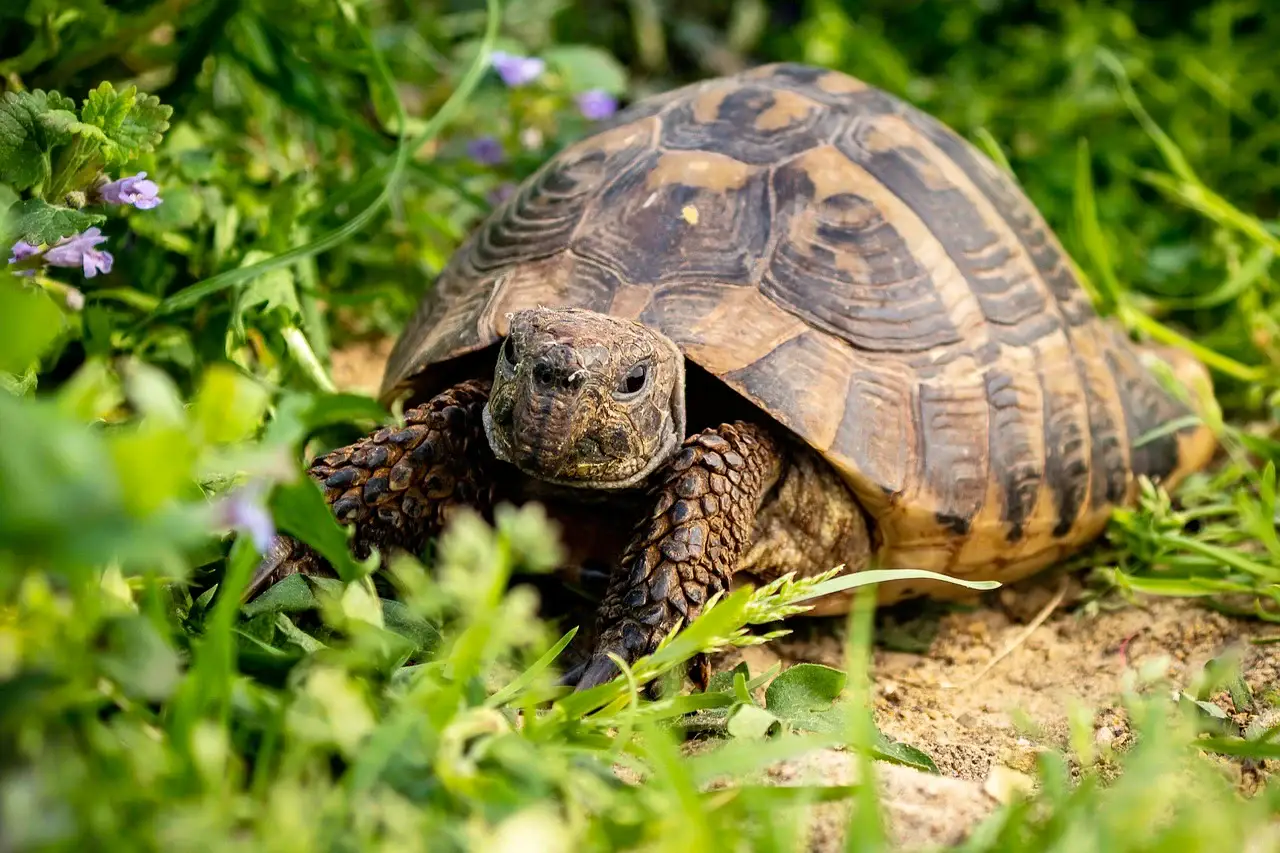
Spur-thighed tortoise (Testudo graeca)
- Where to see it: Crevillente, Aspe, Albatera, rural fincas
- When active: Spring to autumn, during the day (in sunshine)
- Size: Shell length up to 25 cm
- Special feature: Strictly protected – do not touch or take away
- Threats: Road traffic & illegal collection
- Tip: Stay calm, watch & take a photo
🦎 Wall lizards & geckos – the secret insect hunters
The most typical reptiles on the coast are lizards – you'll see them on every warm stone wall, e.g. in Denia, Altea, La Nucía or around old fincas. Houses are often home to Mediterranean house geckos, which hunt mosquitoes at night – natural "insect control".
🐍 Snakes – harmless and rare
In remote areas such as the Sierra de Crevillente or the Font Roja near Alcoy you may (very rarely!) come across grass snakes or smooth snakes – but don't worry: venomous snakes are extremely rare on the Costa Blanca and shy.
Birds – from flamingos to parrots
🦩 Flamingos – pink guests in Santa Pola & Torrevieja
Every year thousands of flamingos stop over in the salt lagoons near Torrevieja and in the Las Salinas de Santa Pola Natural Park. A breathtaking sight, especially in the early morning.
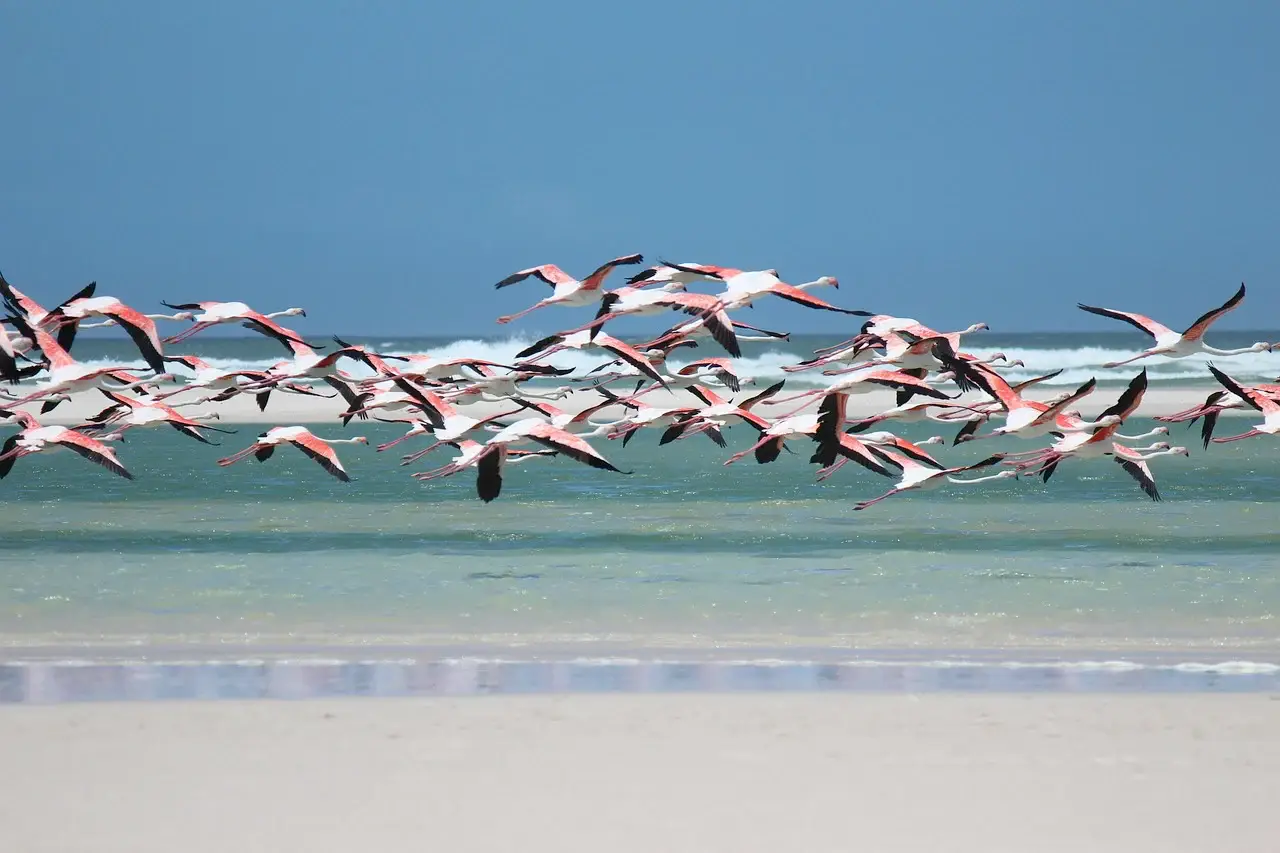
Greater flamingo (Phoenicopterus roseus)
- Where to see it: Salinas de Santa Pola, Laguna de Torrevieja, El Hondo
- When active: All year round, largest flocks from March to October
- Size: Up to 150 cm tall, wingspan up to 165 cm
- Colour: Pink from carotenoids in brine shrimp & algae
- Diet: Filter feeders – they filter tiny organisms out of the water with their beaks
- Special feature: Often stand on one leg – to regulate body heat
- Numbers: Visible in flocks of sometimes more than 1,000 birds
- Tip: Best watched early in the morning or late in the evening with binoculars
🦜 Parrots in the palm trees of Alicante
In urban areas such as Alicante, Elche or Orihuela Costa there are feral monk parakeets. They build huge nests in palm trees and are impossible to miss – loud, colourful and exotic.
🦅 Birds of prey – wildlife watching in the mountains
In the Sierra de Mariola, the Sierra del Maigmó or the mountains near Petrer, with a bit of luck you can see buzzards, goshawks or griffon vultures circling in the sky. Tip: a good pair of binoculars is worth it!
🦇 Bats – silently through the night
In summer you'll see them almost everywhere – especially over pools or plantations. They are particularly active in rural areas around Dolores, Catral or Callosa de Segura.
Discover the climate & weather on the Costa Blanca
Find out all about the Mediterranean climate – the perfect basis for the region's rich wildlife.
Read the climate guide →Mammals – secretive, nocturnal & surprising
🐇 Rabbits & hares – everywhere in the countryside
Whether between Crevillente and Elche or near San Vicente del Raspeig – wild rabbits hop through olive groves, plantations and along roadsides here – they are the animals you'll see most often. The Iberian hare is rarer and noticeably larger. Dusk is the best time to see both.
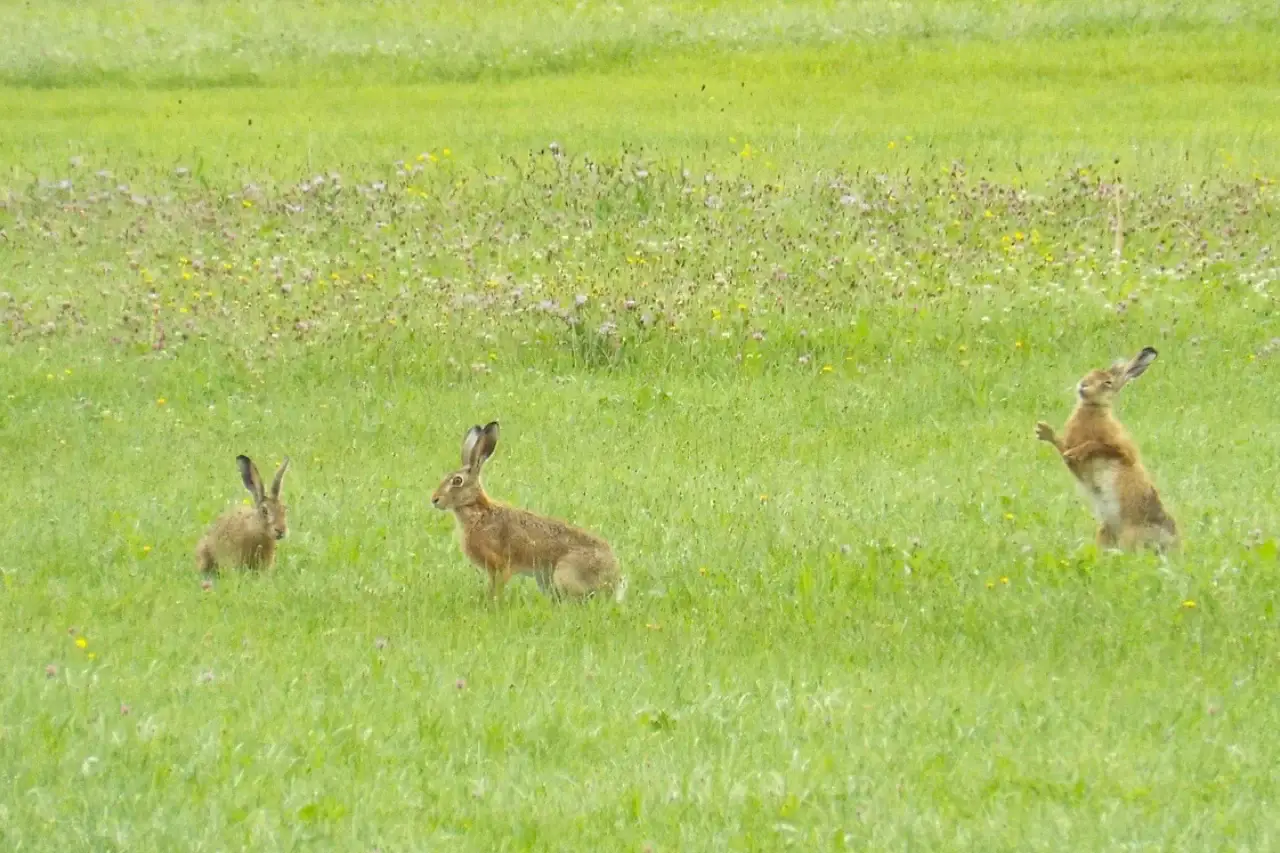
Wild hare (Lepus granatensis – Iberian hare)
- Where to see it: Crevillente, Elche, Vega Baja, dry fields, plantations & verges
- When active: Dusk & night – usually very active in spring and late summer
- Size: usually around 1.5–3 kg – smaller than the European brown hare
- Special feature: Very fast and agile when fleeing
- Predators: Birds of prey, foxes, stray dogs & humans (hunting)
- Breeding: Several litters a year with 2–5 young (from February to October)
- Lifespan: Usually only 3–5 years in the wild
- Population: Widespread; the animal regarded as an agricultural pest in the region, however, is mainly the wild rabbit – the regional government keeps an official list of municipalities with rabbit overpopulation (including Alicante)
- Behaviour: Well hidden during the day in hollows or under bushes
- Tip: Best spotted at sunrise on quiet farm tracks or country roads
🐆 Genets – nocturnal hunters
A real insider tip: the common genet (Genetta genetta) is a nocturnal predator occasionally sighted in the Sierra de Crevillente or near Jijona. It looks like a small wildcat with a long tail and spotted fur.
🐗 Wild boar – hidden in the mountains
Wild boar live in remote areas such as the Sierra de Bernia, Guadalest or the hinterland of Murcia. They usually only come out of the woods at night – but there have also been sightings at rubbish dumps and fincas.
🦔 Hedgehogs – night-time visitors in the garden
Especially in spring and autumn they wander through gardens at night looking for food. They are particularly common in quiet residential areas such as La Marina, Ciudad Quesada or Rojales.
Insects & co. – the little stars
🦂 Scorpions – rare but present
In dry, rocky areas – e.g. in the hinterland of Orihuela, Fortuna or Redován – there are small, non-dangerous scorpions. Hidden during the day, active at night. Easy to spot only with UV light.
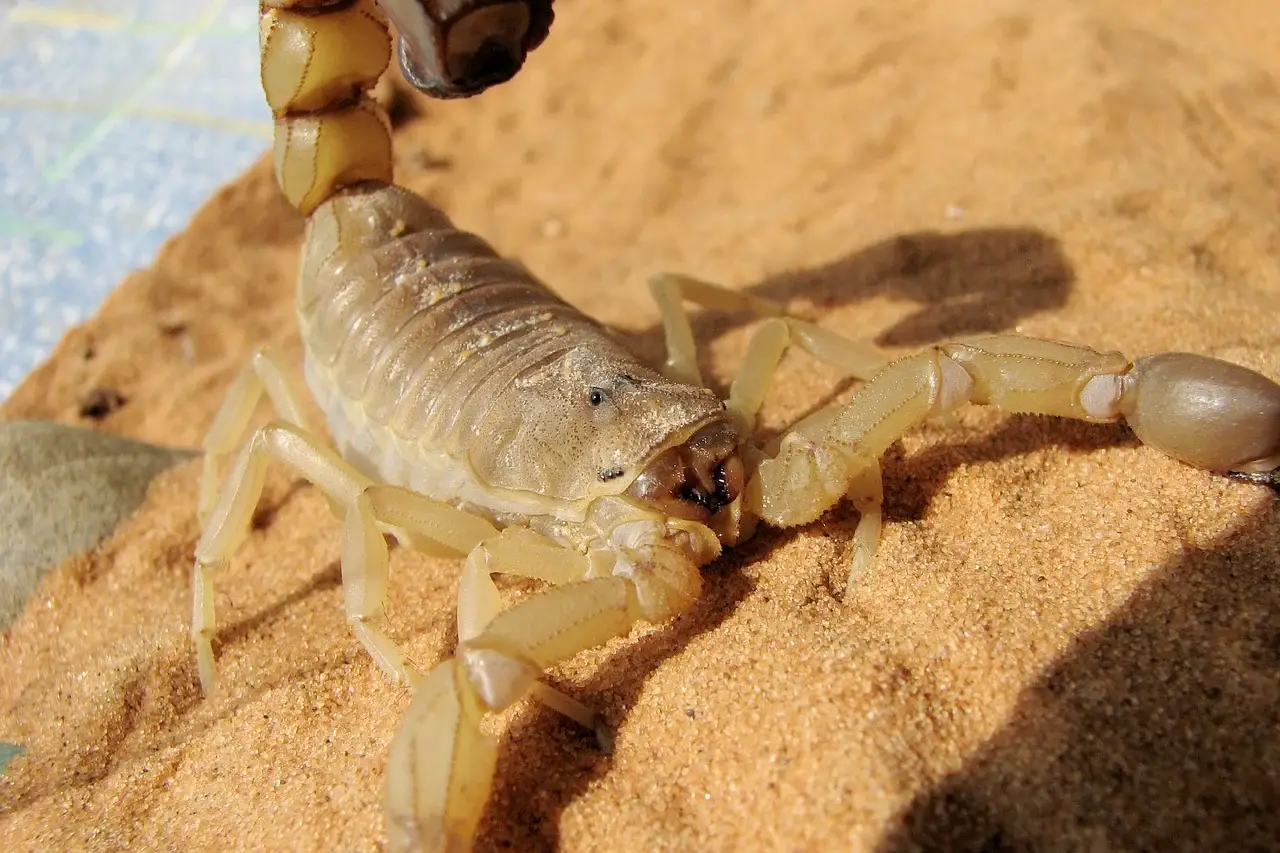
Scorpion (Buthus occitanus – common yellow scorpion)
- Where to see it: Rocky areas, cracks in walls, dry-stone walls – e.g. near Crevillente, Fortuna, Orihuela
- When active: March to October, mainly at night
- Size: Up to 7 cm long (without the sting extended)
- Venom: Mildly venomous – comparable to a strong wasp sting
- Danger to humans: Only a problem for people with allergies – harmless for healthy adults
- Behaviour: Avoids people, only stings on direct contact (e.g. in shoes or under stones)
- How to recognise it: Glows greenish under UV light – ideal for finding them at night
- Population: Common locally but rarely seen – nocturnal & well hidden
- Tip: Always turn shoes left outside overnight upside down, take care with stones & woodpiles
🐝 Bees, wasps & hornets
The Costa Blanca has numerous species of wild bee, and sometimes wild honeybees in old walls. In summer, however, wasps and occasionally hornets are also an issue – especially in open gardens.
✨ Fireflies & butterflies
In wetter areas such as El Hondo Natural Park or the Vega Baja marshes you can see spectacular butterflies and even fireflies in spring.
The underwater world of the Costa Blanca – from octopus to shark
The Costa Blanca is rich in species not only above water – there's a fascinating world beneath the surface of the Mediterranean too. Especially along rocky coasts, near seagrass meadows or in sheltered coves between Javea, Altea, Tabarca, Santa Pola or the salt lagoons of Torrevieja, you can discover numerous sea creatures when snorkelling or diving.
🐙 Octopus & cuttlefish – clever masters of disguise
Especially in rocky coves such as Cala Portitxol (Javea) or Cala del Moraig (Benitachell), with a bit of luck you may come across an octopus. They hide between rocks and change colour in a flash. Smaller cuttlefish are also seen regularly – especially in spring and late summer.
🐟 Fish while snorkelling – colourful variety close to the shore
All along the Costa Blanca you can watch many typical Mediterranean fish while snorkelling or even from a boat:
- Salema (shoals of yellow-striped fish)
- Grey mullet, which like to gather in harbours (e.g. Torrevieja, Denia)
- Brightly coloured wrasse
- Sea bass, groupers and occasionally even moray eels in deeper rocky coves
The best snorkelling spots are:
- Isla de Tabarca – a marine reserve since 1986 and, alongside Cap de Sant Antoni between Dénia and Jávea, the best known in the region
- Cala Ambolo (Javea) – clear water, lots of rocky hiding places
- Cala Ferris (Torrevieja) – lined with palm trees and popular with families
🦈 Sharks on the Costa Blanca – rare, but real
Media reports about shark sightings on the Costa Blanca do the rounds every now and then. Even though they are extremely rare, the following species really do belong to the Mediterranean – and have occasionally been sighted here:
- Blue shark (Prionace glauca) – hardly a danger to swimmers, usually lives out at sea
- Small-spotted catsharks – harmless, nocturnal, often on the seabed
Important: shark incidents involving swimmers are extremely rare on Spain's Mediterranean coast. Even so, sightings (mostly by fishermen) are a fascinating part of the region's biodiversity.
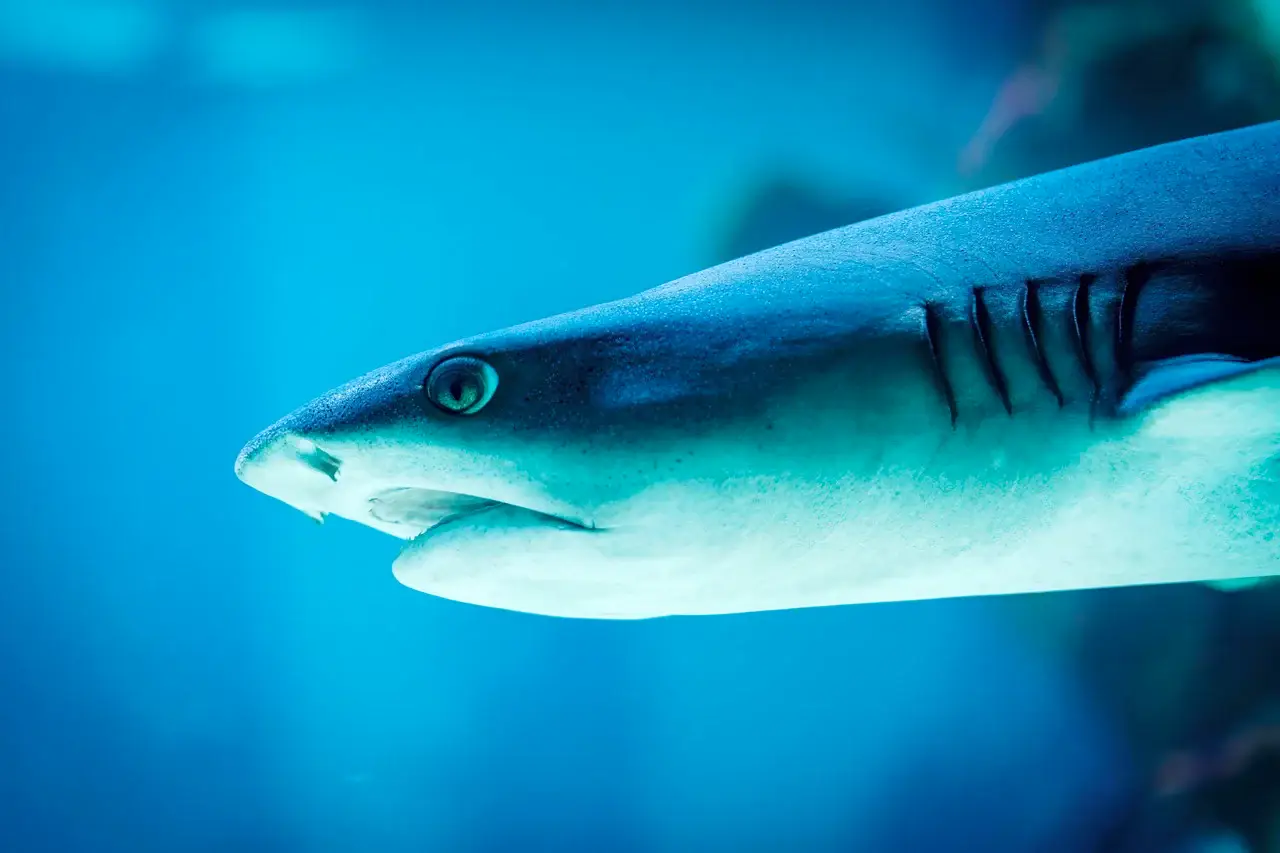
Blue shark (Prionace glauca)
- Where it occurs: Open sea off the Costa Blanca – occasional sightings near the coast (e.g. near Torrevieja, Santa Pola, Denia)
- Size: 2–3 m on average, rarely up to 4 m
- Why near the coast? Feeding migrations, warmer water; injured animals sometimes stray
- Danger to humans: Low – incidents are extremely rare, but the FishBase database classes the blue shark as potentially dangerous, so keep your distance
- Behaviour: An open-ocean (pelagic) shark, not a deep-sea fish: lives out at sea, mostly in the upper 200 m or so, and only rarely comes close to the coast
- Media hype: "Shark alert on the Costa Blanca" is usually exaggerated – a Baywatch effect without any real danger
- Special feature: An important part of the Mediterranean ecosystem – sadly heavily overfished
- In short: Sharks on the Costa Blanca are real – but no reason to panic
Conclusion: the Costa Blanca is full of life – if you look closely
From tortoises in your own garden and noisy parrots to nocturnal genets – the wildlife of the Costa Blanca is varied, wild and often surprising. If you see the region not just as a place for a beach holiday but also as a habitat, you'll be rewarded with unique encounters.
Tip for newcomers and Spain lovers: Keep your eyes and ears open – you'll usually find the most fascinating animals where you least expect them.
Any questions?
Carlo Reuss has 22 years of experience living abroad, 10 of them in Spain. Have a question about this topic? Send it to us via the contact form.
Ask a question →Frequently asked questions
Which wild animals can I see on the Costa Blanca?
Tortoises, geckos, flamingos, parrots, hares and genets, plus a rich underwater world. Especially around Crevillente, Aspe and Hondón de las Nieves, and in the salt pans of Torrevieja and Santa Pola.
Where can I see flamingos on the Costa Blanca?
Every year thousands of flamingos stop over in the salt lagoons near Torrevieja and in the Las Salinas de Santa Pola Natural Park. A breathtaking sight, especially in the early morning.
Are the scorpions on the Costa Blanca dangerous?
No. In dry, rocky areas – for example in the hinterland of Orihuela, in Fortuna or Redován – there are small, non-dangerous scorpions. Hidden during the day, active at night. Easy to spot with UV light.
What should I do if a wild tortoise turns up in my garden?
This happens occasionally, especially in dry, stony areas around Crevillente, Aspe or Albatera. The animals are shy and slow – leave them in peace, don't shut them in or move them elsewhere.


Planning your move to the Costa Blanca?
Our guides cover the key steps — from the NIE number and residency to buying property.
Start with the NIE guidePersonal questions: new requests via the consultation page are currently paused.