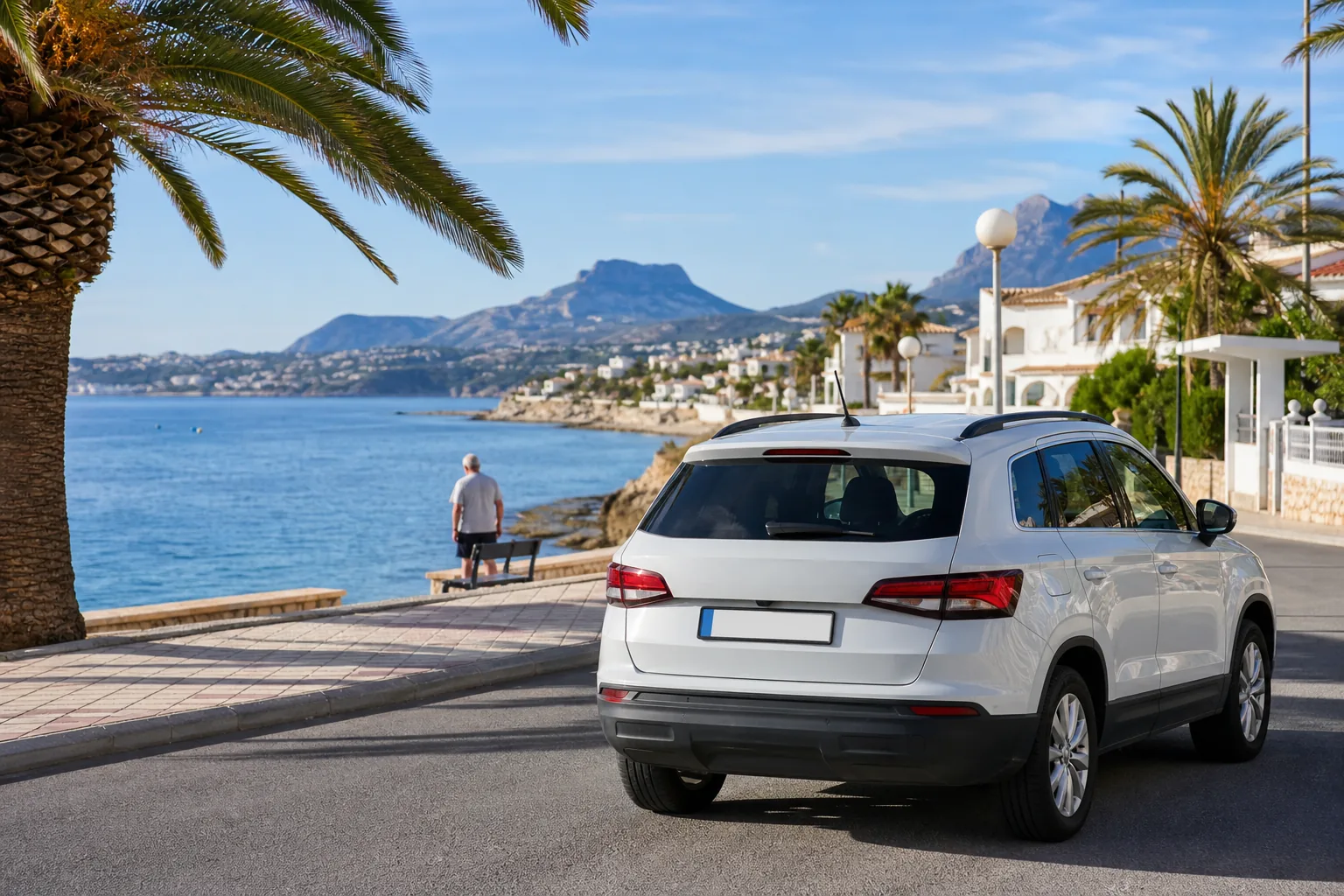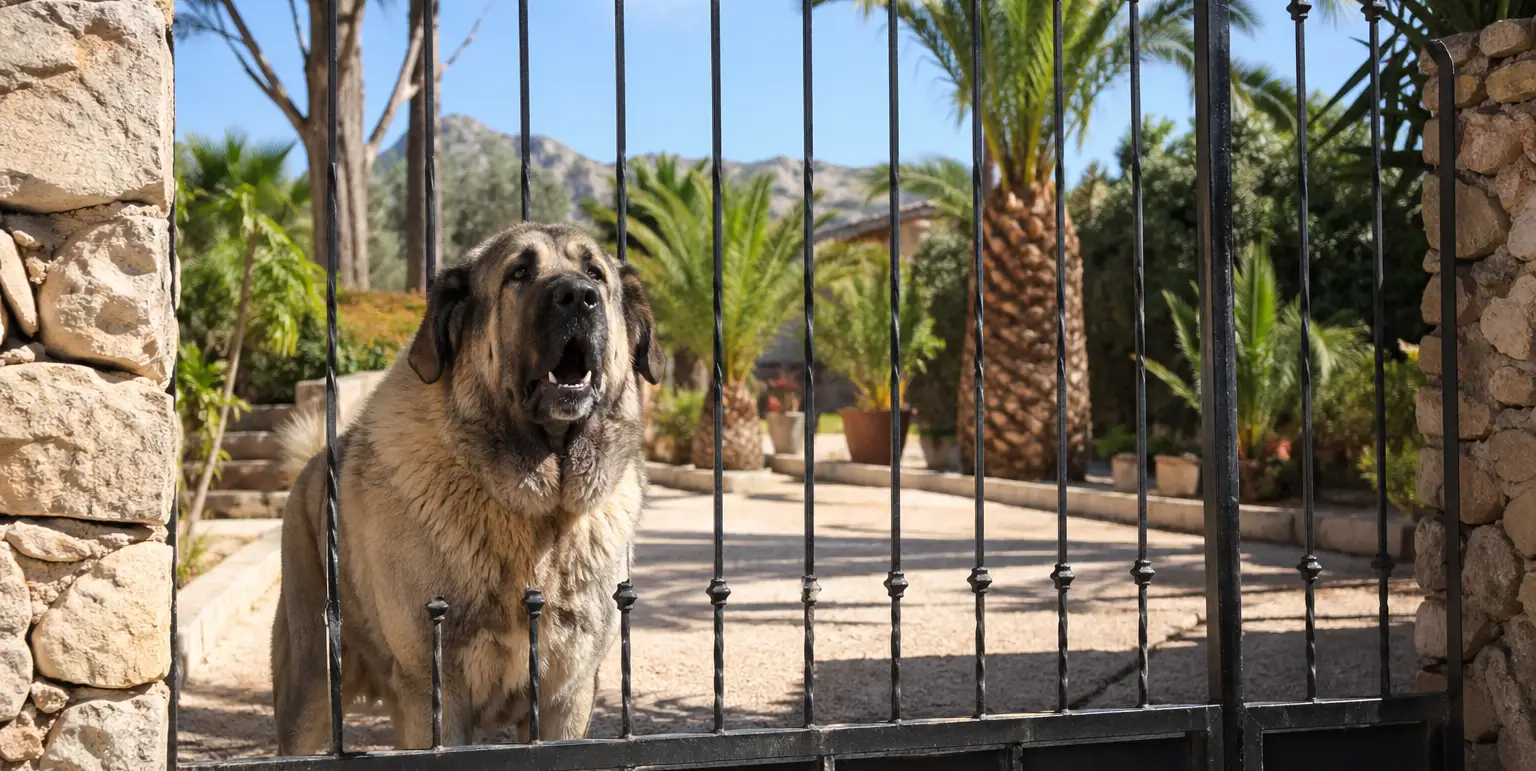
If you move to the Costa Blanca or buy a finca here, you soon notice that dogs are part of everyday life, just like the scent of orange blossom and the sound of the sea. They are loyal companions, loud doorbells and reliable burglar alarms all in one. I have lived in Spain for 10 years and have seen how people's relationship with their four-legged friends has changed dramatically. Once often seen merely as working animals, dogs are now almost everywhere full members of the family.
Bringing your dog to Spain: the legal requirements
A move with a dog within the EU is straightforward as long as the EU rules are followed. Every dog needs a valid EU pet passport, issued by an authorised vet. It must record the microchip (ISO standard 11784/11785) and a rabies vaccination (given at least 21 days earlier, and after the chip was implanted). A clearly legible tattoo is only still accepted if it was applied before 3 July 2011 – any dog marked after that date must have a microchip. The new EU Regulation 2026/1818 (published in August 2026, with multi-year transition periods) introduces EU-wide chipping and registration in linked databases, but for people moving from Germany or elsewhere in the EU it changes little in essence. Puppies may enter at 15 weeks at the earliest. [Note for non-EU readers, e.g. from the UK or USA: a pet passport issued in the UK is no longer valid for entering the EU. Instead you need an animal health certificate issued by an official vet shortly before travel, and the rules differ by country of origin, so check the current requirements with your vet and the Spanish authorities.]
When travelling by car or plane, no further documents are needed as long as the dog is travelling on a non-commercial basis (max. five animals per person). Important: if you are driving through France, check the breed lists – more on that later.
Registering your dog in Spain
In Spain every dog must be registered with the Censo Municipal de Animales de Compañía (municipal register of pets) at the local Ayuntamiento (town hall) within 30 days of moving or of being chipped. This also applies to dogs that live here for more than three months a year. Registration requires proof of the chip, the vaccination record and the owner's ID (non-EU residents: passport or NIE/TIE). In the province of Alicante almost 390,000 dogs are currently officially registered – and the number is rising fast.
Here is an overview of the current figures (as of March 2026, RIVIA register):
| Species | Number registered | Share of total | Increase in 2025 |
|---|---|---|---|
| Dogs | 387,248 | 79.4% | +14% |
| Cats | 96,247 | 19.7% | +37% |
| Total | 487,584 | 100% | +14.3% |
Source: RIVIA (Registro Informático Valenciano de Identificación Animal). Statistically, that works out at one dog or cat for roughly every four residents in the province of Alicante.
Pet liability insurance – compulsory for all dog owners
Since the Ley de Bienestar Animal (animal welfare law) of September 2023, liability insurance (seguro de responsabilidad civil) is required for every dog, regardless of breed or size. Minimum cover and deadlines are to be set by an implementing regulation, which, as of November 2026, is not yet finally in force. The policy must cover damage to third parties and their property, and it applies for the dog's whole life. Many buildings or home contents policies (seguro de hogar) already include dog liability or offer it as an inexpensive add-on. So check your existing policy first before taking out a separate one. That often saves money and meets the legal requirement at the same time. If you cannot show proof of cover, you risk fines of up to €10,000.
Planning your move to Spain – with your dog and everything that goes with it
A move to the Costa Blanca needs good preparation. Find out what to watch out for with transport, customs and arrival.
To the moving guide →Special breeds: the Mastín Español and travelling within Europe
The Mastín Español (Spanish Mastiff) is a classic guard dog of the region – large, powerful and with a pronounced protective instinct. In Spain it is not classed as a ‘perro potencialmente peligroso’ (PPP, potentially dangerous dog), so there are no special requirements such as a muzzle or licence. Things look different when travelling through France: there, mastiff-type breeds without an official pedigree fall under the strict Category 1 and may neither enter nor transit. A purebred Mastín Español or a strong crossbreed can cause problems at a police check at the French border. My own dog is a Mastín mix that turned out a little slimmer and smaller – we have never had any trouble with him. If you plan to get a purebred Mastín, check the current French regulations before every car journey to Germany.
Many of us remember the word ‘Pedigree’ from the TV adverts of the 1990s and 2000s. Back then, Pedigree was practically the only big dog food brand on TV – and the brand name literally means ‘family tree’ or ‘lineage’. Anyone who heard ‘Pedigree’ back then automatically thought of purebred dogs with papers. Today we know that the best pedigree is often the one from an animal shelter.
Keeping dogs in Spain: great progress
15–20 years ago you still saw plenty of chained dogs on fincas on the Costa Blanca. Thank goodness, that has changed fundamentally. Thanks to the new animal welfare law and growing awareness, most dogs now live as full members of the family, in the house or on the property. The integration into everyday life is noticeable – and it does people and animals alike a lot of good.
Dogs as guards on fincas – my personal experience

On almost every finca and in many urbanizaciones (residential estates), one or more dogs simply come with the territory. They are burglar alarm, doorbell and best friend all at once. My own dog has lived on our finca for years, almost never leaves the property and has that inner instinct to do regular rounds. As soon as a car, a hare or a stranger appears, he raises the alarm – loud and clear. But as soon as the visitor is inside the house, he turns into the friendliest greeter in the world. I got him from the reputable English-speaking animal welfare organisation Noah's ARC in Murcia (about 30 minutes away). Three puppies had been abandoned by the roadside, and sadly two of them didn't make it. The organisation sorted everything out: vaccinations, worming, lead, harness and even a 20 kg bag of food. The lady said at the time: ‘Just take him home for now, we'll speak on the phone in ten days – and then you decide what you'd like to donate.’ I was so impressed by the professionalism and love that I donated considerably more than usual. Today I don't regret a single second. If you are looking for a dog, the best place to start is reputable animal welfare groups on Facebook – but always check carefully who is behind them. I'm happy to help you assess a link.
A reputable point of contact in the region is Noah's ARC in Murcia (about 30 minutes away). The English-speaking organisation rescues dogs from the Spanish animal welfare system, takes care of vaccinations, neutering and rehoming – and works closely with foster homes. A good starting point if you would like to adopt a dog.
View dogs for adoption →Everyday rules: leads, dog mess and public spaces
Throughout Spain, dogs must in principle be kept on a lead in public spaces. The lead may be a maximum of two metres long. Dog mess must always be picked up, everywhere – this is consistently checked and fined. Some municipalities have additional requirements for certain breeds (muzzle). Parks and green spaces have designated parques caninos (fenced off-lead areas), which are well used in towns such as Torrevieja and Calpe.
Dog beaches and off-lead areas on the Costa Blanca
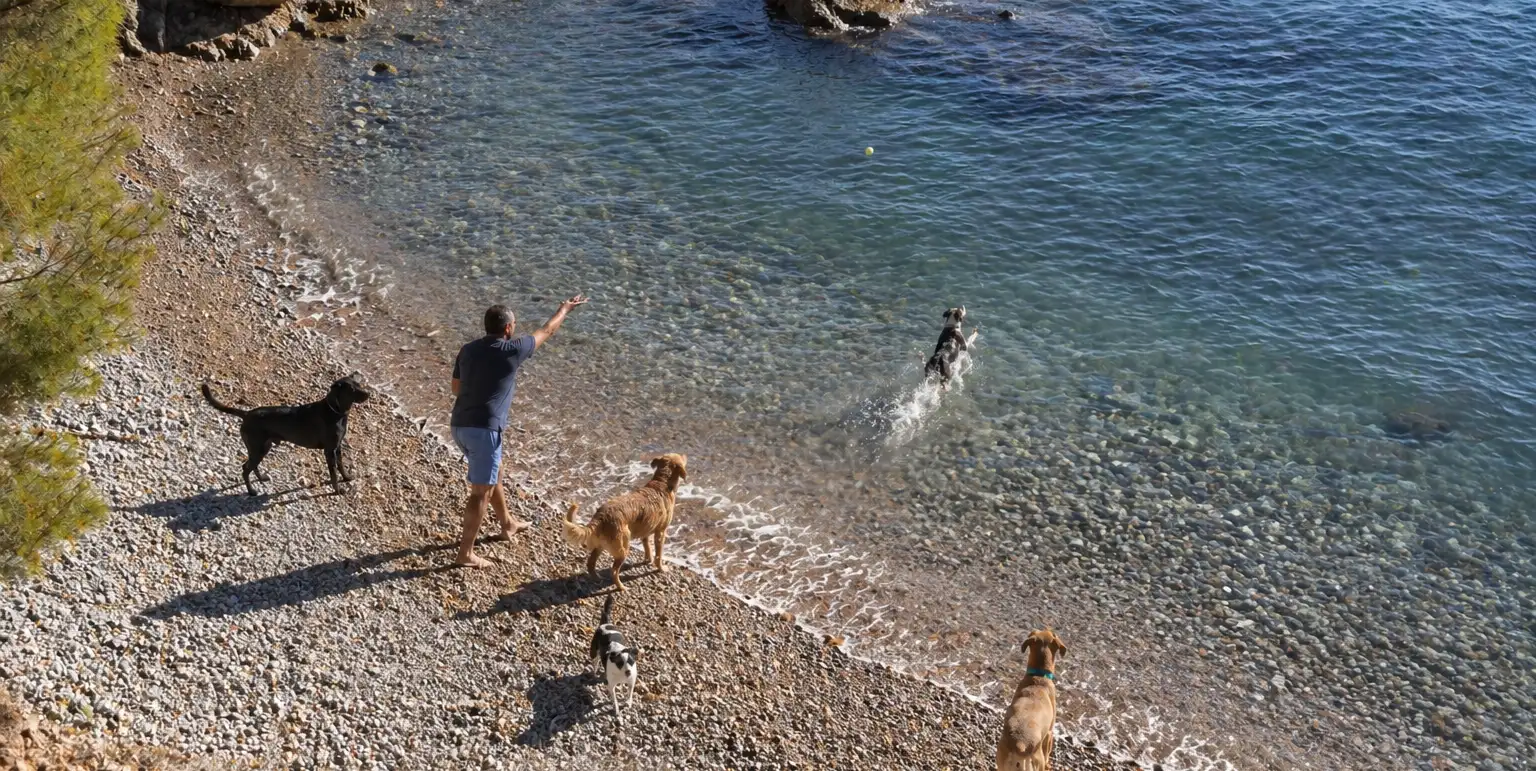
Dogs are usually banned from regular beaches from June to September. There are, however, official playas para perros (dog beaches), which can be used all year round or at least outside the high season. Many have showers, drinking water and dog-waste bag dispensers.
Here is an overview of selected dog beaches (as of 2026):
| Town | Beach / cove | Surface | Year-round? | 特徴 |
|---|---|---|---|---|
| Dénia | Playa Escollera Norte | Shingle/sand | Yes | Calm harbour basin |
| Calpe | Cala Les Urques | Rock/shingle | Yes | Clear view of the Peñón de Ifach |
| Alicante | Playa de Agua Amarga | Sand | Yes | Showers, dog toilet |
| Santa Pola | Caleta dels Gossets | Sand/shingle | Yes | Very popular |
| Torrevieja | Cala Rocío | Rocky | Yes | Quiet, slightly out of the way |
Many towns also have fenced-off exercise areas, which make life with a dog enormously easier.
Dog schools and other practical tips
Dog schools and puppy classes can be found in almost all larger towns on the Costa Blanca – often bilingual or with German-speaking trainers. They are particularly recommended if your dog comes from a shelter or needs to get used to new stimuli. Many trainers work with positive reinforcement and know the local peculiarities.
If you are moving abroad, plan early: sort out the chip, vaccinations and insurance, then register the dog at the Ayuntamiento. Then nothing stands in the way of a relaxed life on the Costa Blanca with your four-legged friend.
Frequently asked questions
Do I need to have my dog re-chipped or re-vaccinated when moving from Germany?
No – the EU pet passport with a microchip and a valid rabies vaccination is enough. A booster is only needed if the chip is missing or the vaccination has expired.
Is pet liability insurance really compulsory for every dog?
Under the animal welfare law (Ley 7/2023) yes – but the implementing regulation with minimum cover and deadlines is still missing (as of November 2026). Taking out a policy is sensible anyway. Many buildings insurance policies already cover it.
Can I take my Mastín mix with me in the car to Germany?
Within Spain, yes. When driving through France, check the current breed lists – purebred mastiffs without a pedigree can cause problems.
Where can my dog swim on the Costa Blanca?
At designated dog beaches such as those in Dénia, Calpe or Alicante, all year round. At regular beaches usually only outside the bathing season.
How do I find a reputable rescue dog?
Look at established organisations on Facebook, check references and get advice if in doubt. Many rescue dogs are waiting for a new home – and are often rehomed with a complete starter kit.



Planning your move to the Costa Blanca?
Our guides cover the key steps — from the NIE number and residency to buying property.
Start with the NIE guidePersonal questions: new requests via the consultation page are currently paused.