Tolls in Spain: costs, payment and the mysterious "T"
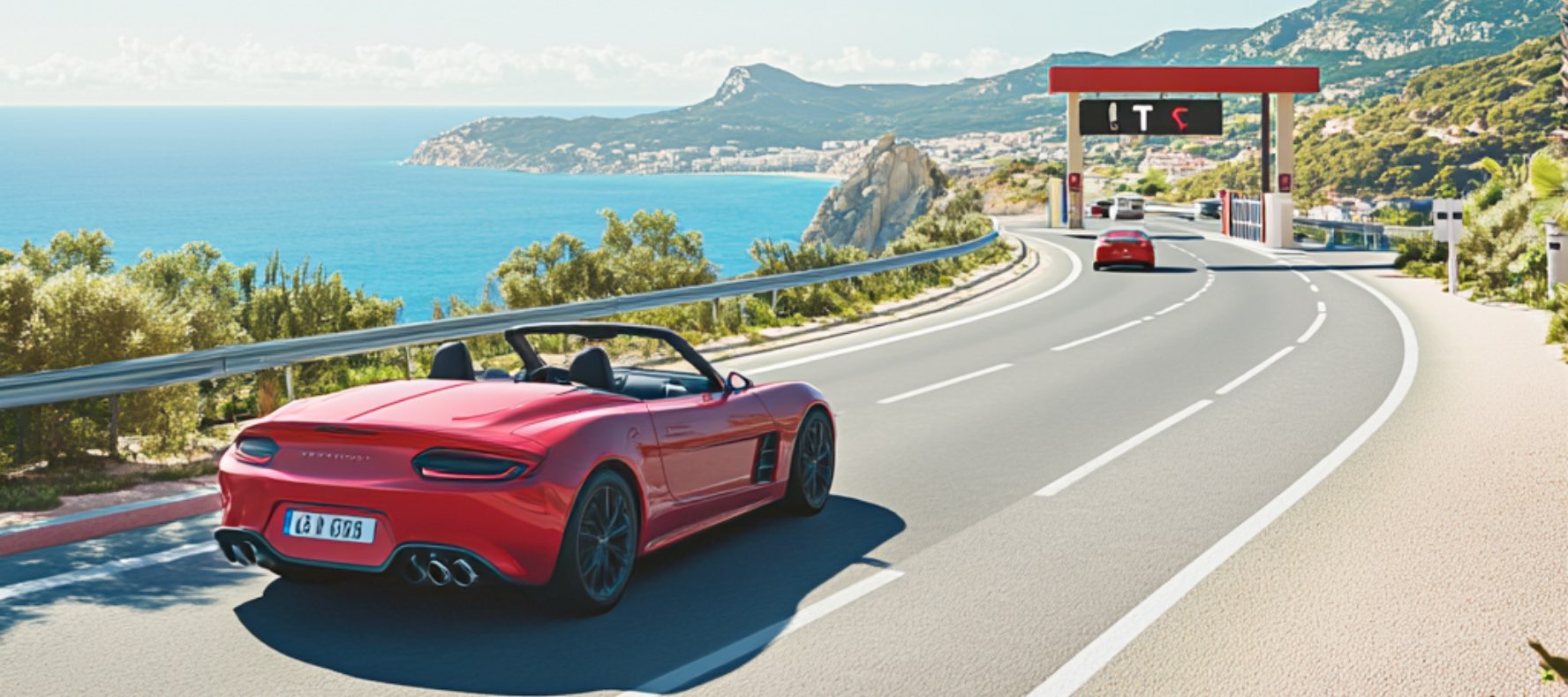
If you're driving on the Costa Blanca, you no longer pay tolls on most motorways – even the AP-7 from the French border to Alicante has been completely toll-free since 2021, and since 2026 the AP-7 ring road around Alicante has also been permanently toll-free. On the Costa Blanca, practically the only stretch where you still pay is the AP-7 section Alicante–Cartagena in the south (e.g. Los Montesinos–La Zenia, approx. 3–5 euros depending on the season). At the toll booths you can pay in cash, by card or with a Via-T toll tag (Telepeaje – an electronic transponder offered e.g. by Spanish banks). Look out for the "T" symbol at the checkpoints – it stands for "Telepeaje" (electronic toll) and is reserved for cars with a toll tag. No tag? Then take the lanes marked with the card or cash symbol.
To avoid the toll on the AP-7 south of Alicante, take the toll-free A-7 inland or the N-332 along the coast – it takes a little longer but costs nothing.
Roads and roundabouts: generous and free-flowing
[BILD]
Driving on the Costa Blanca is more relaxed than in many other countries, because Spain's roads – apart from narrow side streets – are generously laid out. Usually there are two lanes in each direction plus parking along the side. What stands out most are the many roundabouts (rotondas), often with two lanes, which keep the traffic flowing.
How do you enter? If you want to take the second or third exit, start in the inside lane. For the first exit, stay on the outside. But be careful: you'll often see Spanish drivers taking the outside lane and carrying on round – which can get dangerous if you want to leave from the inside lane.
Watch other drivers' indicators on the roundabout, but don't rely on them blindly!
Registering your car in Spain – how it works
Bringing your car to the Costa Blanca? Then don't wait too long to re-register it on Spanish plates. Here you'll find all the steps, deadlines and costs – clearly explained.
To the step-by-step guide →Parking on the Costa Blanca: colours and car parks
Parking in Spain has its own rules, and on the Costa Blanca you should know the colours:
- Blue lines – paid parking, usually with a ticket machine nearby
- White lines – free, but rare in towns
- Yellow lines – strictly off-limits, reserved for loading zones or disabled drivers
Multi-storey car parks are a smart alternative: they are often cheaper than at home (approx. 1–2 euros per hour) and safer. On public streets and open car parks, minor accidents unfortunately happen a lot – hit-and-runs, dents and scratches are nothing unusual. For many Spaniards the car is a practical object, and you can see that on their vehicles.
If you haven't looked into car insurance in Spain yet, it's worth doing – precisely because of everyday risks like these.
Police checks: respect pays off
Police checks are nothing unusual on the Costa Blanca, especially outside the summer months when the flood of tourists subsides. In summer the officers are often busy with beachgoers, but the rest of the year you'll see them regularly on the roads. The Spanish police are direct but fair – treat them with respect and you'll be treated with respect. Typical checks cover documents, alcohol or speed.
Stay calm, have your documents ready and carry on enjoying your drive!
Speed cameras on the Costa Blanca
Getting caught by a speed camera in Spain is actually not that easy – especially on the Costa Blanca! In front of almost every fixed speed camera there is a large, clearly visible warning sign that alerts you to the radar check in good time. That way you can calmly adjust your speed and avoid trouble.
Mobile speed cameras, on the other hand, are rare – they usually only appear in the peak tourist season or in unexpected places. Thanks to the warning signs, driving on the Costa Blanca is pretty relaxed overall.
Conclusion: conquering the Costa Blanca by car
Driving on the Costa Blanca is an experience – from the wide roads and practical roundabouts to the inexpensive car parks. With a few tricks (paying tolls, inside lane on the roundabout, parking colours) you'll be well prepared. Respect the police, look after your car and enjoy the freedom of Spain's roads.
If you're bringing your car from your home country, you should also look into registering your car in Spain in good time – it saves stress later on. And if you live here permanently, you can't avoid the residencia and the TIE (residence registration and foreigner ID card) either, because without an official residence many dealings with the authorities lead nowhere. You'll also find a general overview of the cost of living on the Costa Blanca – including car and insurance – on this site.
Any questions?
Carlo Reuss has 22 years of experience living abroad, 10 of them in Spain. Have a question about this topic? Send it to us via the contact form.
Ask a question →Frequently asked questions
What does the "T" symbol at the toll booth mean?
The "T" stands for "Telepeaje" (electronic toll) and marks the lane for vehicles with an electronic toll tag (in Spain: Via-T). Without a tag, use the lane with the card or cash symbol.
What do the colours of parking lines mean in Spain?
Blue lines = paid parking with a ticket, white lines = free parking (rare in towns), yellow lines = strictly no parking (loading zones or disabled parking).
How should I behave at a police check in Spain?
Stay calm, treat the officers with respect and have all your documents (driving licence, vehicle registration document, proof of insurance) ready. The Spanish police are direct but fair.
Are there many speed cameras on the Costa Blanca?
In front of almost every fixed speed camera there is a clearly visible warning sign. Mobile speed checks are rare and mainly appear during the tourist season. The speed limits: in towns 30 km/h on roads with one lane in each direction (50 km/h with two or more lanes, 20 km/h where road and pavement are on one level), 90 km/h on ordinary roads, 120 km/h on motorways.
How do I use a roundabout correctly in Spain?
For the first exit, stay in the outside lane. For the second or third exit, start in the inside lane. Be careful: not all Spanish drivers stick to this consistently – always stay alert.


Planning your move to the Costa Blanca?
Our guides cover the key steps — from the NIE number and residency to buying property.
Start with the NIE guidePersonal questions: new requests via the consultation page are currently paused.