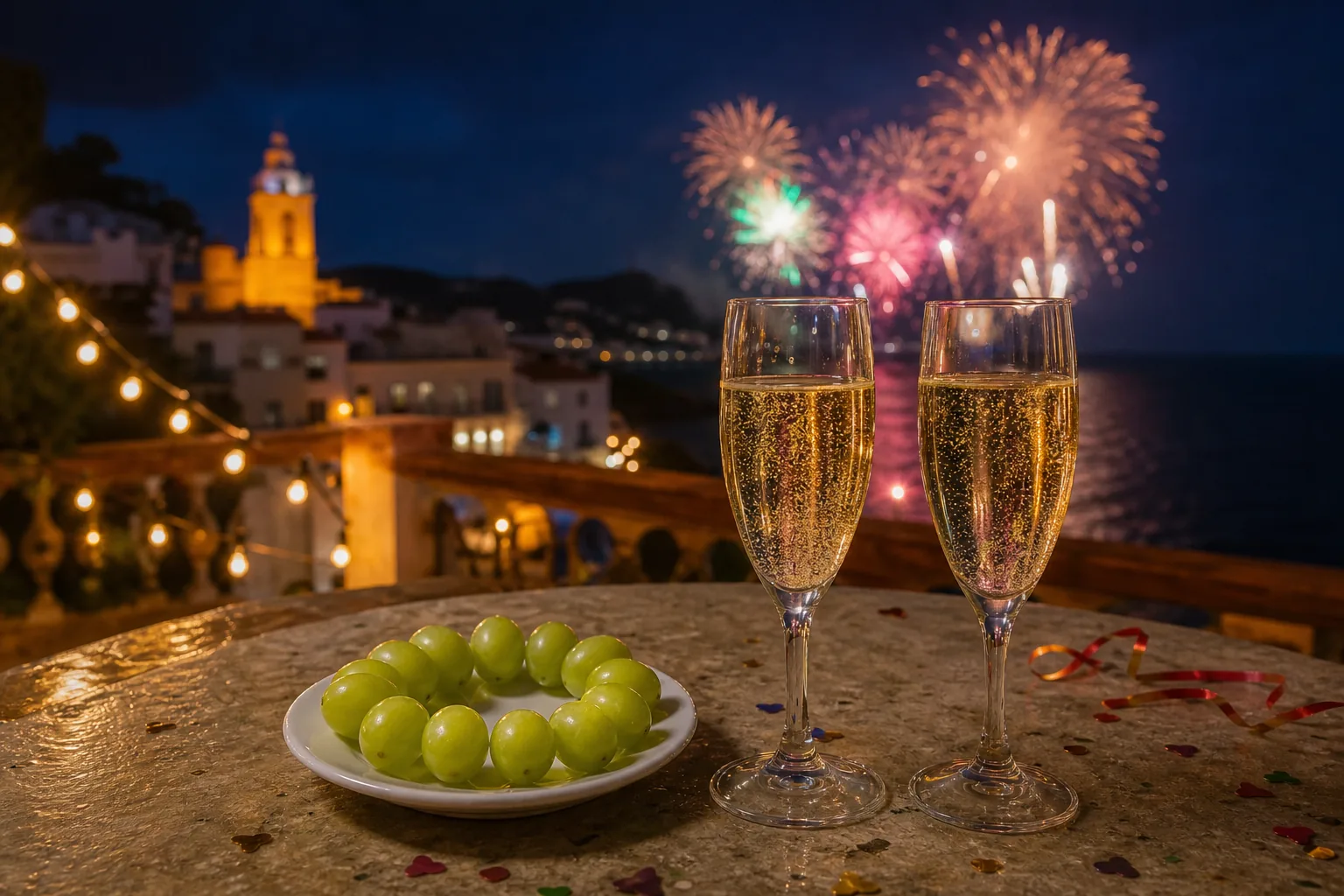
At midnight, Spain suddenly goes quiet. Everyone stares at a clock, on TV or on the town hall tower, holding twelve grapes. With the first chime it starts: one grape per chime, chew, swallow, next one. Manage all twelve and the new year brings luck. Don't, and you laugh with your mouth full. New Year's Eve in Spain is called Nochevieja, the "old night". It runs later, louder and a little more superstitious than in most of Northern Europe or the US. Here is what to expect and what to prepare.
The twelve grapes: how it works
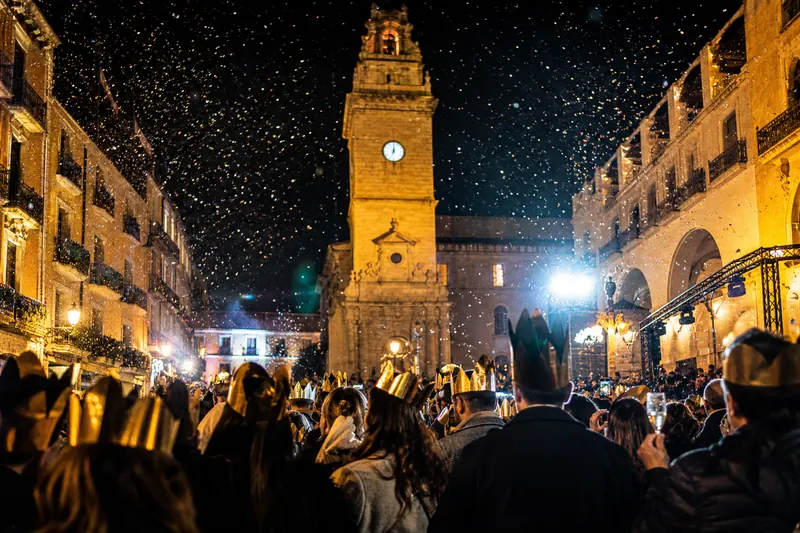
The uvas de la suerte, the lucky grapes, are Spain's most important New Year's tradition. The whole country watches the clock at Puerta del Sol in Madrid, broadcast live by all the major channels. In many Costa Blanca towns people also gather in front of their own town hall and eat the grapes together.
The beginner's trap: before the twelve chimes come four double chimes, the cuartos. Start eating then and you have finished too early. Wait until the ball on the tower has dropped and the first real chime sounds. The chimes come roughly every three seconds, which is tighter than it sounds.
- Choose small, seedless grapes. Large grapes with seeds are the main reason people fail.
- In December, supermarkets sell tins or cups with exactly twelve peeled, seedless grapes. Handy if children join in.
- Count out twelve grapes per person beforehand, ideally in a small bowl each. Nobody wants to count at 23:59.
The grapes come from next door: Vinalopó
A large share of Spain's New Year's grapes grows just a few kilometres inland in the Vinalopó valley, in Novelda, Aspe, Monforte del Cid, Agost, La Romana and the two Hondón villages. Here the grapes are wrapped one bunch at a time in paper bags while still on the vine. This Uva de mesa embolsada del Vinalopó has a protected designation of origin. The bag lets it ripen slowly and be harvested late, just in time for New Year's Eve.
The province also likes to tell the story of how the custom began: in 1909, grape growers around Alicante are said to have sold a record harvest as "lucky grapes" in packs of twelve. Newspapers, however, already reported grape eating at Puerta del Sol in Madrid in the 1880s, so the Alicante harvest was more of a big push than the beginning. Either way, buy grapes from Vinalopó and you are eating a piece of the Costa Blanca at midnight.
Red underwear, gold in the glass and the right foot
Besides the grapes, you will see a few smaller lucky charms everywhere in Spain:
- Red underwear: on New Year's Eve, people wear something red underneath for love and luck. Ideally it is a gift rather than something you bought yourself. From early December, shops have whole racks of red briefs and boxer shorts.
- Gold in the glass: some people drop a gold ring or a piece of jewellery into their glass for the toast, said to bring prosperity. The toast is usually made with cava, Spanish sparkling wine, not champagne.
- The right foot: empezar el año con buen pie means "to start the year on the right foot". Some take it literally and step forward with their right foot after midnight.
How the night unfolds: later than you think
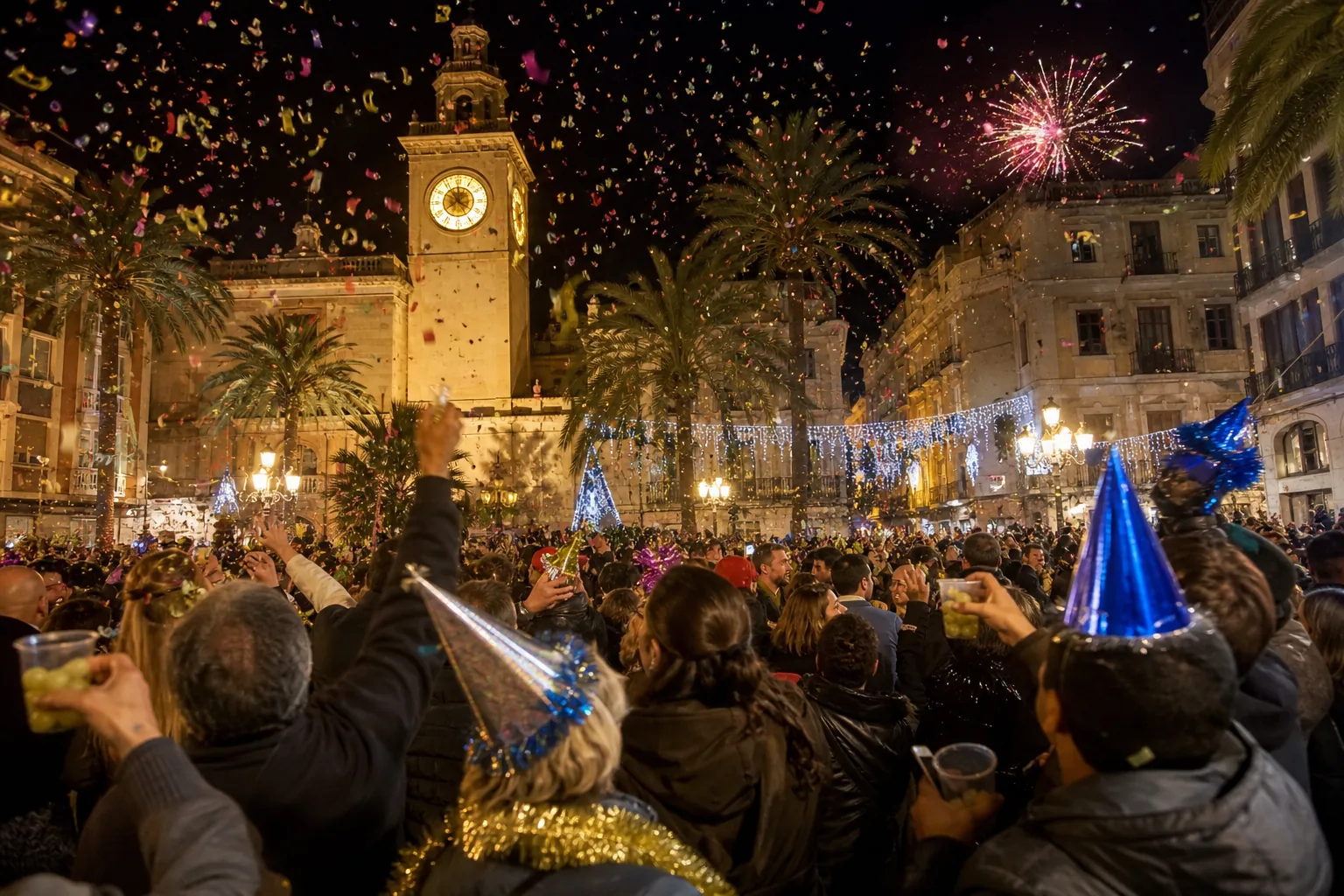
A Spanish New Year's Eve has two halves. Before midnight it belongs to the family: a long, generous dinner, often seafood, lamb or fish, followed by turrón and polvorones. Shortly before twelve the TV goes on and the grapes are ready.
After midnight everyone heads out. Parties, bars and clubs fill up from about one o'clock. The fiesta de cotillón, with party hats, streamers and noisemakers, often lasts until morning. Those who make it through have chocolate con churros for breakfast.
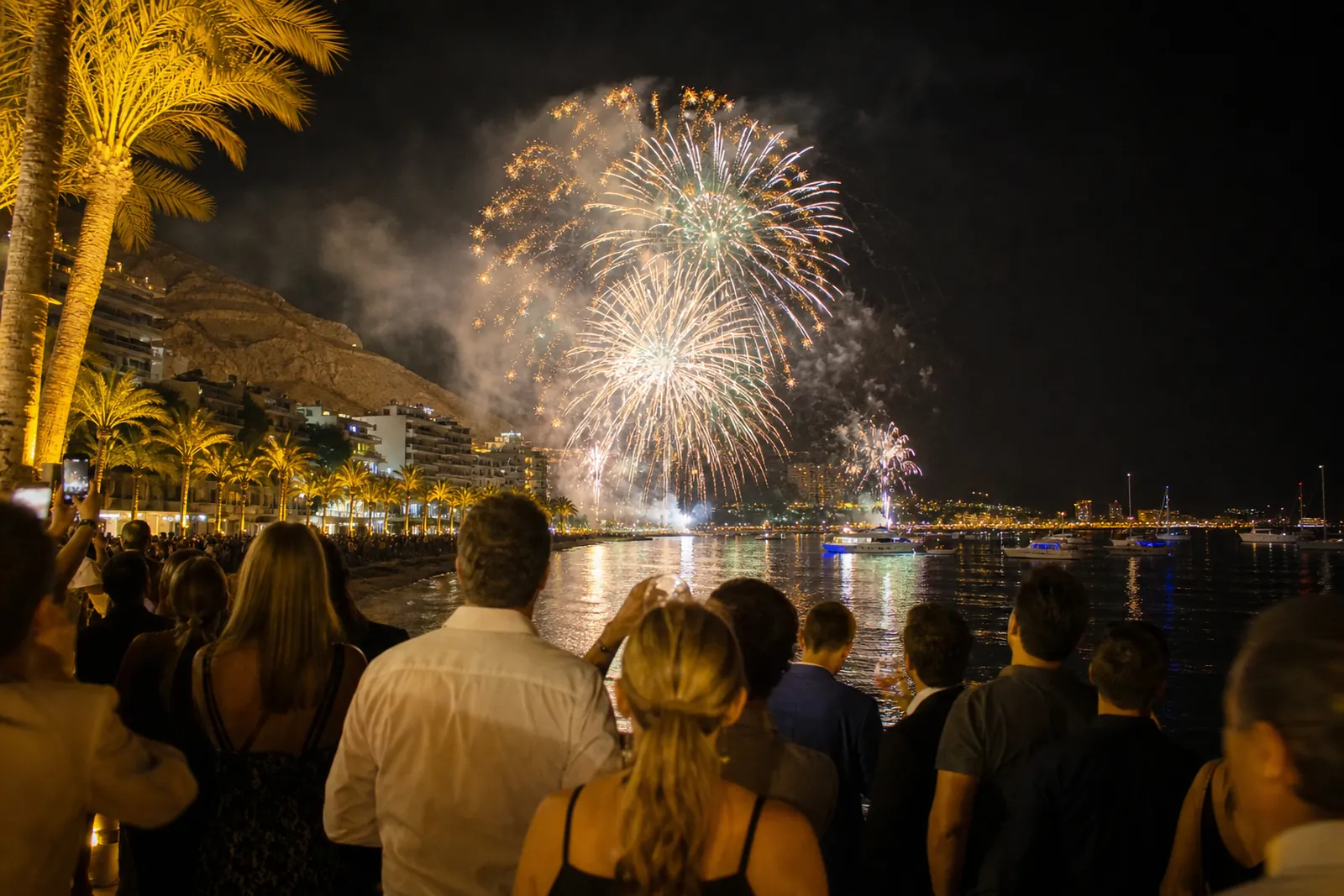
Private fireworks are much less common than in many other countries, and many municipalities ban fireworks in public spaces without a permit. If you want to set off your own, check your town's rules first. Larger towns celebrate together on the main square instead, for example Alicante, Benidorm and Torrevieja.
Celebrating in a restaurant or hotel: what to watch out for
More and more expats and winter visitors celebrate out rather than cook at home. In Spain this works differently from a normal restaurant visit:
- Set menu only: on New Year's Eve there is almost always a fixed menú de Nochevieja with several courses and no à la carte. Grapes, cava and cotillón are often included.
- Prepayment is normal: many restaurants and hotels ask for a deposit or the full price when you book. Ask whether you get a refund if you cancel.
- Book early: popular places with sea views or live music are often gone by mid-December.
- Check the drinks: are wine and water included, or only cava at midnight? Offers differ a lot here.
- Children: many venues offer a cheaper children's menu, which adds up quickly for families.
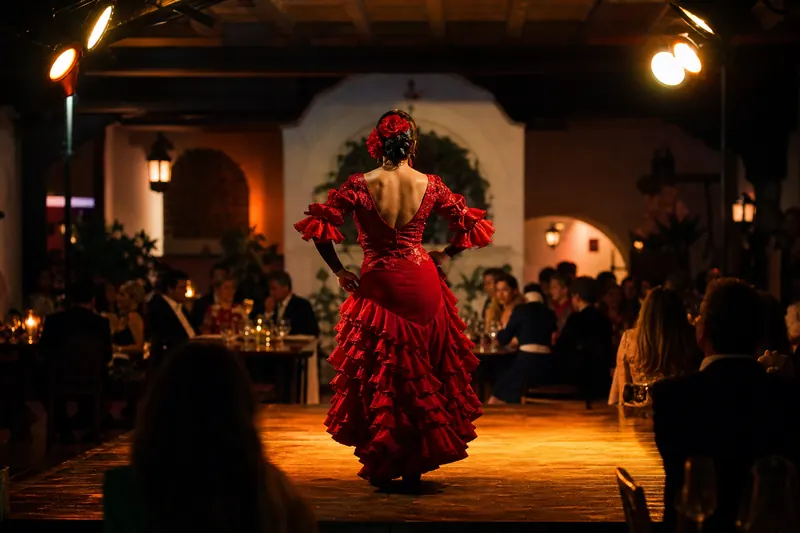
Prices on the Costa Blanca range roughly from €45 for a simple menu to over €300 for a gala with show and open bar. On our New Year's Eve page you can filter by town, price and type and see the menu and schedule for every offer.
Practical: shopping, public holidays and getting home
- 31 December: not a public holiday, but many shops close early. Buy grapes and cava a day or two before.
- 1 January 2027 (Friday): public holiday, most shops are closed, followed directly by the weekend.
- 6 January 2027 (Wednesday): Three Kings' Day (Día de Reyes) is also a public holiday, and the day Spanish children get their presents. More in our article on Christmas markets and winter traditions.
- Getting home: taxis are scarce on New Year's Eve. Book one in advance or pick a celebration within walking distance. The Guardia Civil runs extra checks that night, so if you drink, don't drive.
- Bring a jacket: days are often mild, but nights on the coast get noticeably cool. You will want more than a shirt on the plaza at midnight.
- Pets: even with fewer private fireworks, there are fireworks at midnight. Keep dogs and cats indoors.
FAQ: New Year's Eve in Spain
When do you eat the twelve grapes? At midnight, one grape with each of the twelve chimes. The four double chimes before them (cuartos) don't count, so don't start yet.
Do I need to book a restaurant for New Year's Eve? Yes, and early. Most restaurants only serve a fixed New Year's menu, often paid in advance. Good spots are scarce from mid-December.
Are there free New Year's Eve celebrations on the Costa Blanca? Yes. Larger towns hold public celebrations with grapes, music and fireworks, for example Alicante. Exact programmes are usually only confirmed in December.
Is 1 January a public holiday in Spain? Yes. In 2027 it falls on a Friday. The next holiday is Three Kings' Day on 6 January.
Why red underwear on New Year's Eve? Red is said to bring luck and love on New Year's Eve, and tradition says it works best if it was a gift.
Sources


Planning your move to the Costa Blanca?
Our guides cover the key steps — from the NIE number and residency to buying property.
Start with the NIE guidePersonal questions: new requests via the consultation page are currently paused.