
Every year the Costa Blanca attracts thousands of people moving abroad, retirees and investors. But if you're planning to live in Spain, one question comes up quickly: rent or buy? Does it still make sense to buy property on the Costa Blanca in 2026, or are you better off renting? In this article we look at the pros and cons of both options and use practical examples to show you which solution suits you best.
1. The Costa Blanca property market in 2026 – where is it heading?
Prices are rising – strongly of late
Property prices on the Costa Blanca have risen significantly in recent years: according to Spain's statistics office INE, housing prices in Spain were 12.2% higher year on year in the second quarter of 2026. In popular areas such as Denia, Javea, Moraira or Altea you now pay between 2,500 and 5,000 euros per square metre for a house or a modern flat with sea views. You'll find an up-to-date overview of price trends on our property market overview page.
Cheaper alternatives inland
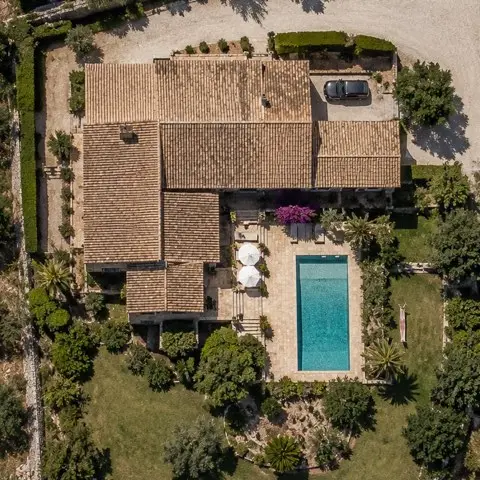
If you don't need to live right by the sea, there are plenty of towns such as Crevillente, Pinoso or Aspe where you'll find houses for under 200,000 euros – often with a large plot and a pool.
Rents are still relatively low – but holiday lets make them hard to find
Rents in places such as Torrevieja or Benidorm have also risen noticeably in recent years – compare current listings locally rather than planning with old guide prices. Above all, in practice it is often difficult to find a long-term rental. Many properties in these popular resorts are let as holiday accommodation from April to October, so long-term tenancies are rare. The upside: from November to March flats like these can often be rented for considerably less.
Inland, on the other hand, you will also find long-term rentals at affordable prices, especially in towns such as Crevillente or Aspe.
Be careful with offers that ask for advance payment from abroad before you have viewed the property. Scams involving non-existent or dubious rental properties keep happening, unfortunately.
Tip: if you want the best value for money, roll up your sleeves yourself
A real-life example: a property in the Elche area for €165,000. After an investment of around €15,000, including tradespeople, it was in good to very good condition.
[BILD]Rent or buy – help with the decision
Not sure which option suits you better? Our in-depth guide helps you make the right decision for your situation.
Read the guide: buy or rent →2. Pros and cons of renting
Pros
- Flexibility – If you don't like the area, you can move at any time.
- Lower fixed costs – You pay no property tax, no notary fees and don't have to cover maintenance costs.
- More choice & less risk – Especially as a newcomer, you can try out different places before you commit.
Cons
- Rents are rising – In popular coastal areas such as Calpe or Javea, rents are slowly going up as more foreigners move to Spain.
- No wealth building – You pay money month after month without benefiting from any long-term increase in a property's value.
- Uncertainty caused by landlords – Some landlords sell their property after a short time or suddenly raise the rent.
3. Pros and cons of buying
Pros
- Long-term savings – The monthly mortgage payment can often be lower than rent.
- Building wealth – Prices on the Costa Blanca are rising, if only moderately. Your property can gain in value.
- Security – You are your own landlord and can adapt the property to your wishes.
Cons
- High upfront costs – Purchase costs are often around 10–13% of the purchase price. The biggest item for resale property in the Valencian Community is the transfer tax (ITP): 9% since 1 June 2026 (11% above €1 million), plus notary, land registry and possibly a lawyer/gestoría. New builds carry 10% VAT plus stamp duty instead of ITP.
- Little flexibility – If you decide to move back home after all, you will have to sell or let the property.
- Maintenance costs – As the owner, you pay for repairs and the upkeep of the pool, garden or roof.
If you want to plan buying a property step by step or want to know what to look out for when checking a property, we have detailed guides for you.
If you want to live on the Costa Blanca and have the financial cushion, buy! But don't make a bad purchase! Better to go a little cheaper, with a fallback plan of selling the property at a profit or letting it to holidaymakers.
Whether you rent or buy, good preparation is crucial. Before you decide, also read up on the cost of living on the Costa Blanca and on financing & mortgages.
Frequently asked questions
Is it still worth buying property on the Costa Blanca in 2026?
Prices have risen strongly of late (Spain: +12.2% year on year in Q2 2026, according to INE). If you have the necessary capital and avoid a bad purchase, you can benefit in the long term from rising values and lower monthly costs compared with renting.
How high are the purchase costs when buying property in Spain?
Purchase costs are often around 10–13% of the purchase price. For resale property in the Valencian Community the transfer tax (ITP) has been 9% since 1 June 2026 (11% above €1 million); notary, land registry and possibly a lawyer/gestoría come on top.
Is it difficult to find a long-term rental on the Costa Blanca?
In popular resorts such as Torrevieja or Benidorm, many flats are used as holiday lets from April to October, which makes long-term tenancies harder to find. Inland and in the winter months, the supply is much better.
Where on the Costa Blanca can you still find affordable property?
Inland – for example in Crevillente, Pinoso or Aspe – you can often find houses for under 200,000 euros, frequently with a large plot and a pool.


Planning your move to the Costa Blanca?
Our guides cover the key steps — from the NIE number and residency to buying property.
Start with the NIE guidePersonal questions: new requests via the consultation page are currently paused.