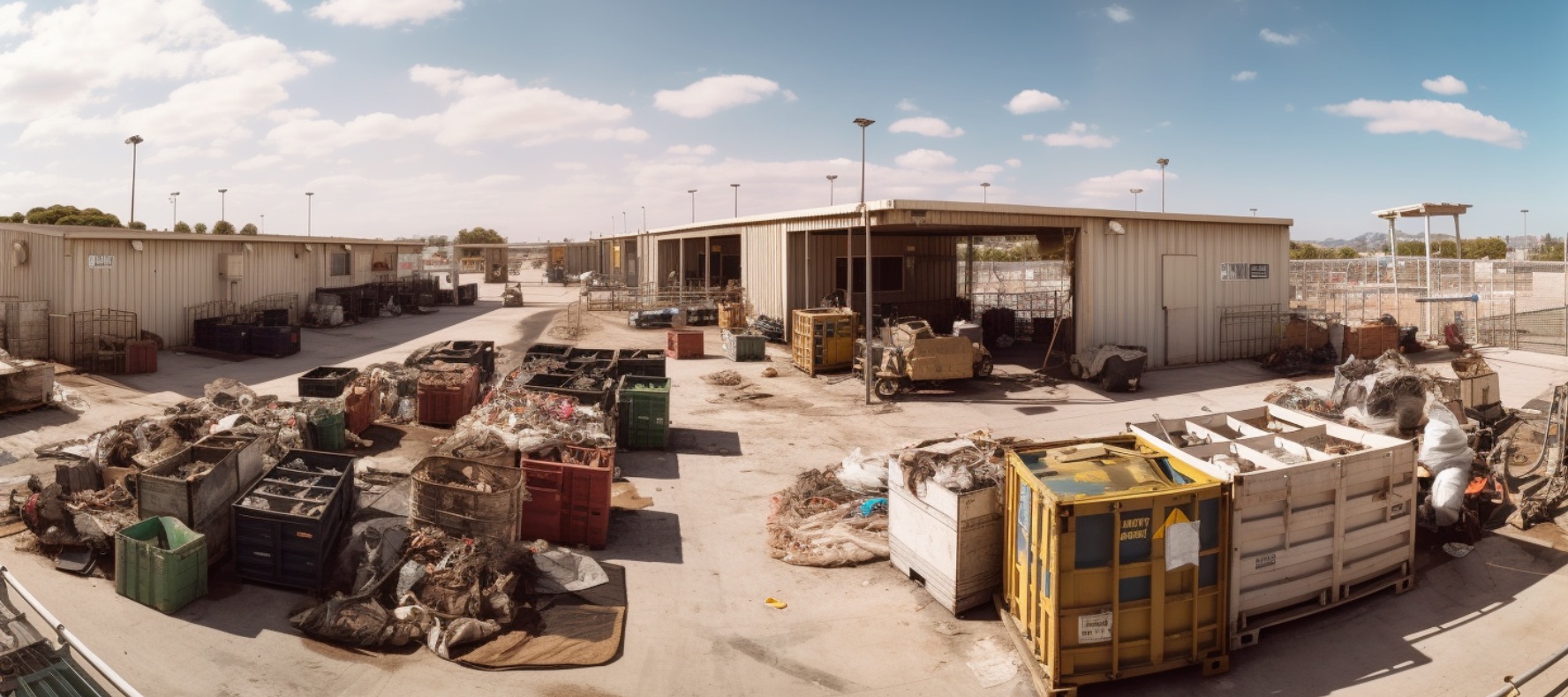
The Costa Blanca beckons with sun, beaches and a relaxed lifestyle – a dream for anyone moving abroad! But between the tapas and the sea there's one thing everyone should know: how does rubbish disposal in Spain work? Don't panic, it's easier than it sounds. The stars of the show are the ecoparques, handy recycling centres that exist in almost every municipality. This article explains what ecoparques are, how they work, how to find them, what rubbish disposal costs and what the new bottle deposit scheme 2026 will bring.
[BILD]What are ecoparques?
Imagine a place where everything ends up that doesn't fit into the colourful bins on the street – that's an ecoparque. These recycling centres on the Costa Blanca are like Swiss army knives for waste: electronic waste, old furniture, building rubble, batteries, paint tins or even garden waste? No problem at all! In municipalities such as Denia, Calpe or Benidorm there's at least one ecoparque, usually easy to reach and perfectly organised.
Why are they so important? Recycling protects the environment, and especially on the Costa Blanca, where nature and tourism go hand in hand, every contribution counts. Ecoparques don't just take your junk off your hands, they make sure it is sorted properly and recycled. Bonus: for residents the service is usually free!
How a visit to the ecoparque works
A trip to the ecoparque on the Costa Blanca is as relaxed as a stroll on the beach – once you know how it works. Here's the process in a few steps:
- Pack up and go: load your waste into the car – whether it's a broken toaster, an old mattress or paint tins. Larger amounts of building rubble may be subject to weight limits, so check the municipality's website beforehand.
- Arrive: drive to the ecoparque – the address is usually online. Many are well signposted, e.g. in Jávea directly on the main road.
- Sort: on site, staff help you throw the waste into the right containers – wood here, metal there, chemicals separately. Everything is clearly labelled.
- Done: in 10–15 minutes the boot is empty and your conscience is clear!
A question that often comes up: do you need an NIE (foreigner identification number) or other proof? That varies from municipality to municipality. Some ecoparques officially require proof of residence such as the NIE or the "padrón" (certificate of registration with the town hall). On the Costa Blanca, however, things are often more relaxed, especially in tourist areas such as Benidorm or Alicante. To be on the safe side, take your NIE or an electricity bill showing your address in case someone does ask. Language problems? No stress – a few words of Spanish or a smile are usually enough.
Check the opening hours beforehand, as many ecoparques close for a siesta at midday or are closed on Sundays. The ecoparque in Jávea is open Monday to Saturday from 9:00 to 13:30 and in the afternoon until 17:30, in summer even until 20:00.
Cost of living on the Costa Blanca
What does life on the Costa Blanca really cost? From rent and groceries to taxes and fees – an honest overview from real life.
Cost of living at a glance →Finding ecoparques: easier than you think
Finding the nearest recycling centre on the Costa Blanca is child's play. Most municipalities list their ecoparques on the town hall ("ayuntamiento") website, including address and opening hours. Simply type "Ecoparque Jávea", "Ecoparque Denia" or "Punto Limpio Alicante" into Google and the search will show you everything.
Even better: some municipalities such as Valencia or Alicante offer mobile ecoparques that tour the different districts. The dates are often published on the town hall website or in local calendars. Apps like Google Maps help too – just type in "Ecoparque" plus the name of the town, and the map shows you the way.
Find your nearest ecoparque
Looking for a recycling centre nearby? Simply enter "Ecoparque" plus the name of the municipality (e.g. "Ecoparque Jávea") in Google Maps. The address and opening hours pop up straight away!
Rubbish disposal and costs: the system behind it
Rubbish disposal on the Costa Blanca is a real hit – it runs so smoothly that you almost feel like sorting rubbish! Colourful containers stand on the streets and make life child's play:
The best part? These containers are emptied almost every day – no overflowing, no smell, just pure order. And unlike in some countries (e.g. in Germany), where a family has to make do with one small bin per week and fitting the rubbish in becomes an Olympic sport – here there's no limit. Just throw everything into the right container and you're done!
The costs? They're covered by the annual rubbish tax ("basura") that every household pays – it varies greatly from municipality to municipality. Since 2025 the waste law (Ley 7/2022) has required municipalities to cover the full costs, which is why 150 to over 200 euros a year is now often charged. This fully covers the containers and the ecoparques on the Costa Blanca. Bulky waste? No problem – one call to the town hall is enough and they'll collect the old sofa free of charge. Waste separation in Spain is so well organised that you almost forget how annoying rubbish disposal can be elsewhere. You'll find more about the general cost of living on the Costa Blanca in our detailed guide.
Bottle deposit 2026: the EU pushes it through
Spain has to introduce a deposit return scheme (SDDR, sistema de depósito, devolución y retorno): under the packaging decree (Real Decreto 1055/2022, Art. 47), producers have two years to set it up after it was established that Spain missed its collection targets for plastic bottles – which puts the deadline at the end of November 2026. As of 20 November 2026 the scheme is not yet in operation; there is no separate start date just for the Valencian Community. Until now, plastic bottles and cans simply go into the yellow container, but soon there will be a deposit on single-use packaging such as bottles, cans or drinks cartons – at least 10 cents per item (drinks packaging up to 3 litres). You get the money back when you return the empty containers to supermarkets or reverse vending machines.
Why all this? The EU has put on the pressure with its directive against single-use plastics, and Spain had to follow suit: the EU directive requires at least 90% of single-use plastic bottles to be collected separately by 2029 (an EU collection target, not a recycling rate). That's a win for the environment, especially on the beaches of the Costa Blanca. For everyday life it means: collect your bottles and save a few cents. More details are still to come, but the region is ready for the change.
Conclusion: recycling with a sea view
Ecoparques on the Costa Blanca make rubbish disposal child's play – whether electronic waste, bulky waste or paint tins. With the colourful containers on the street and the rubbish tax, everyday life is well organised, and a bottle deposit is on its way by law, even though the launch is delayed. The environment is happy, and your new chapter on the Costa Blanca starts without mountains of rubbish. So, pack the boot, google the ecoparque and off you go!
Any questions?
Carlo Reuss has 22 years of experience living abroad, 10 of them in Spain. Have a question about this topic? Send it to us via the contact form.
Ask a question →Frequently asked questions
What are ecoparques and how do they work?
Ecoparques are municipal recycling centres where you can dispose of various types of waste free of charge, such as electronic waste, building rubble, paints, batteries and more. They are run by local consortia or municipalities and are available in many towns on the Costa Blanca.
Are there mobile ecoparques?
Yes, many municipalities use mobile ecoparques – lorry trailers that stand at changing locations on certain days. There, too, you can drop off hazardous waste free of charge. Dates and locations are usually announced on the town halls' websites or social media channels.
How does waste separation work on the Costa Blanca?
Waste is separated using colour-coded containers: yellow for packaging, blue for paper, green for glass and grey for general waste. Some municipalities also have brown bins for organic waste.
What happens if you dump rubbish illegally?
Illegal dumping is severely punished. In El Campello, for example, people who had dumped waste next to containers were identified and fined up to 30,050 euros.
How can I dispose of large or bulky waste?
Many municipalities offer a free collection service for bulky waste such as furniture or electrical appliances. Collection takes place either on fixed days or by prior appointment. You'll find information on your municipality's website.
Which packaging recycling targets does the EU set?
By the end of 2025 the targets were 65% for packaging overall, 70% for glass, 75% for paper and 50% for plastic and aluminium. By the end of 2030 they rise to 70% overall, 75% glass, 85% paper, 55% plastic and 60% aluminium (Directive (EU) 2018/852).


Planning your move to the Costa Blanca?
Our guides cover the key steps — from the NIE number and residency to buying property.
Start with the NIE guidePersonal questions: new requests via the consultation page are currently paused.