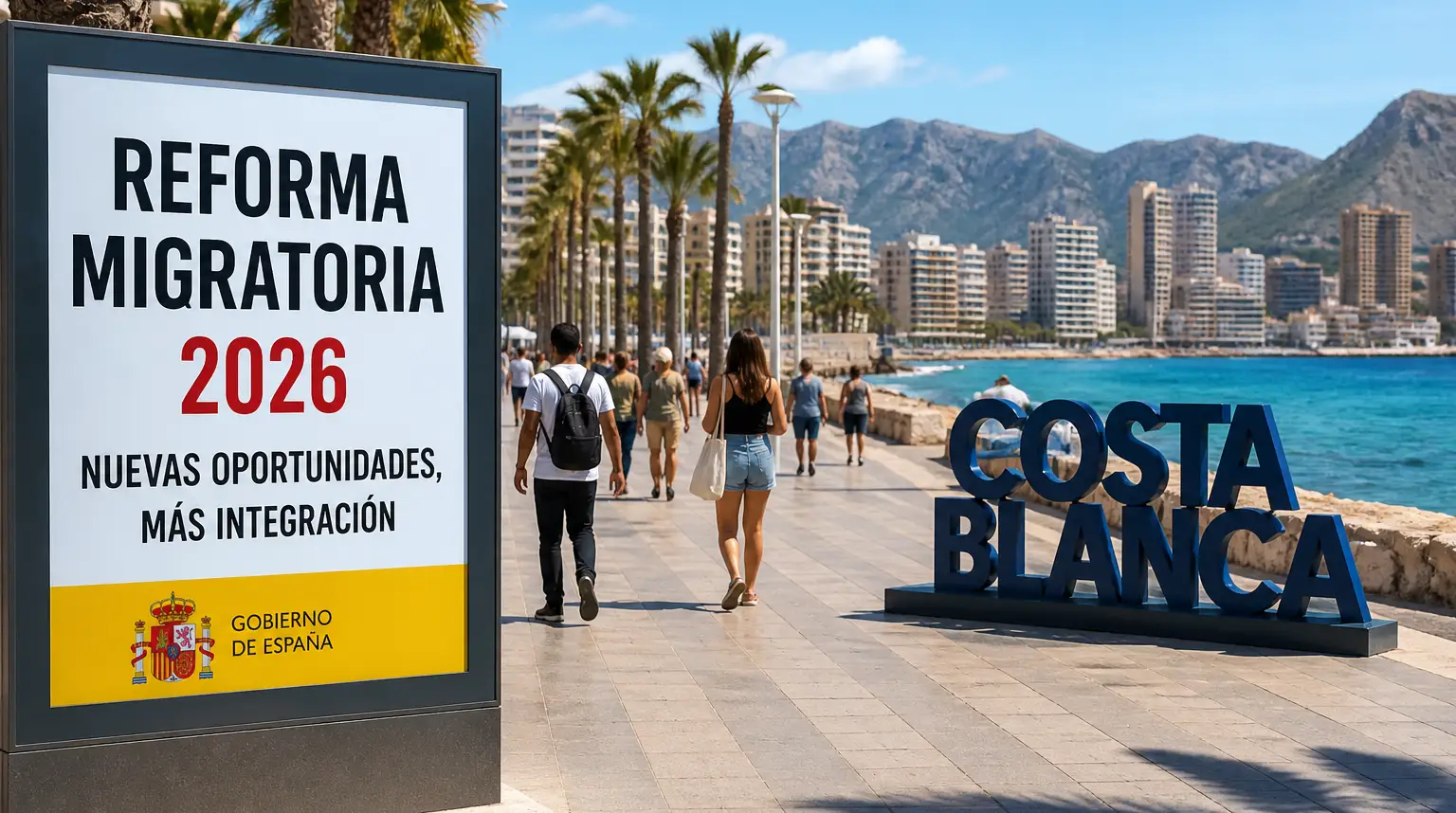
For weeks, X and TikTok have been full of clips that feed a stereotype: young men from Morocco or Senegal misbehaving in train stations or on public squares. If those are the only clips you see, you'd think Spain's new migration reform is a recipe for chaos. On the Costa Blanca, the reality looks different, and it is far more nuanced.
What the reform actually regulates
Since 16 April 2026, the Extraordinary Regularisation under Real Decreto 316/2026 has applied across Spain. Until 30 June 2026, up to 500,000 people who had already been living in Spain continuously for at least five months before 31 December 2025 can apply for a one-year residence and work permit. The conditions: no criminal record and proof of residence. A gestoría (an administrative agent that handles paperwork for you) will typically accept a rental contract, an empadronamiento (registration on the local town hall's residents' register), doctor's visits, or electricity and water bills.
Once approved, people follow the same path as any other newcomer: NIE number, Residencia/TIE, registration with social security, tax number. So the reform is not a shortcut around the system. It is the way into the system.
The deadline is 30 June 2026. Complete documents must be submitted to the Extranjería (immigration office) by then. Anyone who leaves their application until the end of June will run into offices that are already overloaded.
From personal experience
How I came to understand what this reform really changes on the Costa Blanca

Three years ago I met a Colombian man in Alicante. Let's call him José. He worked off the books on building sites, cleaned pools, helped out with renovations. He spoke fluent Spanish, had friends here, went to the market and spent his money where the rest of us do: at the baker's, in Mercadona, on rent. He was part of the community, just without papers.
He kept saying the same thing to me: "I just can't get papers, even though I've lived here for years." With the new reform, José can now apply officially. Once the permit comes through, he'll pay social security, pay tax, and be in the system. That is exactly the quiet benefit of this reform: people who already live and work here are brought out of the shadow economy.
And José is not an isolated case. In Torrevieja, on the Orihuela Costa, in Benidorm and in Dénia I know dozens of Latin Americans, mostly from Colombia and Venezuela, who have been here for years, speak Spanish as their mother tongue and move through daily life culturally like locals. The reform makes visible what has long been everyday reality on the street.
Why the Costa Blanca benefits twice over
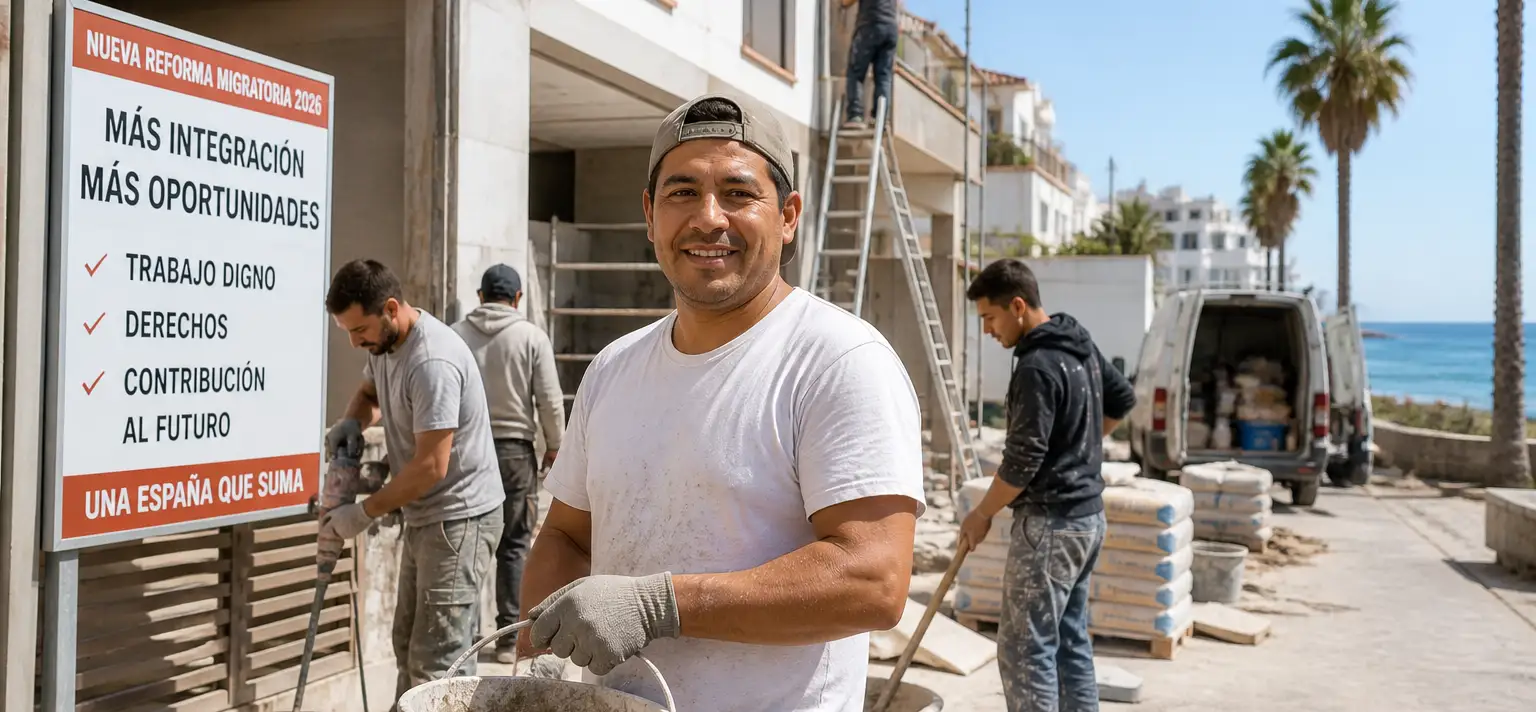
On the Costa Blanca, a considerable share of the workforce is in tourism, care, construction and agriculture, sectors that have complained of staff shortages for years. Anyone looking for a cleaner, a carer or a building labourer knows the dilemma: the people are here, but many of them work without papers. With the regularisation, tens of thousands of these workers become legally employable, and with that also covered by health insurance and social security and registered for tax.
For newcomers who are currently setting up as autónomo (self-employed) or an SL (limited company) or hiring a team of tradespeople, this has a very concrete effect: less risk from undeclared work, clearer invoices showing IVA (Spanish VAT), and fewer grey areas in the bookkeeping.
What's going on at the offices right now
Honestly: the Extranjería offices in Alicante, the comisarías (police stations) in Jávea and Calpe, and the ayuntamientos handling empadronamientos are groaning under the flood of applications. Extra shifts, long queues, appointment shortages. If you need an NIE or an empadronamiento for yourself at this time, expect waiting times that would have seemed unrealistic just a few months ago.
That's unpleasant, but temporary. In the medium term the reform actually takes pressure off these very offices, because it pulls routine cases out of the grey zone and bundles them into a one-off procedure. Pragmatism, not idealism.
Current waiting times on the Costa Blanca, a step-by-step guide and appointment tips.
What Pedro Sánchez says
Prime Minister Pedro Sánchez has set out the government's line clearly on several occasions recently:
"Migration is the engine of our economic growth. Over the last six years it has accounted for around 80 per cent of the dynamic growth in Spain."
"We have to recognise that we need migration, and for that we must create legal routes. People who live and work in Spain should do so under equal conditions and pay taxes."
That is exactly what's happening now. Instead of leaving people in illegality for years, they are brought into the tax and social security system. That brings the state revenue, and brings the labour market workers it badly needs. I've written more background on Spain's political course in the post "Spain stays level-headed".
The other side: what remains critical
Nobody denies that there is another side. There are people who don't behave. There are criminal structures that will exploit any regulation. There are groups that don't want to integrate. The reform explicitly excludes people with a criminal record: anyone with a relevant conviction doesn't fall under the scheme. But the filter isn't perfect, and that will become visible over the coming months.
What many on X overlook: the problem with young men in stations and on squares is largely not a problem of this reform. This group mostly arrived via Morocco or the Canary Islands and has its own, parallel asylum route, which the regularisation doesn't touch at all. Anyone who lumps the two together is comparing apples with oranges.
My conclusion
The 2026 migration reform is not a free pass. It is a pragmatic step that gives a legal status to people who are already part of this society, with everything that comes with it: social security, taxes, rights and obligations.
On the Costa Blanca we benefit twice over. In the medium term the authorities get some relief, because less grey area means fewer inspections. And we gain motivated workers who are integrated linguistically and already live here, rather than an abstract "new wave". Most people I know who see the subject from the practical side see it the same way.
Anyone who only sees the negative images on X is missing the other, much bigger story: that of José and thousands of others who can finally become legal. And that is good for the Costa Blanca.
Frequently asked questions
Who can apply for the 2026 regularisation?
People who lived continuously in Spain for at least five months before 31 December 2025, have no relevant criminal record and can prove their residence (e.g. rental contract, empadronamiento, electricity/water bills, doctor's visits). Application deadline: 30 June 2026.
What does the one-year residence and work permit actually give you?
With the permit, people can be legally employed, are part of the social security system and pay taxes. After the year is up, they move onto the regular path: renewal as a work or residence permit, later Residencia and, where applicable, NIE/TIE.
Does the reform affect me as an expat from Germany or elsewhere?
Indirectly, yes: if you are applying for an NIE or Residencia right now, the offices are under more strain, so allow more lead time. Directly, no: as an EU citizen you go through the regular registration route anyway and don't need the regularisation. (Non-EU readers also follow their own regular route, such as a visa or the permit that fits their situation, and don't need this one-off scheme unless they meet the conditions above.)
How does this affect the labour market on the Costa Blanca?
In tourism, care, construction and agriculture, there will suddenly be many more workers who can be legally employed. For business owners and expats with their own autónomo status or SL, that means clean contracts, clear invoices with IVA and fewer grey areas.
Will people from Latin America be regularised too?
Yes, the reform is neutral as to origin. In practice Latin Americans (above all from Colombia, Venezuela and Peru) benefit disproportionately, because on the Costa Blanca they make up the largest group of people without papers who have long been living here. Their cultural and linguistic closeness usually makes integration quick.
Where can I find official information and help with applying?
The official source is Real Decreto 316/2026, published in the Boletín Oficial del Estado (BOE). Applications go to the Oficinas de Extranjería of the relevant province. For complex cases it's worth going through a gestoría or a lawyer who is familiar with Extranjería practice.



Planning your move to the Costa Blanca?
Our guides cover the key steps — from the NIE number and residency to buying property.
Start with the NIE guidePersonal questions: new requests via the consultation page are currently paused.