In recent days, all of Spain has been looking at a small town in the Region of Murcia: Torre Pacheco. Videos are going viral showing angry residents taking to the streets, protesting loudly and confronting media crews. Headlines were quickly formed: “Far-right uprising”, “Hatred against migrants” or “Spain is shifting to the right”. But look closely and you will see: this is not about right or left – it is about a country that refuses to be hoodwinked any longer.
Germany whispers, Spain acts
In Germany, silence often rules: people get annoyed in private, talk behind closed doors and swallow their frustration. Spain is different. When a 68-year-old resident is brutally beaten up (as in the case that set off Torre Pacheco), it doesn't stay stuck in WhatsApp groups. Spaniards take to the streets. Loudly. Emotionally. And humanly.
That doesn't mean, however, that this is “right-wing violence”. It means: people finally want order, respect and boundaries to apply again – for EVERYONE.
A man speaks to a crowd, holding a Spanish flag. He stresses that the desire for safe streets and the protection of mothers, daughters and grandmothers should not be regarded as ultra-right. He warns against manipulation by traditional media and urges people not to be intimidated. The man speaks in favour of legal and controlled immigration and stresses that this does not imply fascist or Nazi views, but is simply sensible.
Spain is not right-wing. Spain is angry.
The narrative some media outlets are now trying to build strongly resembles German debating culture: anyone who protests must be “right-wing”. Anyone who raises integration critically is automatically a “Nazi”.
But Spain ticks differently. The country is proud of its diversity. People from Morocco, Colombia, Ecuador, Romania and Venezuela live in every town. And in many regions, living side by side works well. If you want to learn more about everyday life in these regions, the page on the cost of living on the Costa Blanca gives a good overview. Spaniards are not against foreigners – they are against chaos.
But when immigration happens uncontrolled, rules are not followed, violence happens on the streets every day – and politicians stay silent anyway – then things start to boil. And at some point that anger erupts.
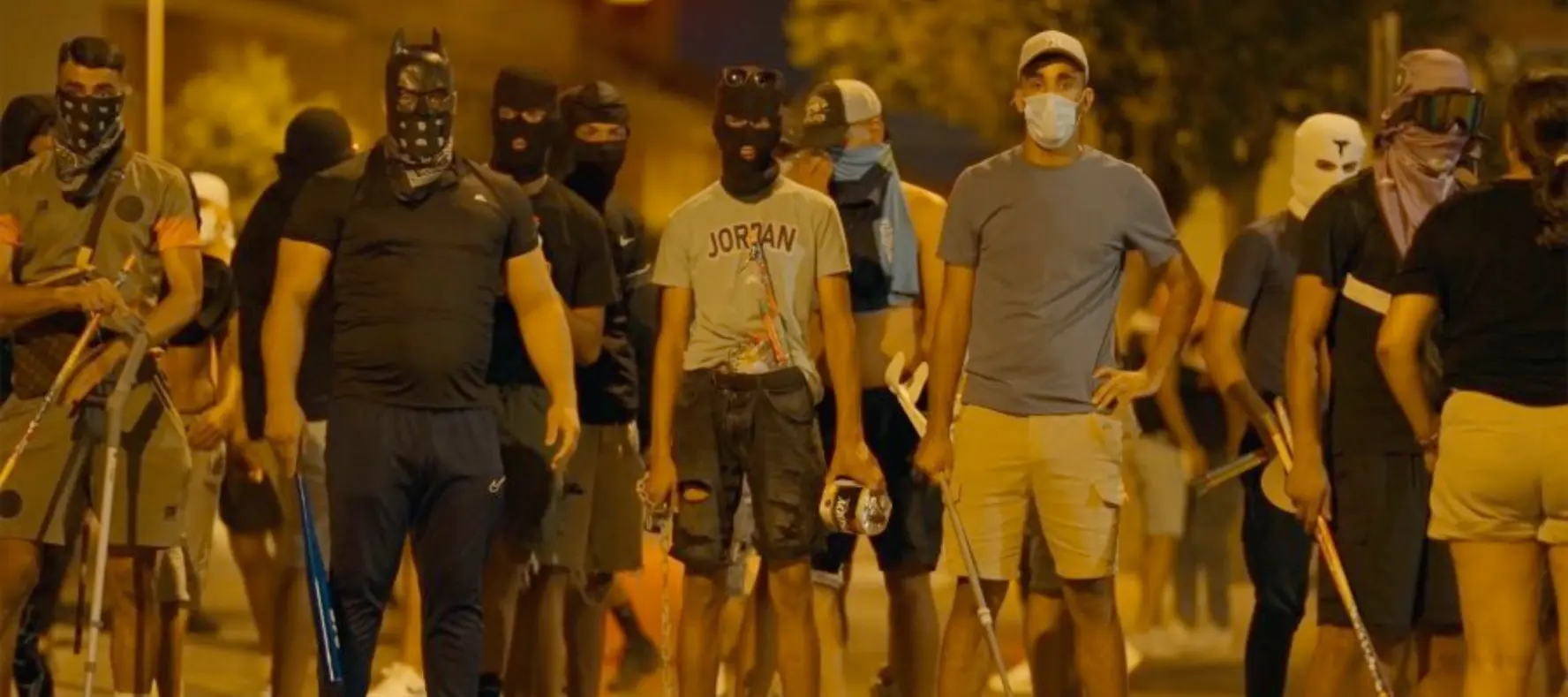
A group of masked people gathers at night in a public place. A man, apparently of Moroccan origin, speaks to the crowd wearing a mask and holding a baseball bat and, according to the X post by Pablo González Gasca, calls those gathered his “Maghrebi army” in Torre Pacheco. The scene is tense, some in the crowd raise their hands, others chant loudly. The video gives an impression of the growing escalation on the ground, where, according to reports, groups armed with machetes and other weapons are said to have committed violence against locals.
Asylum applications in Spain
[BILD]
Life in Spain – what can I really expect?
If you are moving to Spain, you want to know what life there is really like – beyond the headlines. Our guide to the cost of living on the Costa Blanca gives honest insights into everyday life, costs and social reality on the ground.
To the cost of living →Police and media under criticism
Several videos show journalists who tried to portray demonstrators as “far-right” becoming the target of the anger themselves. The police did not intervene – not because they take sides, but because they understand that the situation is complex. They prevented violence, but not opinions.
Other footage shows residents yelling at cameras: “Why don't you film what's really going on here!” Trust in traditional media has also been badly shaken in Spain. Many people no longer feel honestly represented.
Political reactions: between de-escalation and finger-pointing
The political reactions to the incidents in Torre Pacheco show a divided picture: while some call for calm, others use the situation to settle political scores. The conservative president of the Region of Murcia, López Miras (PP), called for restraint and stressed that violence is no solution – at the same time, he promised that the brutal attack on the pensioner would not go unpunished. The socialist governing party PSOE, on the other hand, sharply criticised the role of Vox, the right-wing populist party, and held its “trivialisation of right-wing extremism” partly responsible for the escalation. Other parties also condemned the aggressive rhetoric on social media, which in their view helped to inflame the mood.
Spanish media such as El País and international outlets such as Reuters or The New York Times speak of growing tension between migrants and parts of the population – and see in the current events a possible tipping point in the debate on migration, integration and public safety. The reactions clearly show: Spain, like many other European countries, stands at a political crossroads.
Conclusion: The situation is complex, emotionally charged and heavily present in the media. Between the legitimate concerns of the population, party-political calculation and ideological trench warfare, the focus on real solutions risks being lost.
The Spanish left is not the German “woke” left
What often causes bafflement in Germany: Spain's left is pragmatic. Clearly social, often very pro-worker, but without a morally lofty agenda.
Here you won't find gender asterisks, calls to abolish the police or drag story hours for children at school. Instead, it's about bread, rent and real problems.
The “wokeness” of the German left barely exists in Spain – and that's a good thing.
Share of the population in Spain
Important context
As so often with events like these, the same applies here: not everything is black or white. While many people in Torre Pacheco are acting out of genuine concern for their safety, there are unfortunately also groups who deliberately exploit the situation to spread extreme messages or to provoke on purpose. In recent days, some groups have even travelled in from outside to stir up feeling on the ground – in part with the clear intention of escalating. In this context, there have already been isolated attacks on innocent migrants who have nothing to do with the original triggers. That is not only wrong but also dangerous – because real solutions don't come from blanket agitation, but from clear rules, mutual respect and an honest debate.
A group of Spaniards moves through the streets of Torre Pacheco, some armed with machetes and smashing car windows as they go. A woman watches from a balcony and loudly voices her criticism. She calls the group “Nazis” and sharply condemns what they are doing – in particular the use of machetes and the wearing of masks. In a sarcastic tone she thanks them for spreading fear in the neighbourhood and questions their courage, since they hide their faces. She also draws a pointed comparison: whether they are the ones who have been toiling in the fields for 30 years – a reference to the hard work of many migrant workers.
What matters now
Spain is at a turning point. Torre Pacheco was not an isolated case, but a symptom. If politicians keep looking away, if real problems keep being moralised instead of solved, it won't stay limited to one town.
People are ready to take responsibility. They want rules, protection and order. No more, no less. If you are considering the move to Spain yourself, the pages on Alicante or Torrevieja offer honest insights into life on the ground – far from glossy advertising. If you want to find out about legal protection, the page on Lawyer & gestoría has further information.
Still have questions?
Carlo Reuß has 22 years of experience in emigration, 10 of them in Spain. Have a question on this topic? Send it to us via the contact form.
Ask a question →Frequently asked questions
What triggered the protests in Torre Pacheco?
The trigger was the brutal attack on a 68-year-old resident. In the aftermath, angry residents took to the streets and demanded more order, protection and safety in their community.
How did Spanish politicians react to the events?
The conservative regional president López Miras (PP) called for restraint and promised consequences for the attack on the pensioner. The socialist PSOE sharply criticised Vox and held its rhetoric partly responsible for the escalation.
Has Spain shifted to the right politically?
The article argues that Spain is not “right-wing”, but is reacting to concrete security problems. The country is proud of its diversity – according to the article, the protest is directed against chaos and uncontrolled conditions, not against foreigners as such.
What is the share of foreigners in Spain according to the article?
According to the table in the article, 77.1 % of the population are Spaniards. Britons make up 3.9 %, Moroccans 2.4 %, South Americans 1.8 %, Romanians 1.0 % and other foreigners 13.8 %.
Were innocent migrants also attacked in Torre Pacheco?
Yes. The article reports that there were isolated attacks on innocent migrants who had nothing to do with the original triggers. It also says that groups travelled in from outside to deliberately provoke and escalate.


Planning your move to the Costa Blanca?
Our guides cover the key steps — from the NIE number and residency to buying property.
Start with the NIE guidePersonal questions: new requests via the consultation page are currently paused.