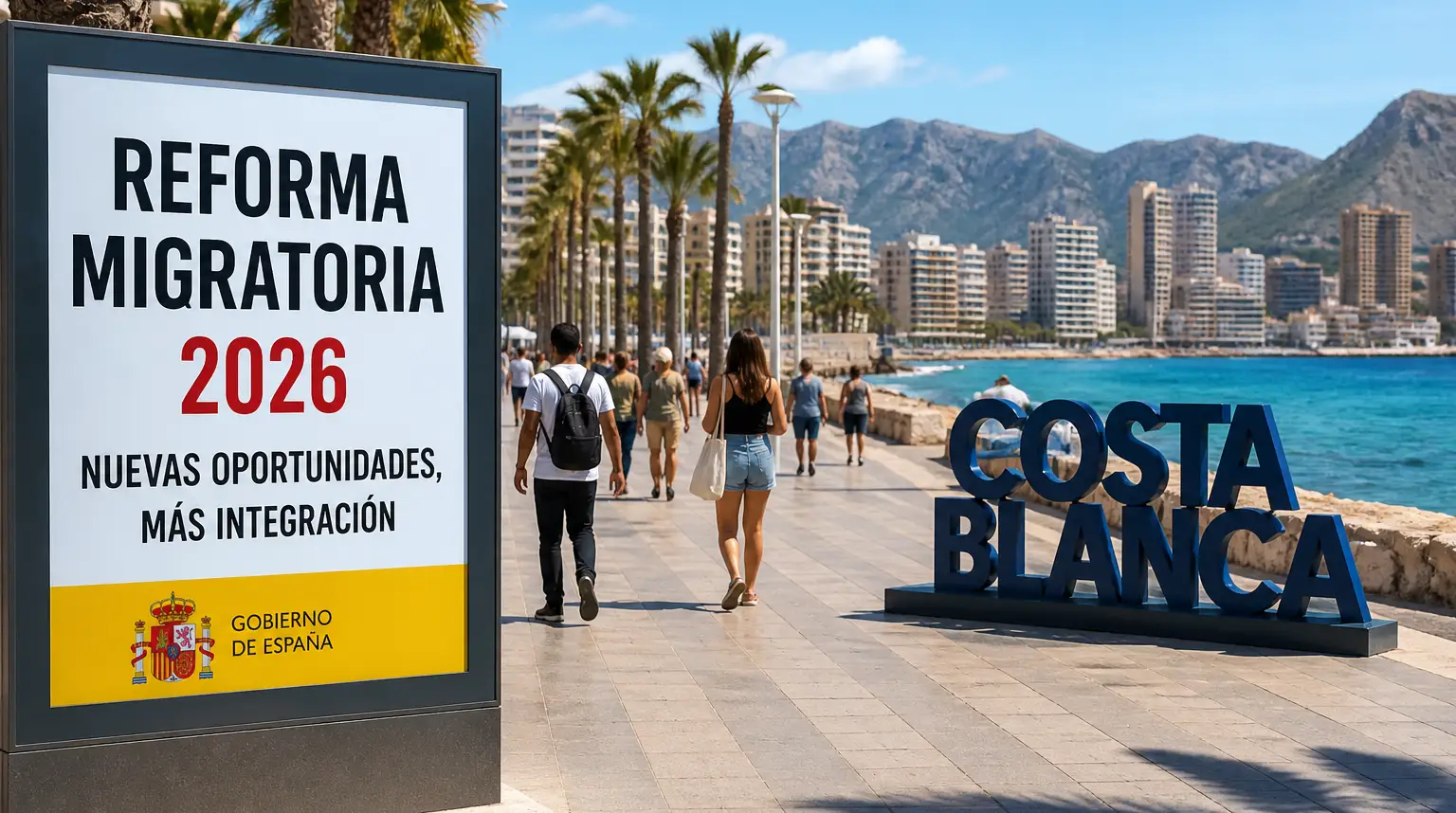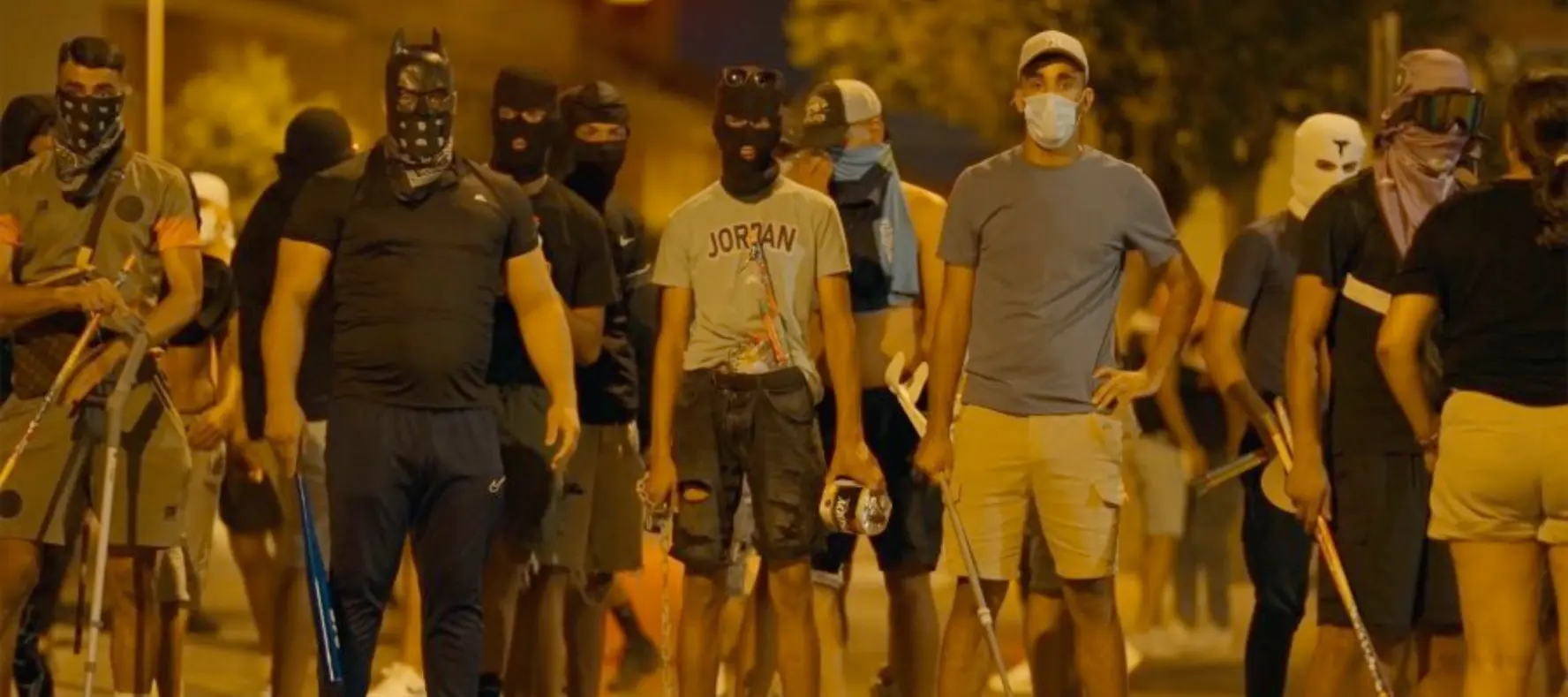





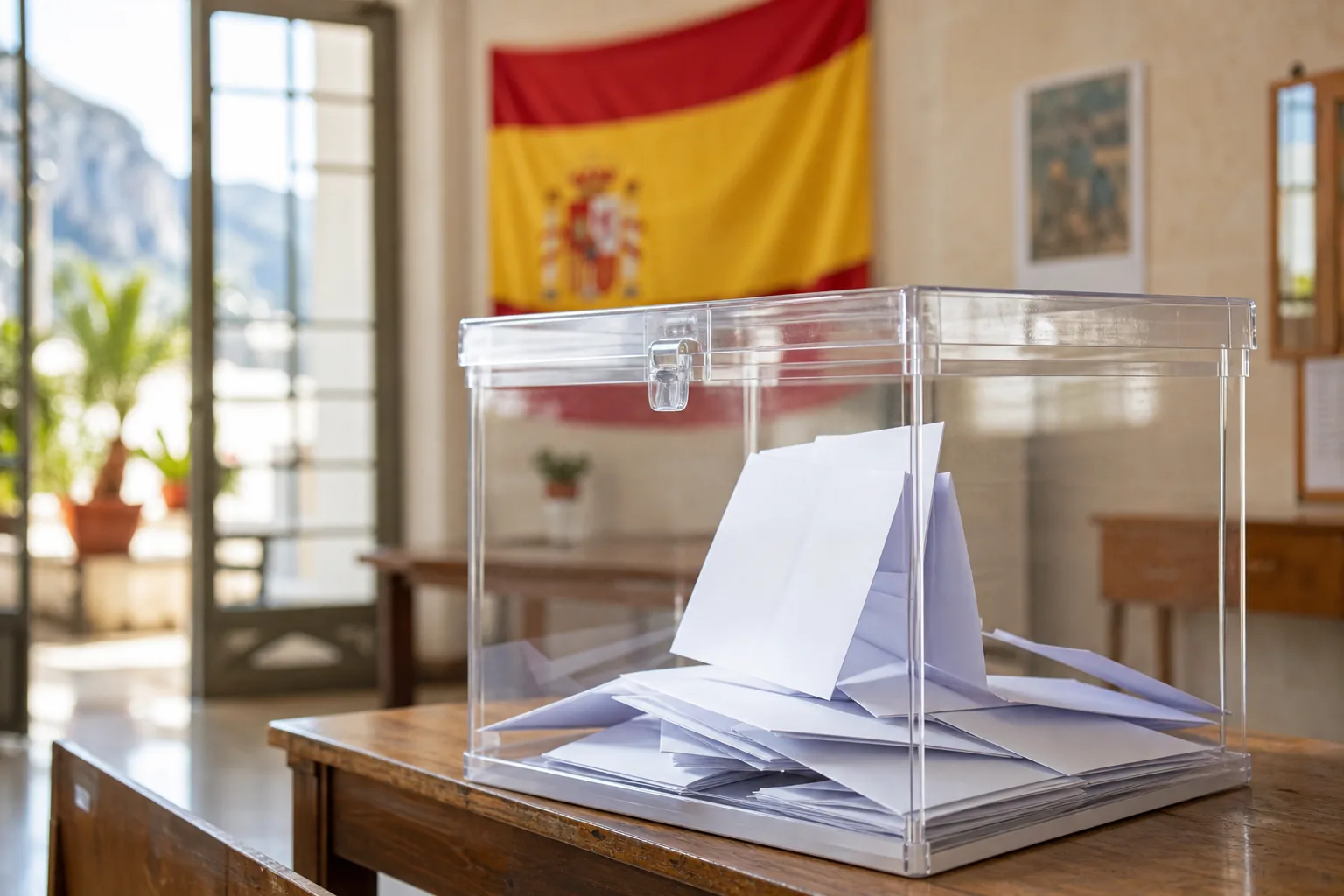
As of 29 November 2026. Spain is holding a snap general election today. Prime Minister Pedro Sánchez (PSOE) faces Alberto Núñez Feijóo (PP), while the far-right Vox and the left-wing alliance Frente Amplio compete for third place. For anyone living on the Costa Blanca or planning to move here, the stakes are rents, purchase taxes, holiday lets, taxes and residency. This guide sets out what the parties actually put in their manifestos – with sources, no predictions.
The short answers:
- Result: Polls close at 8 pm. The provisional result comes in during the evening – we will add it right here.
- Can expats vote? No. Only Spanish citizens vote in the general election – British, American and EU residents cannot.
- What is at stake for foreigners? Mainly purchase taxes for non-EU buyers, rental rules, holiday lets and whether benefits could be allocated by nationality.
- When will things change? Not overnight. The new parliament meets on 23 December, then the prime minister must be voted in – new laws come in 2027 at the earliest.
The result will appear here from about 9 pm
Polling stations close at 8 pm (Canary Islands: 9 pm Spanish time). This page will be updated with the provisional result.
What the final polls said
Average seats from 7 polls (fieldwork 10–23 Nov); the thin line shows the range. Polls are not results.
Which majority is possible?
176 seats = absolute majority
- According to all 7 polls, the only route to a government runs through PP and Vox. The PP alone would fall well short of 176.
- Feijóo wants to govern alone with Vox support from outside; a coalition “does not depend on me but on the votes” (8 Nov). So it is open whether Vox gets ministries.
- PSOE and Frente Amplio would not reach 176 in any poll, even with all other parties.
- Caution: in 2023 most polls also showed a PP–Vox majority – in the end they won 170 seats.
- 29.11.Election, provisional result in the evening
- 4.–7.12.Official count by the electoral boards
- 23.12.New parliament meets
- AfterInvestiture vote: 176 votes, or a simple majority in a second vote
Why Spain is voting today
The next election was not due until 2027. But in October 2026, the PP, Vox and Junts voted down two government housing decrees in Congress. Sánchez dissolved parliament and called a snap election for 29 November. Housing – rising prices, scarce rentals, tourist flats – is therefore the dominant issue of this campaign.
Voters elect the 350 members of Congress and members of the Senate. Alicante province returns 12 MPs and 4 senators.
What moves Spanish voters: housing, migration – and Gaza
- Housing is the number one issue. In the November 2026 CIS barometer, 59.5% of respondents named housing among Spain's three biggest problems, and 33.3% put it first. The snap election itself was triggered by the row over the housing laws.
- Migration comes next. In the October CIS barometer it ranked second with 20.9% of first mentions. It is Vox's core issue (“Ni uno más”), and the PP also wants much tougher rules. Housing and migration have dominated the campaign – and in the polls PP and Vox are clearly ahead together.
- On Gaza, the majority stands elsewhere. According to a Real Instituto Elcano survey (May 2025), 82% of Spaniards consider Israel's conduct in Gaza a genocide, 78% support recognition of Palestine by European states and 70% back EU sanctions on Israel. On this question the majority is closer to the PSOE and Frente Amplio – but the election is being decided on housing and migration.
Who is standing?
- PSOE (Socialists) led by Prime Minister Pedro Sánchez.
- PP (Partido Popular, conservative) led by Alberto Núñez Feijóo – in the same European party family as Commission President Ursula von der Leyen.
- Vox (far right) led by Santiago Abascal.
- Frente Amplio, the new left-wing alliance (incl. Sumar, Izquierda Unida, Más Madrid, Comuns) led by Ada Colau, former mayor of Barcelona.
- Podemos runs separately (Irene Montero).
In the Valencia region there is a separate left-wing list, Compromís-Front Valencià (incl. Compromís, Podemos, Esquerra Unida). In Alicante it is headed by María Teresa Pérez (Podemos).
What did the final polls say?
Polls could be published until 23 November. In almost all private polls the PP led (roughly 121–135 seats), ahead of the PSOE (roughly 110–124) and Vox (roughly 55–64). Together, PP and Vox reached 184–196 seats in most polls – more than the 176 needed for an absolute majority. Exceptions included AtlasIntel, Cluster17 and the state-run CIS, which put the PSOE ahead. Polls are not results – in 2023 they were clearly off in Spain.
Who wants what? The comparison
The table shows the key positions at a glance. Tap a topic to see the details, how the parties differ and what it means for foreigners.
Who wants what? The parties compared
Pick a topic and switch parties on or off. Based on the party manifestos and documented campaign statements – with sources.
| Topic | PSOEPedro Sánchez | PPAlberto Núñez Feijóo | VoxSantiago Abascal | Frente AmplioAda Colau |
|---|---|---|---|---|
| Foreigners & residency | Integration plan, no new visa rules | Integration pledge to renew permits | “Spaniards first” for benefits | Faster offices, wider voting rights |
| Buying property | No extra levy on foreigners | 4% VAT on first home under 40 | Deterrent tax on non-EU buyers | 100% surcharge on second homes |
| Rent & housing law | Freeze rents, keep the law | Scrap the law, 1 million homes | Scrap the law, Spaniards first | Rent cap, open-ended contracts |
| Holiday rentals | Overnight levy, more inspections | Not mentioned in the manifesto | Curb sprawl, police illegal lets | Licences expire within 3 years |
| Taxes & economy | Higher taxes on large fortunes | Tax relief, brackets indexed | Cut taxes, cut spending | End Beckham regime, 52% top rate |
| Migration | Legal routes, integration | No mass regularisation | “Remigration”, end arraigo | Permanent regularisation |
| EU & Brussels | More EU, less unanimity | EU mainstream, von der Leyen's family | Against Green Deal and Mercosur | Loosen EU fiscal rules |
| USA, Iran & NATO | “No to war”, bases closed | Repair ties with Washington | Close to Trump, against his tariffs | Less military, convert US bases |
| Israel & Gaza | Recognised Palestine, sanctions | Two states, against recognition | Pro-Israel (not in manifesto) | Permanent arms embargo |
Summary – details and sources in each topic. Swipe the table sideways to see all parties.
Foreigners & residency
What changes for people without a Spanish passport?
Integration plan, no new visa rules
Integration and citizenship plan 2026–2030 worth €500m. Nothing new on digital nomad or non-lucrative visas; the golden visa is only mentioned as an abolished privilege.
[1][18]Integration pledge to renew permits
Anyone renewing a temporary residence permit under the general immigration regime would sign an integration commitment (learn Spanish, know the constitution and EU values). New points-based visa with annual quotas. Priority for benefits based on verifiable roots (registration, contributions, length of stay) – explicitly not nationality.
[2]“Spaniards first” for benefits
“Prioridad nacional”: Spaniards first for social housing, nursery places, aid and benefits; minimum income (IMV) for Spaniards only; a tax on money transfers abroad; stricter rules for citizenship.
[3]Faster offices, wider voting rights
Appointment at the immigration office within 7 days, 30% more staff; healthcare for all residents regardless of status; extend local voting and candidacy rights for migrants.
[4]The difference: The PP ties rights to length of stay and integration, Vox to nationality. PSOE and Frente Amplio want to make access easier.
What it means for foreigners: EU citizens such as Germans are not covered by the general immigration regime, so the PP integration pledge is unlikely to apply to them. Non-EU residents on temporary permits (e.g. non-lucrative or digital nomad visas) would be; whether Britons with a Withdrawal Agreement TIE count is unclear. Vox's “Spaniards first” would, as worded, also affect EU citizens.
Buying property
Who wants to tax buyers – including foreign buyers – more?
No extra levy on foreigners
The 2026 manifesto has no extra tax on foreign buyers – the 100% levy on non-EU buyers proposed in 2025 is not in it. Interest-free loans of up to €50,000 for first-time buyers (“TU CASA”).
[1][25]4% VAT on first home under 40
VAT on a first new-build home for under-40s cut from 10% to 4%, lower transfer tax (ITP) together with the regions. Nothing on foreign buyers.
[2]Deterrent tax on non-EU buyers
A “deterrent” tax on buyers from outside the EU – no rate given. 0% VAT or no transfer tax on a first home, but only for “Spanish families”.
[3]100% surcharge on second homes
A 100% state surcharge (tax doubled) on purchases that are not a main residence – explicitly including non-residents and non-EU citizens. Transfer-tax exemption for a first home, with income and price caps.
[4]The difference: Only Vox (non-EU buyers) and Frente Amplio (all second homes) plan higher purchase taxes. PSOE and PP propose no special levy.
What it means for foreigners: Britons, Americans or Swiss buying a holiday home would face higher purchase taxes with Vox in government – no rate is given. The Frente Amplio model would hit every second-home purchase, including by Germans and Spaniards.
Rent & housing law
The housing issue triggered this snap election.
Freeze rents, keep the law
Keep the housing law; temporarily freeze rents above the reference index; longer contracts; a land law and over €25bn in state (ICO) loans for new building; housing as a constitutional right.
[1][31]Scrap the law, 1 million homes
Scrap the housing law, the “stressed areas” and the rent index; 1 million homes, building permits within 3 months; a tax bonus for landlords who raise rents only with inflation for 3 years.
[2]Scrap the law, Spaniards first
Scrap the housing law, reform land law, more social housing “for Spanish families”; rental contracts only with proof of legal residence.
[3]Rent cap, open-ended contracts
Rent cap in stressed areas (max. 25% of local income or the reference index), open-ended tenancies, a 10% tax on large housing portfolios, 1.5 million public homes in 12 years.
[4][31]The difference: PSOE and Frente Amplio want to regulate rents; PP and Vox want to scrap the housing law and respond with more building land and tax incentives.
What it means for foreigners: Tenants on the coast would benefit more from rent caps (PSOE, Frente Amplio), landlords from PP and Vox. Under Vox a rental contract would require proof of legal residence – no problem for documented residents.
Holiday rentals
What happens to tourist rentals (VUT)?
Overnight levy, more inspections
Councils may charge a per-night levy on tourist flats; a progressive tax on large owners with tourist or empty homes; more inspections.
[1]Not mentioned in the manifesto
Tourist flats and seasonal lets do not appear in the manifesto (keyword search in the original PDF).
[2]Curb sprawl, police illegal lets
Regulate the “massive proliferation” and step up checks on illegal tourist flats – no concrete figures.
[3]Licences expire within 3 years
In stressed areas, tourist licences in residential buildings expire within 3 years at most; 21% VAT; property-tax surcharge of up to 150%; lets of up to 30 days count as tourist lets.
[4]The difference: Frente Amplio goes furthest, the PP regulates least. PSOE relies on levies and inspections, Vox on policing illegal lets.
What it means for foreigners: Anyone letting a holiday home on the Costa Blanca should follow the result closely. Existing licences and Valencian regional rules remain in force until new laws are passed.
Taxes & economy
Income, wealth, inheritance, Beckham regime, working hours.
Higher taxes on large fortunes
More progressive tax on capital income (up to 35% above €300,000), a supplementary tax on large fortunes, a 37.5-hour week with no pay cut, minimum wage above 60% of average pay, inflation-linked pensions in the constitution.
[1]Tax relief, brackets indexed
Index income-tax brackets to inflation, no income tax on the minimum wage, discounts for 18–35-year-olds, 0% VAT on staple foods, keep nuclear power. Nothing on wealth tax.
[2][32]Cut taxes, cut spending
Cut income tax, VAT and corporate tax, tax rates by number of children, no contributions for self-employed earning below minimum wage; funded by cutting “political” spending; against a statutory shorter working week.
[3][32]End Beckham regime, 52% top rate
52% top rate above €300,000, wealth tax from €1m (at least 2%), extra tax on inheritances over €1m, abolish the special regime for incoming workers (“Beckham”), pension age back to 65, path to a 32-hour week.
[4]The difference: PP and Vox want to cut taxes; PSOE and Frente Amplio want to tax top incomes and wealth more. Only Frente Amplio questions the Beckham regime.
What it means for foreigners: Anyone relying on the Beckham regime would only be at risk with Frente Amplio in government; it polled 6–13 seats in the final surveys. For residents with a pension or income in Spain, the income-tax brackets matter most.
Migration
Regularisation, deportation, “remigration”.
Legal routes, integration
“Regular, humane and effective” migration: legal routes, recruitment in countries of origin, faster recognition of qualifications; €500m integration plan. No new regularisation in the manifesto.
[1][5]No mass regularisation
Ban mass regularisations by law, “arraigo” only as an exception; points-based visa and quotas; more police and Frontex in the south; return centres in third countries; expulsion as the rule for serious crimes.
[2][5]“Remigration”, end arraigo
“Ni uno más”: abolish arraigo, no regularisation of irregular arrivals; “remigration” of foreigners who do not contribute or live on benefits; militarise Ceuta and Melilla.
[3][5]Permanent regularisation
Complete the 2026 regularisation and create a permanent procedure; close detention centres; asylum applications at embassies; against return centres in third countries.
[4][5]The difference: The deepest divide of this election: from permanent regularisation (Frente Amplio) to “remigration” (Vox). The PP sits in between, but clearly stricter than the PSOE.
What it means for foreigners: For Germans and other EU citizens nothing changes in residence rights – they are EU law. For context: 1,174,978 applications were filed in the 2026 regularisation by 30 June – applications, not approvals.
EU & Brussels
Relations with Brussels, von der Leyen, Mercosur, Green Deal.
More EU, less unanimity
Less unanimity in the EU, in favour of the Mercosur deal and the Green Deal; sits with the Social Democrats (S&D) in the European Parliament.
[6][7]EU mainstream, von der Leyen's family
Policy “within the European framework”, Mercosur with safeguards for farmers, revise the Green Deal; part of the EPP, the party family of Commission President Ursula von der Leyen.
[6][7][15]Against Green Deal and Mercosur
“Frontal” rejection of the Green Deal and Agenda 2030, calls Mercosur a “grave betrayal of the countryside”; sits with the Patriots for Europe.
[6][16][15]Loosen EU fiscal rules
Move beyond the Stability Pact, majority voting in foreign policy, challenge the EU returns regulation.
[7]The difference: PSOE and PP represent the EU mainstream; Vox stands for a break with Brussels' climate and trade policy.
What it means for foreigners: According to the GMF think tank, Vox plans such as “Spaniards first” and “remigration” would likely clash with Brussels. For EU citizens in Spain, free movement sets limits no government in Madrid can change alone.
USA, Iran & NATO
Rota and Morón, Trump, the NATO target.
“No to war”, bases closed
In 2026 barred the US from flying strikes on Iran from Rota and Morón and closed Spanish airspace to US war flights; rejects the 5% NATO target (2.1% is enough): “allies, not vassals”.
[10][11][8]Repair ties with Washington
Wants to repair relations with the US “within the EU framework” and avoid a trade war; no fixed NATO figure (“as much as possible”, after an audit); calls Iran's regime the main source of instability. The PP does not say whether Rota and Morón would reopen.
[6][7][8][9]Close to Trump, against his tariffs
Backed the strikes on Iran and is politically close to Trump, but opposes US tariffs on Spanish products; no NATO figure in the manifesto.
[6][8]Less military, convert US bases
Against the 5% target, cut military spending; convert foreign-used bases into technology and civil-protection centres.
[7][8]The difference: The PSOE confronts Trump; PP and Vox seek rapprochement – to different degrees.
What it means for foreigners: Relevant for Americans in Spain: in 2026 Trump threatened to cut trade and pull out of Rota and Morón. According to the GMF, a Feijóo government would likely reopen the bases to the US – an analysis, not a party statement.
Israel & Gaza
Recognition of Palestine, arms embargo.
Recognised Palestine, sanctions
Recognised Palestine in 2024 and withdrew its ambassador from Israel in March 2026; wants EU sanctions on anyone blocking the two-state solution and more aid to rebuild Gaza.
[6][7][12]Two states, against recognition
For a two-state solution but against recognising Palestine; voted against the arms embargo in 2025; Israel and the Arab states are “key partners”, civilians in Gaza must be protected.
[6][7]Pro-Israel (not in manifesto)
Sides with Israel; the manifesto does not mention the Middle East. The pledge to reverse the recognition of Palestine dates from 2024.
[6][7]Permanent arms embargo
A law for a “comprehensive and permanent” arms embargo on Israel, a transit ban on military goods, suspend the EU–Israel association agreement.
[7]The difference: The range goes from a permanent arms embargo (Frente Amplio) to clear support for Israel (Vox).
What it means for foreigners: It has little direct impact on expats – but it shapes Spain's role in the EU and its relationship with the US.
Sources (38)
- PSOE: Wahlprogramm 29N 2026 (PDF) · 11/2026
- PP: „La Reconstrucción Nacional“, Wahlprogramm 2026 (PDF) · 10.11.2026
- Vox: „Es sentido común“, Wahlprogramm 2026 (PDF) · 12.11.2026
- Frente Amplio: „Un programa como una casa“ (PDF) · 23.11.2026
- Euronews: Was die Parteien zur Migration vorschlagen · 23.11.2026
- Infobae: Wie sich Spaniens Außenpolitik nach der Wahl ändern kann · 29.11.2026
- Crónica del Henares: Außenpolitik im 29N – Versprechen von PP, PSOE, Vox und Frente Amplio · 11/2026
- Infobae: Das 5-%-Ziel für Verteidigung · 20.11.2026
- El Español: Feijóo zu Rota und Morón · 03.03.2026
- NPR: Spain and the Iran war · 05.03.2026
- PBS: Spain closes airspace to U.S. planes involved in Iran war · 30.03.2026
- Wikipedia: Spain in the 2026 Iran war · Stand 09/2026
- AP: Iran insists no talks with the US until its conditions are met · 24.11.2026
- Euronews: Can Trump cut trade with Spain? · 08.07.2026
- GMF: Conservative Spain – neither maverick nor anchor · 18.11.2026
- Teleprensa: Vox gegen Agenda 2030 und Green Deal · 26.11.2026
- La Moncloa: Regularisierung endet mit 1.174.978 Anträgen · 02.07.2026
- La Moncloa: Ende der Golden Visa · 02.04.2025
- INE: Kommunalwahl 23. Mai 2027 – EU-Bürger · 2026
- INE: Wählerverzeichnis für Ausländer, Kommunalwahl 2027 · 2026
- iAgua: Wasser an der Urne – was die Parteien vorschlagen · 16.11.2026
- El Diario de Madrid: Letzte Umfragen zum 29N · 27.11.2026
- Maldita: Wie die amtliche Auszählung abläuft · 19.11.2026
- La Moncloa: Ministerrat ruft Wahlen aus · 05.10.2026
- PwC: 100-%-Steuer für Nicht-EU-Käufer (Vorschlag 2025) · 2025
- idealista: Who can vote in Spain's general election · 27.10.2026
- Alicante Plaza: Compromís-Front Valencià in Alicante · 26.10.2026
- La Moncloa: Wahlrecht für Briten bei Kommunalwahlen
- El Plural: Was jede Partei vorschlägt – die Unterschiede · 26.11.2026
- Mundiario: Wohnen, Steuern, Renten – was jede Partei ändern will · 28.11.2026
- Capital: Vier wirtschaftliche Wege für den 29N · 28.11.2026
- Wikipedia: Opinion polling for the 2026 Spanish general election · abgerufen 29.11.2026
- Infobae/EP: Feijóo – Koalition mit Vox „hängt nicht von mir ab“ · 08.11.2026
- Demócrata: Was die Spanier laut CIS bewegt · 11/2026
- CMM: CIS-Barometer Oktober 2026 · 10/2026
- El Independiente: 82 % der Spanier sprechen von Völkermord in Gaza (Elcano, Mai 2025) · 07.07.2025
- Newtral: Faktencheck Elcano-Zahlen zu Gaza · 10.10.2025
- Euronews: Wohnungskrise und Vox prägen die Wahl · 27.11.2026
What the election means for expats – by passport
British residents
Since Brexit, Britons count as non-EU citizens. Two points matter most:
- Buying property: Vox wants a “deterrent” tax on buyers from outside the EU – the manifesto gives no rate. Frente Amplio would double the tax on any purchase that is not a main home, for everyone.
- Residency: The PP wants non-EU residents renewing a temporary permit to sign an integration commitment (learn Spanish, know the constitution). The manifestos do not say whether this would cover Britons holding a Withdrawal Agreement TIE.
- Voting: Britons can vote in local elections after 3 years of legal residence – see below.
Americans
For Americans the property rules are the same as for Britons. On top of that comes the relationship with Washington: in 2026 Spain barred the US from flying strikes on Iran from the Rota and Morón bases, and Trump threatened to cut trade. The PP wants to repair relations with the US, the PSOE keeps its distance. According to an analysis by the GMF think tank, a Feijóo government would likely reopen the bases to the US. The golden visa was abolished in April 2025 – none of the four main manifestos wants it back. Nothing new is proposed for the non-lucrative or digital nomad visas.
EU citizens
Residence rights do not change – they are EU law. Rent rules, purchase taxes on second homes (Frente Amplio), holiday lets and income tax could. Vox's “Spaniards first” for benefits would, as worded, also affect EU citizens; the GMF expects such plans to clash with Brussels.
More on the basics: Residency in Spain and Taxes in Spain.
Property: buying, renting, letting
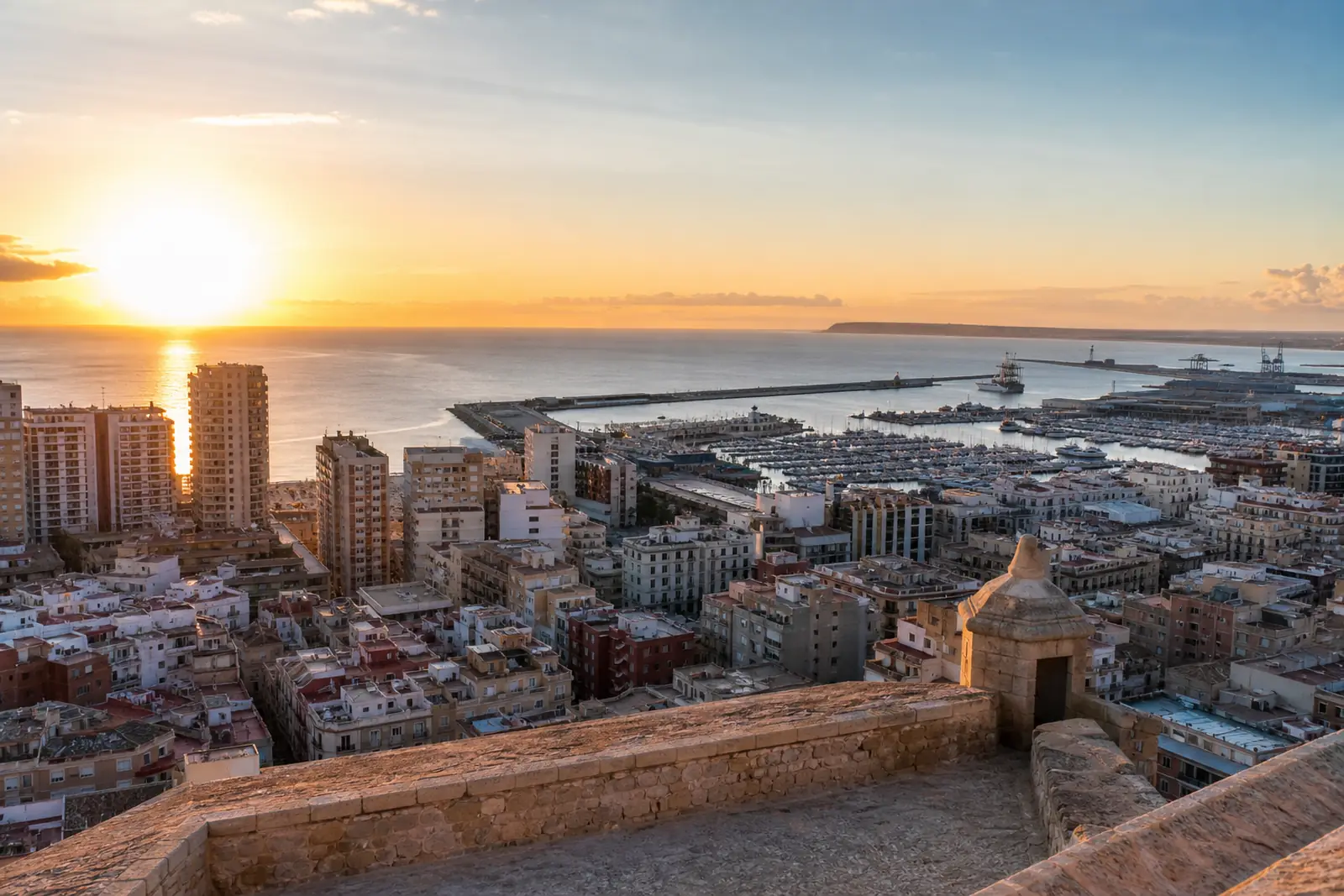
- First home: The PP would cut VAT on a first new-build home for under-40s from 10% to 4%. Vox wants 0% VAT or no transfer tax – but only for “Spanish families”.
- Foreign buyers: The 100% tax on non-EU buyers proposed by the PSOE in 2025 is not in its 2026 manifesto. Vox wants to tax non-EU buyers more; Frente Amplio all second-home purchases.
- Holiday lets: The PP does not mention them. Vox wants tougher checks on illegal tourist flats, the PSOE would let councils charge an overnight levy. Frente Amplio would let licences in stressed areas expire within 3 years.
- Rents: Rent caps (Frente Amplio) and freezes (PSOE) versus scrapping the housing law (PP, Vox).
Existing contracts, purchases and licences remain valid until new laws are passed. Buying right now? Check a property before the notary and buyer support.
Migration: the deepest divide
No issue splits the parties more. Frente Amplio wants to complete the 2026 regularisation and create a permanent procedure. The PSOE favours legal routes and integration. The PP wants to ban mass regularisations by law and introduce a points-based visa. Vox calls for “remigration” of foreigners who do not contribute and wants to abolish “arraigo” – the route to residency through local roots. For context: 1,174,978 applications were filed in the 2026 regularisation by 30 June; these are applications, not approvals.
Spain, the EU and von der Leyen
The PSOE and PP represent the EU mainstream; both back the Mercosur deal. The PP belongs, like Ursula von der Leyen, to the European People's Party. Vox sits with the Patriots for Europe, rejects the Green Deal and Mercosur and speaks dismissively of “Brussels”. According to the GMF, Spain under a Feijóo government would act more “conventionally” in the EU – but with Vox in government, plans such as “Spaniards first” and “remigration” would likely clash with Brussels.
US, Iran, NATO and Israel
- Iran and the US: After the US and Israeli strikes on Iran on 28 February 2026, the Sánchez government barred the use of Rota and Morón for the strikes and later closed Spanish airspace to US war flights. The PP criticised this, Vox backed the strikes, Frente Amplio wants to convert the US bases.
- NATO: The PSOE rejects the 5% target, the PP gives no fixed figure, Frente Amplio wants lower military spending, Vox names no figure.
- Israel and Gaza: The PSOE recognised Palestine and withdrew its ambassador, the PP opposes recognition, Vox sides with Israel, Frente Amplio wants a permanent arms embargo.
What matters for the Costa Blanca
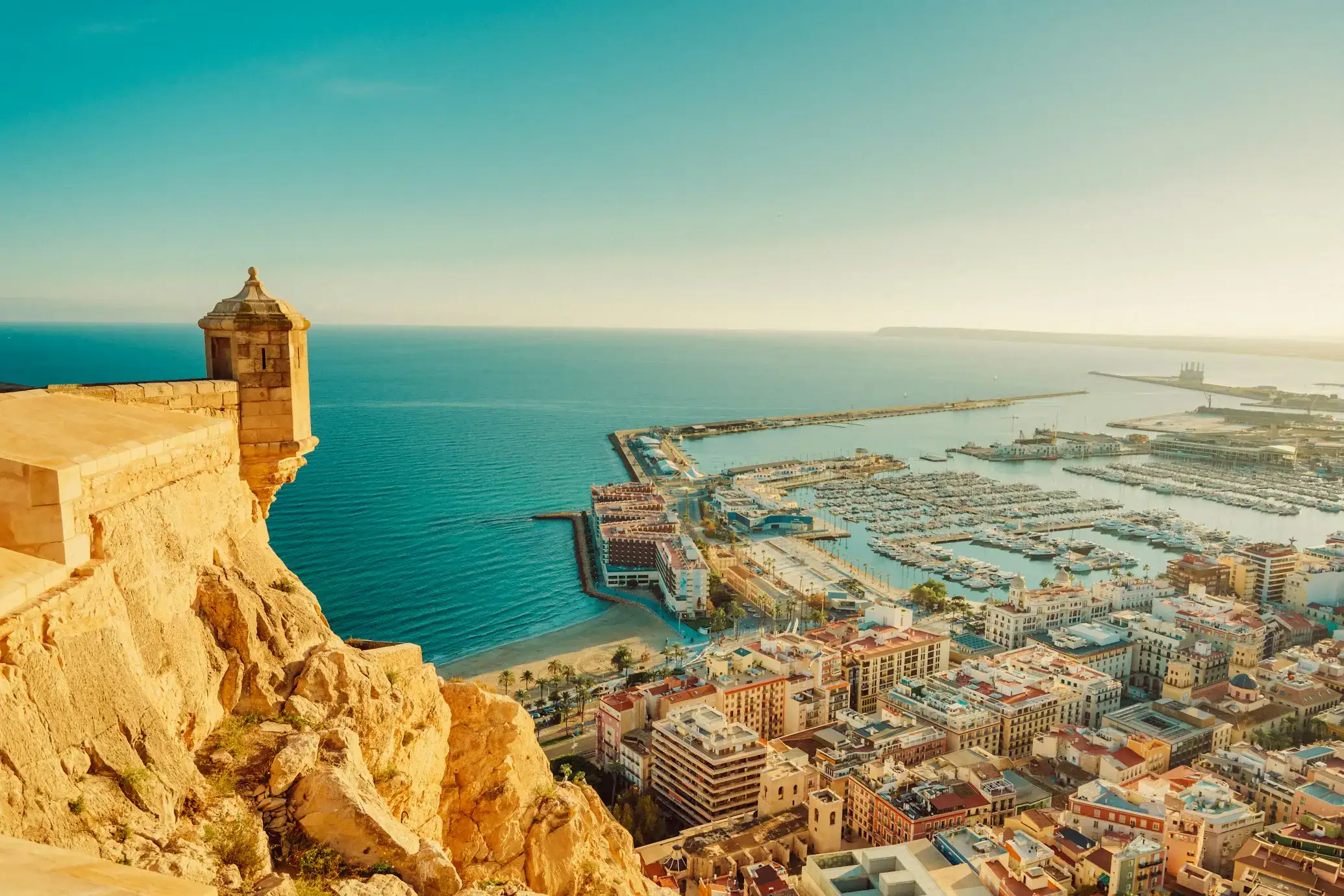
- Water: The Tajo-Segura transfer, vital for farming and towns in the south of the province, is in none of the four manifestos. The PP plans a national water pact with desalination, Vox wants to connect all river basins, the PSOE more desalination, Frente Amplio a moratorium on new transfers.
- DANA floods: Frente Amplio promises that the state pays to rebuild public infrastructure; the PP wants special aid for affected regions and names Valencia; Vox focuses on flood defences.
- Holiday lets and housing: On the coast, tourism and housing collide most – see the comparison above.
Can foreigners vote in Spain?
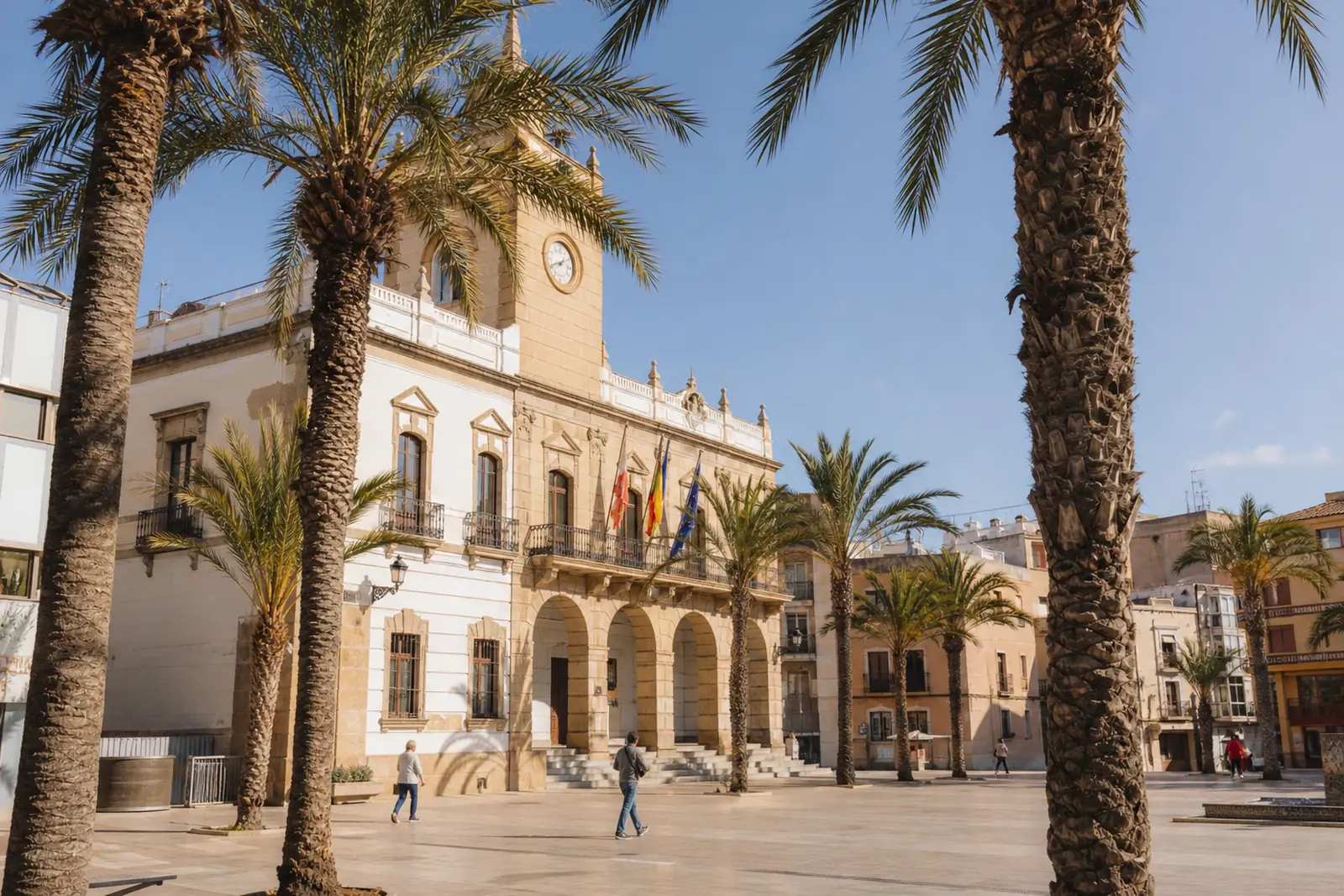
Not in the general election. In the local elections on 23 May 2027, many can:
- EU citizens must be on the padrón and file their declaration to vote in Spain by 30 December 2026 at the latest – at the town hall, via the INE e-office with Cl@ve, or by post. If you registered before, you do not need to do anything.
- Britons can vote locally after 3 years of legal residence; applications run from 1 December 2026 to 15 January 2027.
- Americans cannot vote in local elections – there is no reciprocity agreement with the US.
What happens next?
- 29 November, evening: provisional result.
- 4–7 December: official count by the provincial electoral boards, including votes from Spaniards abroad.
- 23 December: the new parliament meets.
- Then: after consultations, the King proposes a candidate. In the first vote they need 176 votes; 48 hours later, more yes than no votes suffice. If that fails, new elections follow after two months.
Until a new government is formed, the current one stays in office as a caretaker government.
Frequently asked questions
When will the Spanish election result be known?
Polls close at 8 pm. The provisional result comes in during the evening; it is confirmed officially from 4 to 7 December.
Can British expats vote in Spain?
Not in the general election. In the 2027 local elections, yes – after 3 years of legal residence and if they apply between 1 December 2026 and 15 January 2027.
What happens if Vox joins the government?
Vox wants “Spaniards first” for benefits, “remigration”, a tax on non-EU buyers and the repeal of the housing law. What happens depends on coalition talks and legislation – little changes in practice before 2027.
Will the golden visa come back?
It was abolished on 3 April 2025. None of the four main manifestos wants it back.
What changes for holiday-let owners?
Nothing until new laws are passed. After that it depends on the government: from no changes (PP) to more checks (Vox, PSOE) to licences expiring in stressed areas (Frente Amplio).
This article compares the manifestos neutrally and makes no voting recommendation. It is based on the parties' original manifestos and the media cited. We will update it with the result.
Sources
- PSOE – Programa electoral 29N 2026
- PP – La Reconstrucción Nacional (programa 2026)
- Vox – Es sentido común (programa 2026)
- Frente Amplio – Un programa como una casa
- La Moncloa – Convocatoria de elecciones (05.10.2026)
- INE – Elecciones municipales 2027: ciudadanos UE
- INE – Censo electoral de extranjeros residentes 2027
- La Moncloa – Balance regularización extraordinaria (02.07.2026)
- La Moncloa – Fin de la golden visa (02.04.2025)
- El Diario de Madrid – Últimas encuestas 29N (27.11.2026)
- Maldita – Escrutinio definitivo (19.11.2026)
- GMF – Conservative Spain: neither maverick nor anchor (18.11.2026)
- Infobae – Política exterior tras las elecciones (29.11.2026)
- Euronews – Inmigración: propuestas de los partidos (23.11.2026)
- iAgua – El agua en las urnas (16.11.2026)
- CIS – Barómetro noviembre 2026: preocupaciones (vía Demócrata)
- CIS – Barómetro octubre 2026 (vía CMM)
- Real Instituto Elcano 2025: 82 % ven genocidio en Gaza (vía El Independiente)
- Infobae – Feijóo: la coalición con Vox «no depende de mí» (08.11.2026)
- Wikipedia – Opinion polling for the 2026 Spanish general election


 Written by Carlo Reuss22 years living abroad, 10 of them in Spain. About me →
Write to us – we answer or connect you with the right people.
Ask a question →